
Abandoned Cart Recovery Best Practices, With Real Ecommerce Examples

Don’t treat abandoned cart automation as a “you forgot something” email – build a system that recovers your revenue from the first site visit to checkout, segment by customer and product, and give people a real reason to come back.
In this guide we’ll walk through how we at Maestra actually do it – catching every abandonment stage, segmenting recovery, making the message do more than remind, and using price and stock to create real urgency. All cart abandonment email best practices below come from our own work with ecommerce brands.
Content:
What Is Cart Recovery and Why It Matters
Abandoned cart recovery is the system of automated triggers and messages that wins back shoppers who leave before buying. In practice, it’s rarely one “you forgot something” email. It’s a set of flows that catch drop-off across the whole journey – from a browse with no add-to-cart to a full cart abandoned at checkout – and reach back out by email, SMS, push, or WhatsApp with the exact items and a one-click path back to the cart.
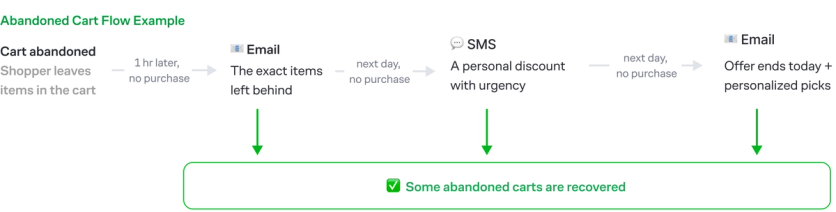
The numbers show why it matters. Global ecommerce converts at roughly 1.6% of visits (Statista) – meaning around 98 out of every 100 sessions end without a sale. And cart abandonment is one of the biggest leaks inside that funnel: more than 70% of carts get abandoned before checkout (Baymard).
You’re paying Meta, Google, and TikTok for every one of those visits. Most of that spend walks before it becomes revenue. What happens to the rest depends on two things: whether you captured the shopper’s contact info before they left, and whether your flows are good enough to bring them back.
The Baseline Recovery Email Every Store Needs
Since a cart-recovery flow is the only thing between your ad budget and the void, it’s a must-have for ecommerce. Every store should launch a single automated email that fires when someone adds an item to their cart and doesn’t buy. At a minimum, that email should include:
- The exact items left behind – product image, name, size, and price, so there’s no doubt what it’s about.
- One clear call to action – a simple “Buy” button that drops the shopper straight back to the cart.
- Your branding – header with logo and an on-brand subject line, so it reads like you, not a system notification.
Basic cart recovery email
Lever 1: Trigger Recovery at Every Abandonment Stage
The funnel leaks long before cart, and every leak is a recoverable signal of intent. Each abandonment stage needs its own trigger. And messages should be synced to where the shopper actually dropped off.
| Stage | What the shopper did | What to send |
|---|---|---|
| Abandoned browse | Viewed a product page, never added to cart | Resurface viewed items plus a few recommendations. Weakest intent signal, so go light and cap at about once a week. |
| Abandoned category | Explored a category or collection, opened no product | Bestsellers or new arrivals from that category. |
| Abandoned search | Ran a specific query, clicked nothing | The matching results, or popular items for that query. |
| Abandoned wishlist | Saved items to favorites, never bought | Remind them of saved items; flag price drops or low stock. |
| Abandoned cart | Added items, never started checkout – strong intent, but still comparing | Run a flow of two to four messages: lead with the items and a reason to return, and add an incentive only on the second or third step. |
| Abandoned checkout | Entered shipping or payment details, didn't finish – highest intent | A shorter, support-led flow that removes the friction that stopped them. Don't treat it the same as an abandoned cart and don't lead with a promo code at this intent level. |
Blossom Flower Delivery shows how much is on the table when you start from a thin base: it built one abandonment journey spanning four stages – session, browse, cart, and checkout – and drove a 5x increase in revenue versus its regular abandoned cart flow. If your cart recovery is currently just one email, adding a trigger at each stage is often the fastest jump in recovered revenue you’ll get.
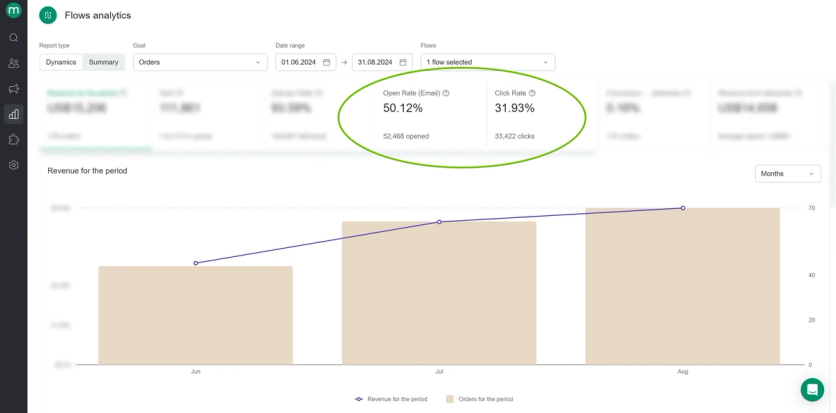
Blossom Flower Delivery’s open and click rates show the abandonment journey successfully re-engages customers
Once the basics are in place, you can layer on more advanced mechanics. Coolibar, a sun-protective apparel brand, rebuilt its recovery email automations around exactly this – including an Abandoned Collection flow that re-engages shoppers who browsed a collection but didn’t buy. Across the rebuilt flow set, revenue from abandoned-item flows tripled and total flow revenue grew +62% YoY within two months.
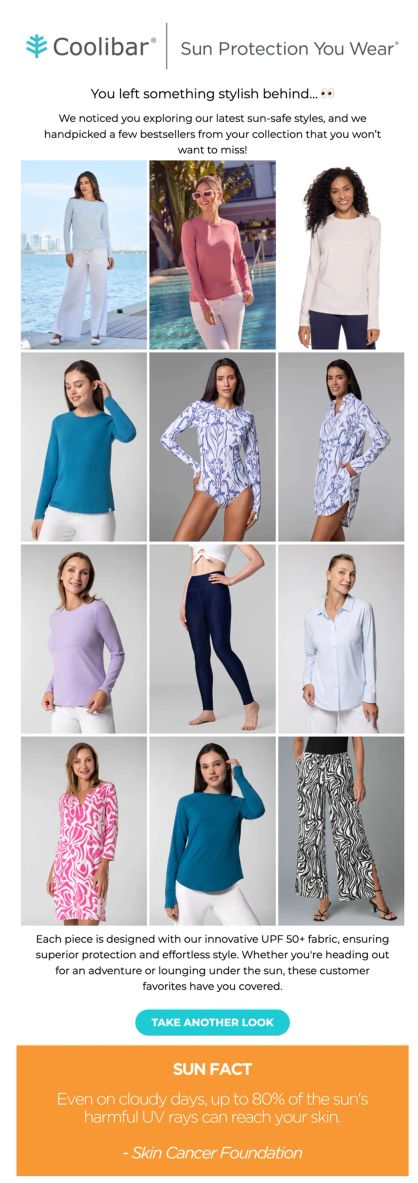
Coolibar’s Abandoned Collection email
Lever 2: Segment Recovery by Customer for Relevant, Timely Sends
A single generic flow underperforms – and that’s lost sales. A returning customer who buys monthly shouldn’t be told “looks like you forgot something” two days after they completed an order. Exclude shoppers who already got a message today and purchasers from the past 7 days. And treat repeat buyers vs. first-time visitors differently. Currency, shipping, and promo windows should match the shopper’s region.
Svaha, a themed-apparel brand, segments by geo: because Australian back-to-school doesn’t line up with the US calendar, Australian shoppers see a 25%-off reminder while US visitors keep the US offer. Loyalty status shapes emails as well – members see their tier and points balance, non-members get an invite to join.
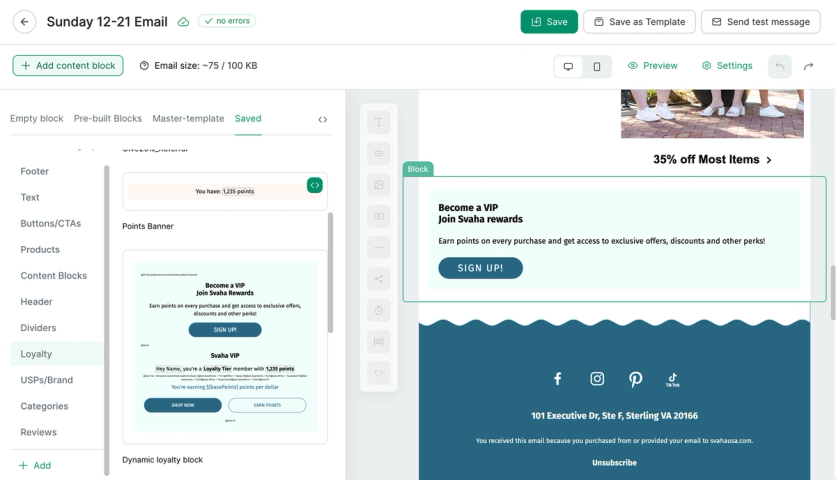
The pre-built loyalty block sits in the email builder, ready to drop into any campaign – members see their tier and points balance, non-members get an invite to join
Lever 3: Segment Recovery by Product, Price, and Category
A shopper who carted a $5,000 perfume doesn’t need the same email as the one who carted $20 of sunscreen. Trigger on the specific SKU the shopper interacted with – not a generic “you have items in your cart” message. Vary content by category, price band, and intent. For example, a higher-AOV cart justifies a second touch (and a human-feeling one); an impulse cart needs one well-timed nudge. Apparel needs sizing reassurance. Electronics need warranty and support. Consumables need replenishment timing.
Magnum Bikes built product-specific abandonment flows tied to individual e-bike models – Ranger premium e-bike browsers receive emails highlighting the model’s key features, while shoppers browsing its used lineup are steered toward Certified Pre-Owned deals aimed at more budget-minded buyers. The brand grew online order volume +111.7% YoY and online revenue +56.6%.
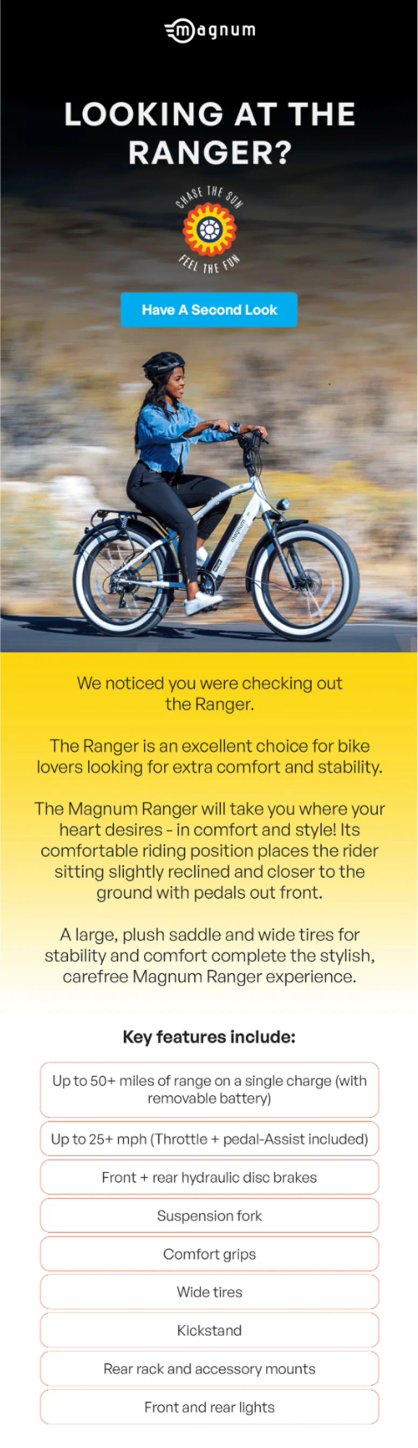
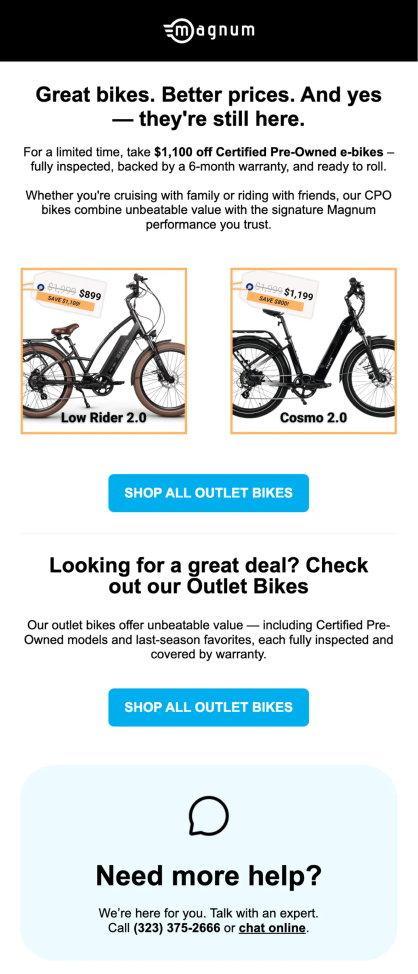
Magnum Bikes’ targeted emails: a Ranger Browse Abandonment nudge and a Certified Pre-Owned Price Drop alert
Lever 4: Match the Channel to How Fast Your Category Buys
Email is the default recovery channel, but it isn’t the only one. SMS, RCS, push, and WhatsApp messages recover carts that email never opens. Which channel to reach for usually comes down to how fast shoppers decide in your category:
- Considered, high-ticket (furniture, electronics): people research and compare over days. Email fits there – a shopper can open it the next morning and still buy.
- Impulse, time-sensitive (fashion, beauty, low stock, flash sales): decisions take minutes or hours, and the buy is often emotional. SMS, push, or WhatsApp gets seen within minutes, while an email often isn’t opened until hours later – long after the moment has passed.
That said, combining the two often works well: I Love Linen runs recovery across both SMS and email. Lead with an SMS to pull the shopper back quickly – ideal when you have a strong, time-sensitive offer. Then follow with an email that does the convincing: the reasons to come back, fuller product detail, and recommendations to make the item harder to walk away from.
Lever 5: Build the Recovery Message Around Recommendations, Loyalty, and Live Offers
The strongest messages give the shopper a reason to come back beyond the items themselves. Here’s what actually boosts cart-recovery email conversion:
Recommend Complementary and Alternative Products
Show complementary, popular, and attribute-matched items or in-stock alternatives if their pick sold out, so a wrong size or too-high price doesn’t kill the recovery. German Kabirski’s abandoned checkout emails include personalized recommendations, giving the shopper something new to consider.
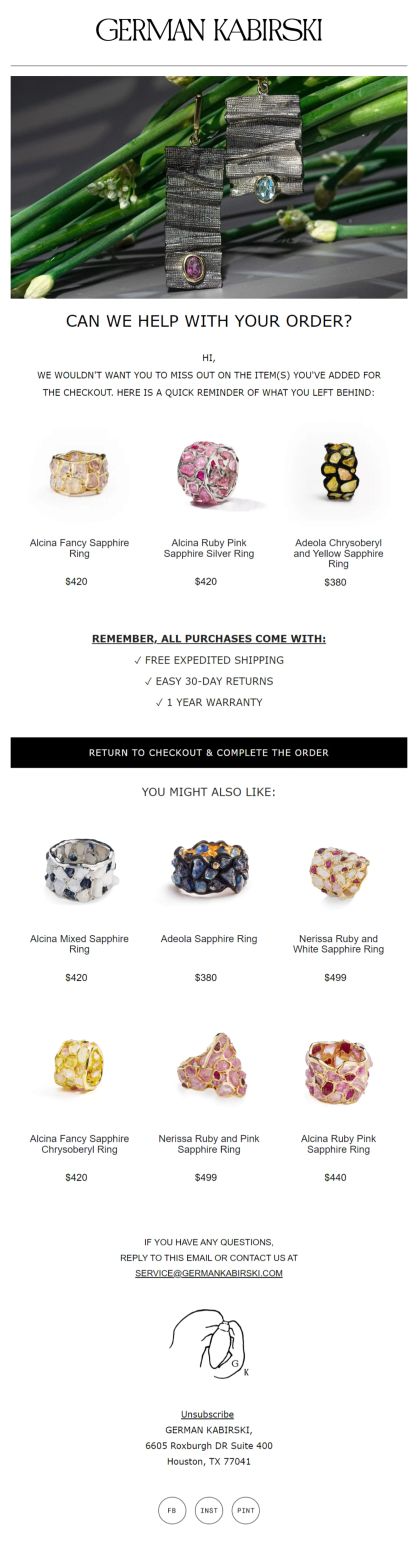
German Kabirski’s checkout abandonment flow
Make the Offer Feel Bigger With Tiered Rewards
An incentive lands harder when it feels earned. An upsell bar turns the offer into a game: the customer watches rewards unlock as the cart grows, so adding more feels like winning more, not just paying more. Selkirk built a tiered upsell bar into its abandoned-cart emails – the more shoppers added, the more opened up: free shipping, then a hat, then pickleballs. Keep a flat discount as a later-stage lever, not your opener.
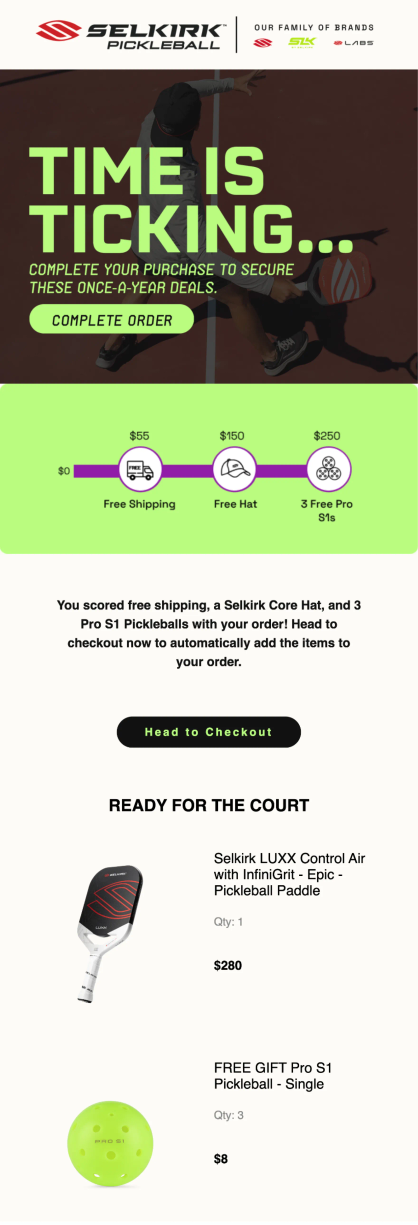
Selkirk’s recovery email – an upsell bar unlocks rewards as the cart grows
Surface loyalty value
If the shopper has points – expiring, or enough to offset this order – say so. It reframes coming back as collecting something they already own, not spending more. Atlanta Cutlery keeps loyalty woven into every email – including points expiry reminder and level upgrade encouragement.
Tie the cart to the customer, not the device
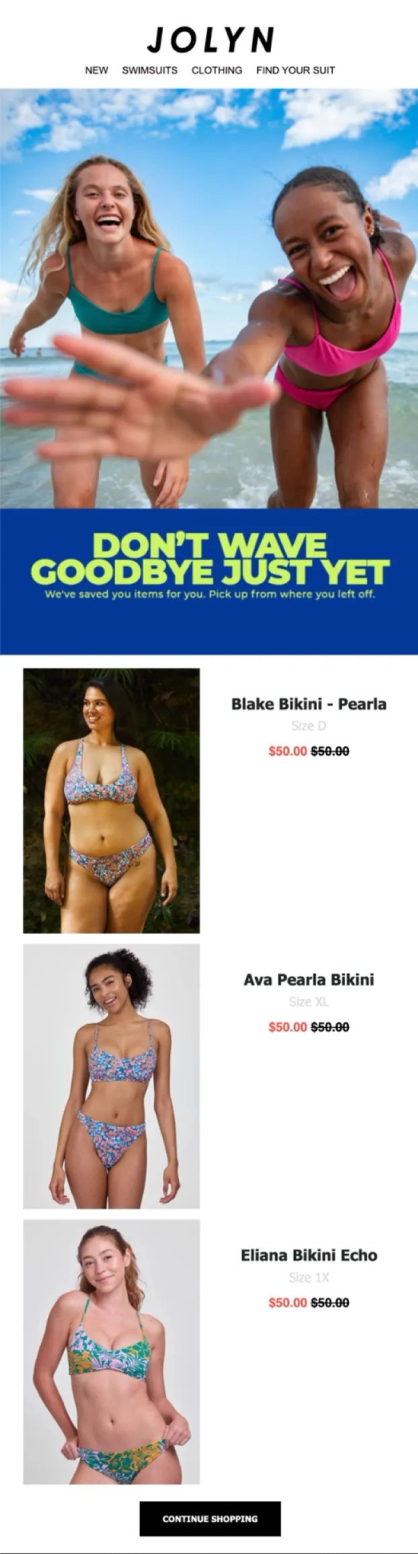
Even if a customer browsed on a laptop and then opened the email on a phone, the full cart should already be loaded when they click through. JOLYN set up exactly this for its abandoned cart emails – clicking any product opens a pre-filled cart on any device.
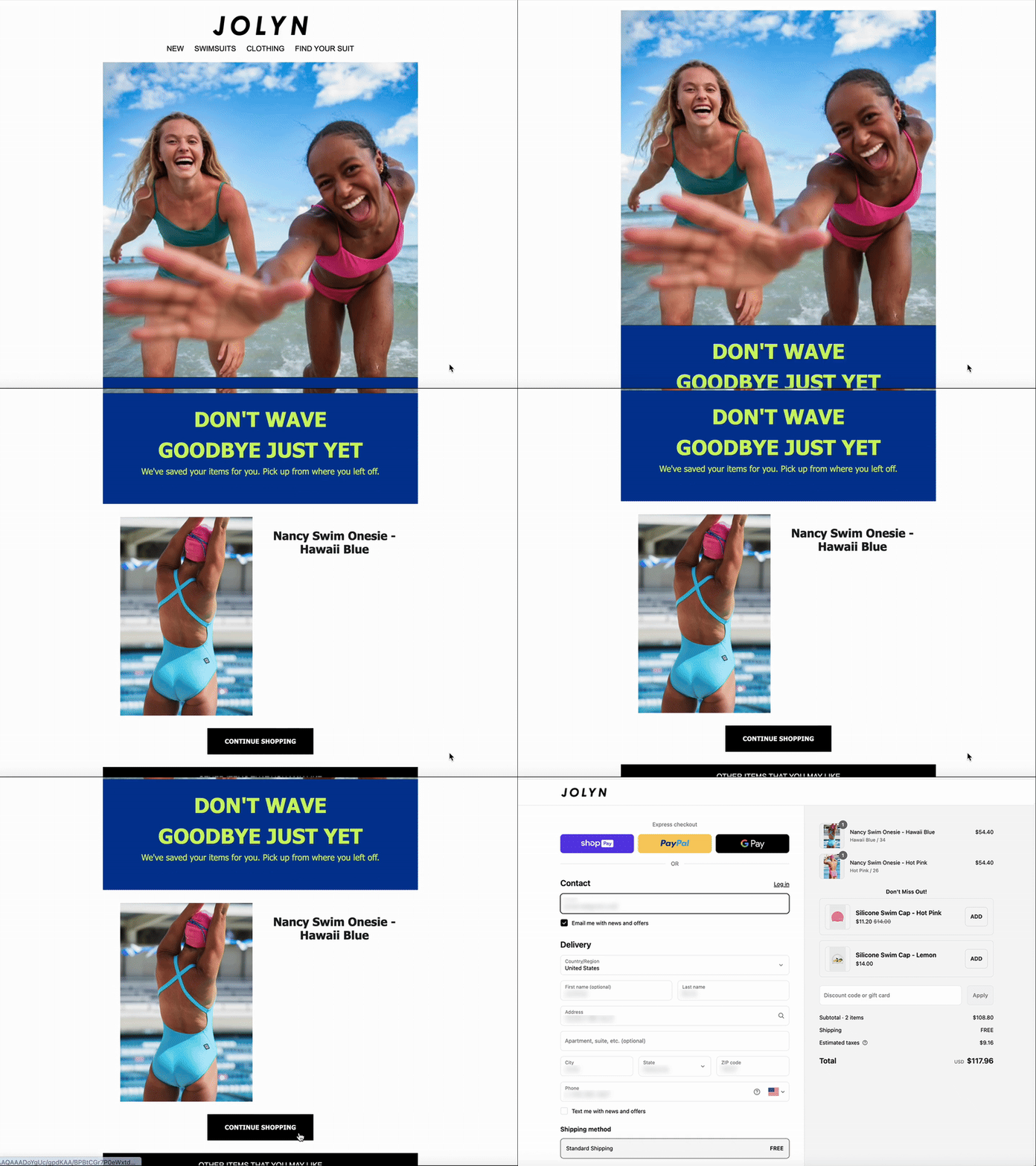
JOLYN’s abandoned cart email
Show the live promo
Make the recovery flow reflect whatever sale is running right now. I Love Linen, an Australian linen brand, uses dynamic content blocks so the email’s banner, subject line, and SMS text auto-update the moment a promotion changes – and revert when it ends. That keeps its recovery messages always-current.
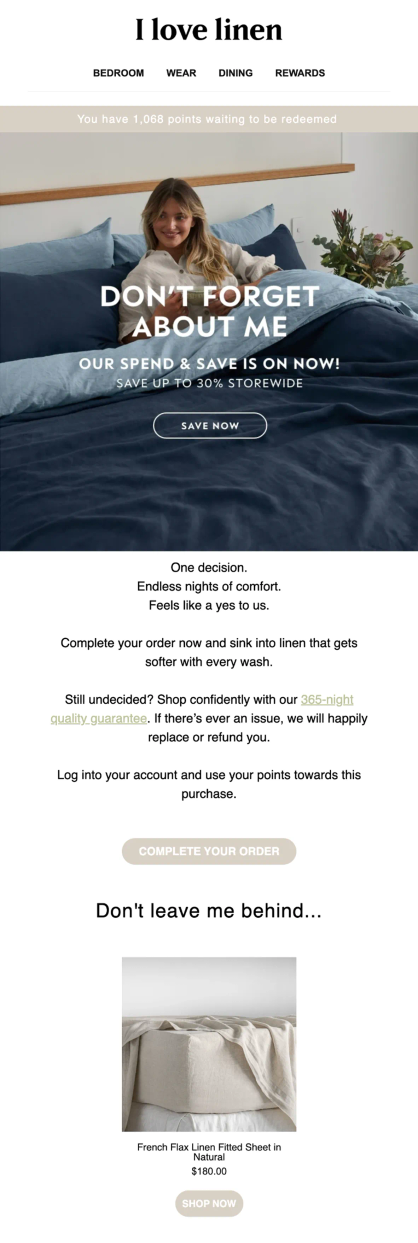
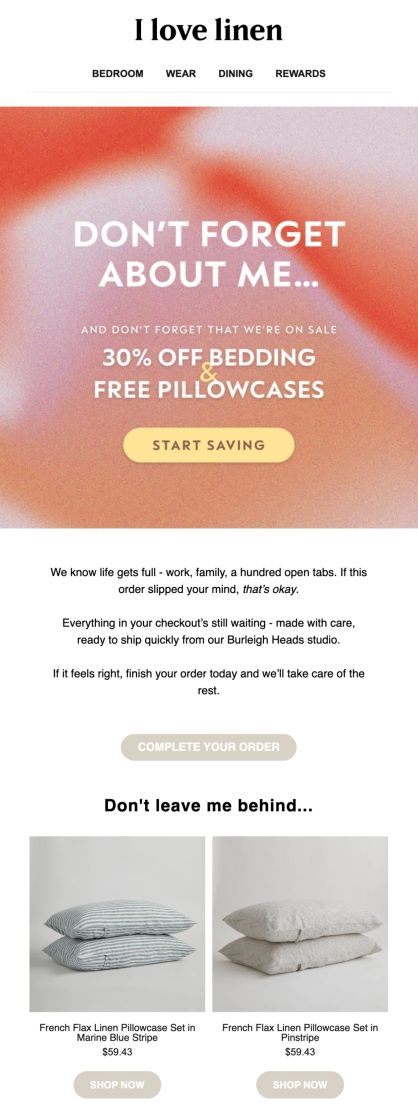
I Love Linen’s recovery email shows whatever sale is live, updated automatically
When the recovery message is relevant – right items, right offer, current promo – it stops feeling like a nag and starts feeling like service.
Lever 6: Win Back Shoppers With Low-Stock and Price-Drop Alerts
In our experience, Low-Stock and Price-Drop Alerts are two of the most profitable recovery triggers. Both work because they’re tied to live data – and that’s exactly why they’re so under-implemented. Simple email tools can’t launch these cart-recovery mechanics, since firing them means reading inventory and pricing in real time. But when everything updates live, you can tell the moment an item is running low or has just dropped in price and reach the shopper while it still matters.
Low-Stock Notifications
They nudge the shoppers who didn’t respond to the cart email but are still comparing. “Only 3 left in your size” signal can reach them before they buy from a competitor. If a shopper didn’t convert and the item then sold out, the next step is a Back-in-Stock alert. You can also combine this with a waitlist and a cross-sell to similar in-stock products while the shopper waits, and you’ve covered both the “I want this item specifically” and “I want something like this” audiences in one mechanic. Running these alerts reliably takes two things: clean product data and real-time retail-store inventory. If store stock and the website aren’t synced, you’ll alert shoppers about items that are already sold out online.
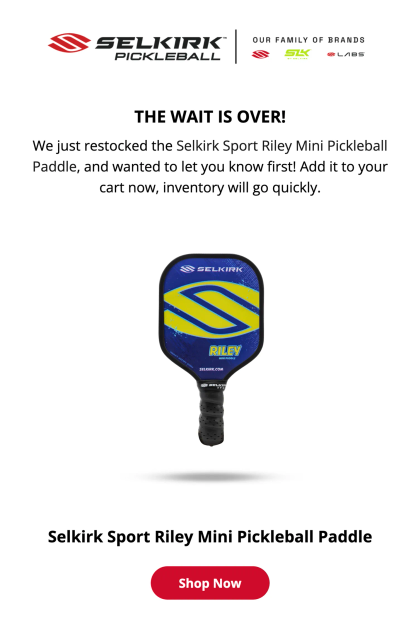
Selkirk’s Back-in-Stock email, powered by real-time inventory
Price Drop Alerts
They fire automatically when a product a shopper viewed or carted goes on sale. Price is a common abandonment driver – 39% of cart abandoners cite “extra costs too high” (shipping, tax, fees) as their top reason (Baymard), so a genuine price drop is one of the most effective ways to re-engage. Coolibar runs exactly this – an alert that notifies shoppers when items they viewed or added to cart go on sale – part of the same rebuild that tripled its abandoned-item flow revenue.
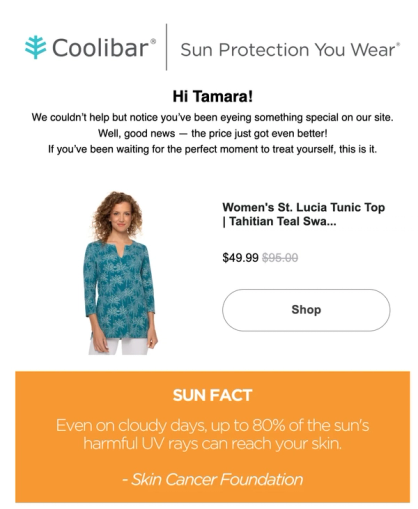
Coolibar’s Price Drop Alert
Timing matters and varies by category. For seasonal apparel, the low-stock reminder usually goes out the same day or within 2–3 days. For furniture or electronics, a week or more can pass before the nudge still feels relevant.
Add live urgency in the message itself. Inventory and price aren’t just triggers – they’re content. “Only 3 left” or “price held for 24 hours” inside the cart reminder turns a passive nudge into a reason to act now, as long as the scarcity is real.
These triggers also fire on their own, independent of the cart flow – catching intent the cart email misses entirely.
Key Takeaways: How to Create an Effective Abandoned Cart Flow
- Build triggers for the whole pre-purchase journey, not just the cart – browse, category, search, wishlist, and checkout each deserve their own flow.
- Segment by customer and product before you pick the message; a generic “you forgot something” underperforms and wastes intent.
- Match the channel to how fast your category buys, and measure per channel – don’t default to a rigid email-then-SMS-then-push cascade.
- Make the message do real work – recommendations, loyalty value, current promos – instead of leaning on a discount.
- Layer in live price-drop and low-stock triggers; they fire on their own and catch intent the cart email misses entirely.
FAQ
- Five rules cover most of it. First, trigger across the whole pre-purchase journey, not just the cart – category view, product view, wishlist, and checkout each deserve their own flow. Second, segment by customer and product; never send a generic “you left something behind” message. Third, pick the channel by how fast your category decides, not a rigid email-then-SMS cascade. Fourth, make the email do real work – recommendations, loyalty reminders, branded creative – instead of leaning on a discount. Fifth, layer in Price Drop and Low Stock triggers to solve the friction directly. Cart recovery isn’t one flow. It’s a system, and the brands winning at it treat it that way.
- Three to four touches across 72 hours is the conventional range. A common cadence: a soft reminder at 1 hour (the “we saved your cart” first touch), a content-led nudge at 24 hours (recommendations, social proof, or back-in-stock signals), and a final offer at 72 hours if the previous touches didn’t convert. Avoid first-touch discounts; they train shoppers to abandon deliberately.
- You can’t, unless you’ve captured contact details before the abandonment – typically through an exit-intent popup, a newsletter signup, a wishlist save, or a logged-in browse session. The two-step framing matters: step one is capturing the contact, step two is recovering with a flow. If your capture rate is low, no recovery program will rescue you. Invest in the capture layer first.
- As little as possible, and not on the first touch. Reserve discounts for the third or fourth email in the flow, if at all, and only after other content levers (recommendations, social proof, loyalty reminders, Back in Stock) have already been tried. Blue Q’s email-driven sales rose 39% YoY not from louder promotions, but from a system of cleaner segmentation and full lifecycle flows.
- Neither, in isolation. Start with the channel that matches how fast your category decides – impulse, time-sensitive categories lean toward SMS or push; considered, high-ticket ones can lean on email – then respect what each customer has opted into. Furniture Fair runs Price Drop Alerts via email and SMS, ensuring customers receive updates through their preferred channel – and email and SMS together drove 11% of their total online and offline revenue. The losing pattern is duplicating the same message across both channels.
- Three layers. First, flow-level revenue and its YoY growth – the dollar value of recovered orders from your recovery flows specifically. Coolibar rebuilt its recovery automations and tripled the revenue from its abandoned-item flows, with total flow revenue up 62% YoY in two months. Second, channel-level attribution – what share of total revenue email and SMS contribute. Third, email engagement hygiene – open rate, click rate, and bounce rate – because a clean sending engine sustains recovery economics over time.
- Cart abandonment means the shopper added items but never started checkout. Checkout abandonment means they entered the checkout flow (shipping details, payment) but didn’t pay. Checkout abandoners have higher intent and respond worse to promotional copy – they were ready to buy and something blocked them. The right first touch on checkout abandonment is support-led (“Anything we can help with on shipping or sizing?”), not promotional. Save offers for later in the flow.
- Most abandonment traces back to friction and surprise costs, so prevention is mostly UX work. Show the full price – shipping, tax, and fees – as early as possible, since 39% of shoppers abandon over unexpected extra costs (Baymard). Offer a clear free-shipping threshold, let people check out as guests, and support the payment methods your customers expect. Keep the checkout short and the running total visible at every step. Recovery flows catch the shoppers who still leave – but the cheapest cart to recover is the one that never gets abandoned.
- Blossom Flower Delivery built a four-stage abandonment journey and drove a 5x increase in recovered revenue. Coolibar rebuilt its flows – including an Abandoned Collection email – and tripled abandoned-item flow revenue. Selkirk added a tiered upsell bar that unlocks free shipping, a hat, and pickleballs as the cart grows. Magnum Bikes ran product-specific flows tied to individual e-bike models and grew online orders 111.7% YoY. The best abandoned cart emails do real work – recommendations, loyalty, and live offers – instead of leaning on a discount.