
Iterable vs Braze vs Maestra: Which Platform Wins Where

Iterable spent spring 2026 folding its whole AI stack into a new brand called Nova and now calls itself an “AI customer engagement platform” – a year after Braze agreed to buy OfferFit for $325 million and rebuilt it as BrazeAI Decisioning Studio. Both now sell the same promise: let the software decide.
Both rebrands outdated much of what’s been written about these platforms, and neither vendor will show you a price without a sales call.
We compared Iterable, Braze, and Maestra across 14 categories using current product pages, docs, and verified reviews from the last 12 months. The short version: Iterable gets you live faster, Braze orchestrates more channels at greater depth, and Maestra hands e-commerce brands the entire stack – email, SMS, CDP, loyalty, personalization – as one product.
Quick Verdict – the Right Platform for Three Different Buyers
Choose Iterable if you want a quicker implementation and support that reviewers praise, and Braze if you need deeper orchestration across more channels; both are enterprise cross-channel platforms that now lead with AI. Maestra plays a different game: mid-size, enterprise, and rapidly scaling e-commerce brands get email, SMS, a real-time CDP, built-in loyalty, and site personalization on one customer profile, with a dedicated team included.
Iterable – best for consumer brands that want cross-channel messaging live in months, not quarters, backed by support reviewers consistently praise. Custom pricing (contact sales).
Braze – best for enterprise app-first companies orchestrating a dozen channels, with engineers available to feed the machine. Custom pricing (contact sales).
Maestra – best for e-commerce brands tired of paying for an ESP, a CDP, a loyalty app, and a personalization tool separately. From $2,000/mo (CDP + unlimited email; first 100,000 active profiles).
Content:
Comparison Summary
Feature | Iterable | Braze | Maestra |
|---|---|---|---|
Omnichannel Flows | ⭐⭐⭐⭐ Studio builds Adaptive Journeys across channels | ⭐⭐⭐⭐⭐ Canvas remains the orchestration benchmark | ⭐⭐⭐⭐ Flows reach on-site content and loyalty |
Customer Data & Segmentation | ⭐⭐⭐⭐ Flexible profiles, but fields can’t be edited or deleted | ⭐⭐⭐ A composable data platform, not a CDP | ⭐⭐⭐⭐⭐ Real-time CDP is the platform’s core |
⭐⭐⭐⭐ Stable, reliable sending; template editor frustrates designers | ⭐⭐⭐⭐ High volume plus AMP; editor pushes users back to HTML | ⭐⭐⭐⭐⭐ Unlimited sends, AMP, up to 2M emails/hour | |
SMS & WhatsApp | ⭐⭐⭐⭐ SMS, WhatsApp, built-in compliance tools | ⭐⭐⭐⭐⭐ SMS, RCS, WhatsApp, LINE, KakaoTalk | ⭐⭐⭐⭐ SMS, MMS, RCS, WhatsApp with published US rates |
Mobile Push & In-App | ⭐⭐⭐⭐ Push, in-app, Embedded Messaging without app updates | ⭐⭐⭐⭐⭐ Live Activities, Content Cards, Feature Flags | ⭐⭐⭐ Push as a journey channel, not an app toolkit |
AI Capabilities | ⭐⭐⭐⭐ Nova launched April 2026 – ambitious, young | ⭐⭐⭐⭐⭐ Decisioning Studio GA; agents in every edition | ⭐⭐⭐⭐ 14 prebuilt algorithms plus Next Best Action |
Site Personalization | ⭐⭐⭐ Embedded Messaging places content, doesn’t rewrite pages | ⭐⭐⭐ Overlays, banners, landing pages – messaging-shaped | ⭐⭐⭐⭐⭐ Catalog, product pages, and minicart adapt per visitor |
Product Recommendations | ⭐⭐⭐ Catalog feeds message-level picks | ⭐⭐⭐ AI Item Recommendations inside messages | ⭐⭐⭐⭐⭐ Case-verified share-of-sales impact |
Loyalty & Promotions | ⭐⭐ Talon.One and Scrollmark do the work | ⭐⭐ Talon.One and Voucherify via Connected Content | ⭐⭐⭐⭐⭐ Points, tiers, referrals, promo codes built in |
Reporting & Analytics | ⭐⭐⭐ Reviewers route serious questions to a warehouse | ⭐⭐⭐ Query Builder helps; cumulative impact stays foggy | ⭐⭐⭐⭐ Revenue attribution per channel on one profile |
Ease of Use & Implementation | ⭐⭐⭐⭐ Three months to implement on G2’s average | ⭐⭐⭐ Four months average; Liquid steepens the ramp | ⭐⭐⭐⭐ Dedicated team runs the ramp with you |
Customer Support & Services | ⭐⭐⭐⭐ Support is the top praise theme, with turnover caveats | ⭐⭐⭐ Paid onboarding tiers, slow-ticket complaints | ⭐⭐⭐⭐⭐ Named Forward Deployed Marketer and migration included in the price |
Integrations & Shopify | ⭐⭐⭐⭐ Smart Ingest (5 free syncs/mo); Segment, Snowflake, Shopify | ⭐⭐⭐⭐⭐ Alloys ecosystem plus warehouse-native ingestion | ⭐⭐⭐⭐ Major carts natively; custom builds during onboarding |
Pricing | ⭐⭐ No pricing page exists at all | ⭐⭐ Four editions, MAU plus Action Credits, zero figures | ⭐⭐⭐⭐ Published entry price, month-to-month |
Iterable vs Braze vs Maestra: Omnichannel Flows
Omnichannel flows winner: Braze – Canvas still sets the standard everyone else describes themselves against.
Iterable | Braze | Maestra |
|---|---|---|
⭐⭐⭐⭐ Visual Studio, journeys praised for reliability | ⭐⭐⭐⭐⭐ Deepest branching and testing toolkit | ⭐⭐⭐⭐ One flow spans messages, site, and loyalty |
Iterable: Reliable Journeys, Drafted From a Prompt
Iterable builds journeys in a visual Studio – “one visual studio, every channel connected” is the product’s own framing – and its 2026 positioning pushes Adaptive Journeys that move past static if/then rules, with a Journey Agent that drafts flows from a prompt.
Reliability is the recurring compliment: one enterprise reviewer wrote this February that “campaigns build cleanly, journeys function as expected, and segmentation updates predictably.” The friction shows up in housekeeping – editing journeys and copying campaigns leaves behind duplicates that reviewers describe as unnecessary noise.
Braze: The Richest Branching, a Steep Learning Curve
Canvas gives Braze the richest orchestration vocabulary of the three: decision splits, action and audience paths, experiment branches, and AI-picked winning paths, all tested at a scale – trillions of messages and Canvas actions processed in 2025 – that few marketing teams will ever stress.
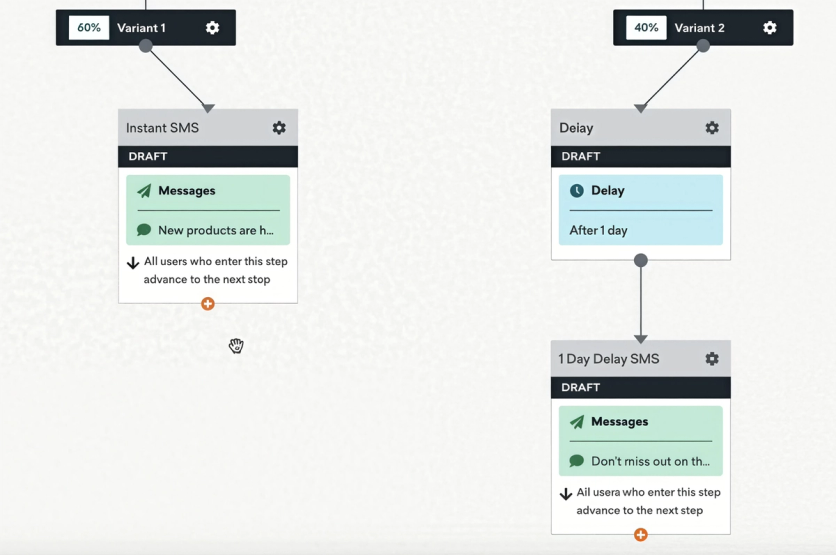
Braze Canvas tests an instant SMS against one sent a day later, with traffic split 60/40 between the two paths
The cost is fluency. A reviewer this July summed up the trade: the platform carries “a steep learning curve and heavy QA burden thanks to its reliance on Liquid.” Canvas rewards teams that treat it like software, because it is.
Maestra: Journeys That Also Change the Site and Award Points
Maestra’s flows cross a boundary the other two respect: the same journey that sends an email and a text can also swap the banner a customer sees on the website and credit loyalty points when they buy – one builder, one profile, no sync.
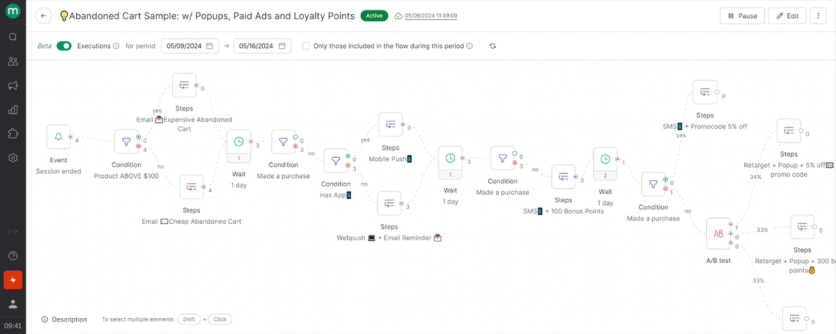
One Maestra abandoned-cart flow sends email, SMS, and push, retargets through ads, shows a popup, and awards loyalty points
The flow-level results are published. JOLYN grew winback flow conversion 9x with AI-powered automation, and Blossom Flower Delivery saw a 5x revenue boost from its advanced abandonment journey. For app-event orchestration at Braze’s depth, though, Canvas keeps the crown.
Iterable vs Braze vs Maestra: Customer Data & Segmentation
Customer data winner: Maestra – the only platform here where the CDP is the product, not a prerequisite.
Iterable | Braze | Maestra |
|---|---|---|
⭐⭐⭐⭐ No-SQL segmentation, rigid schema underneath | ⭐⭐⭐ Says you don’t need a CDP; warehouse sync built in | ⭐⭐⭐⭐⭐ Identity resolution and live segments included |
Iterable: No-SQL Segments on a Schema That Is Hard to Change
Iterable’s pitch is marketer independence – “no SQL, no engineering bottlenecks” – built on unified data profiles and Smart Ingest, a warehouse connector co-developed with Hightouch that pulls from Snowflake or BigQuery through a no-code UI, free for up to five production syncs a month.
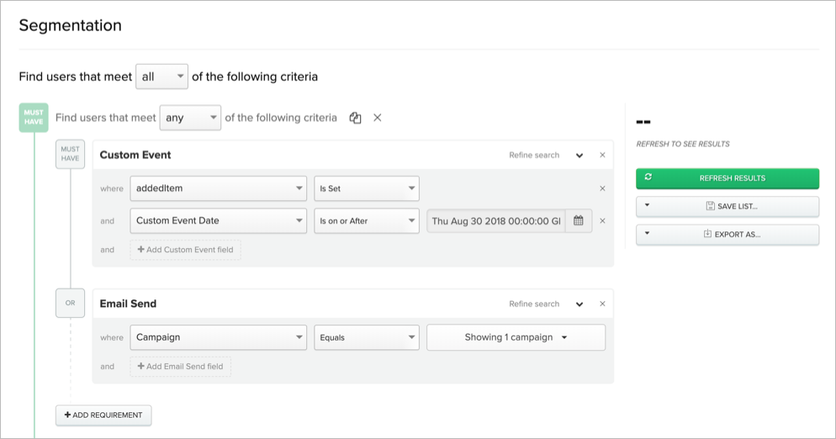
Iterable’s segment builder combines custom events with email-send history, no SQL required
The ceiling is schema rigidity. A VP of CRM operations reviewing in April – in an otherwise glowing writeup – listed the gaps plainly: “I need to be able to delete fields. I need to be able to change field type… I need to have a proper Sandbox.” Data decisions made during setup are hard to walk back.
Braze: A Composable Data Platform, Not a CDP
Braze answers the CDP question itself: its data platform is not a CDP but “a composable data platform purpose built for customer engagement,” and “you do not need a CDP to use Braze” (Braze FAQ). Cloud Data Ingestion covers Snowflake, Redshift, Databricks, BigQuery, and Microsoft Fabric, with automated identity resolution layered on top.
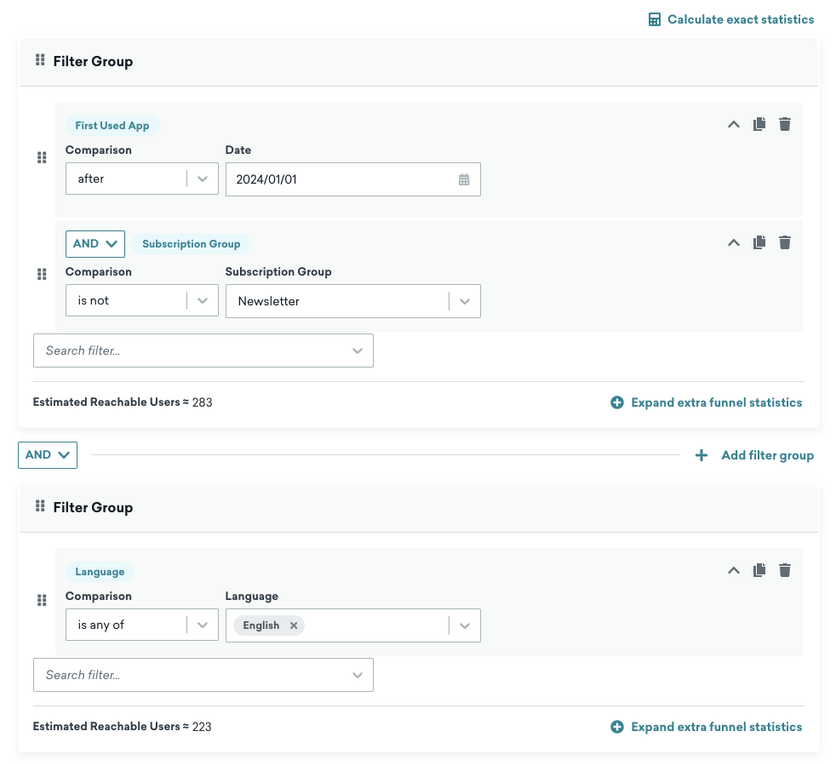
Braze’s segment builder stacks filter groups and shows estimated reachable users as each condition is added
Buyers without that infrastructure feel the gap in small print. One reviewer this January noted the base account caps segment extensions at 25 – more cost extra.
Maestra: Merged Profiles, Continuously Updated Segments
Maestra’s real-time CDP merges profiles across email, phone, loyalty ID, and device as events happen, and segments recalculate continuously – no warehouse project, no second contract, no field you can’t fix later.
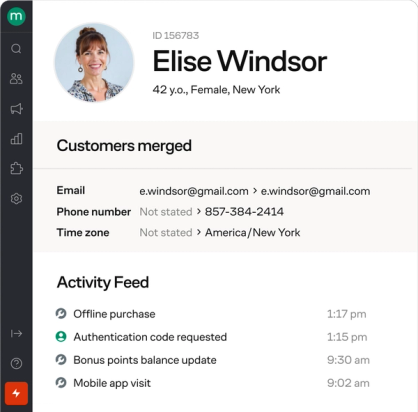
The Maestra profile behind every segment: merged email, phone, and time zone plus offline and app activity in one feed
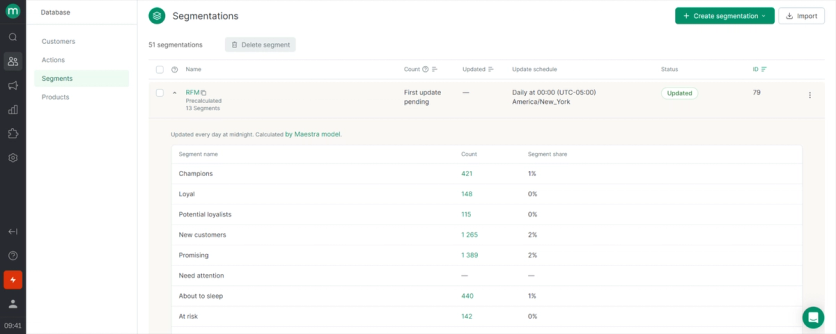
Coolibar keeps its whole customer base in one database with built-in analytics and builds segments with AND/OR logic; campaign revenue across email and SMS rose 33.6% year over year. Sena sells through separate US and EU stores but keeps every shopper in one Maestra account, so a customer who moves between regions stays a single profile instead of showing up as churn, and one campaign can reach either region or both without duplicate sends. Total revenue across the two markets grew 2.2x year over year.
Iterable vs Braze vs Maestra: Email
Email winner: Maestra – unlimited sends and case-verified revenue growth against two metered channels.
Iterable | Braze | Maestra |
|---|---|---|
⭐⭐⭐⭐ Rock-solid delivery, dated template tooling | ⭐⭐⭐⭐ AMP and scale, but the editor sends you to HTML | ⭐⭐⭐⭐⭐ No send caps, no per-email fees |
Iterable: Stable Sending, a Template Editor Designers Outgrow
Email is the channel Iterable’s reputation rests on. Dynamic templates and content blocks handle personalization, and stability is the word reviewers keep reaching for – one called it “significantly more stable and reliable than other ESPs I’ve worked in.”
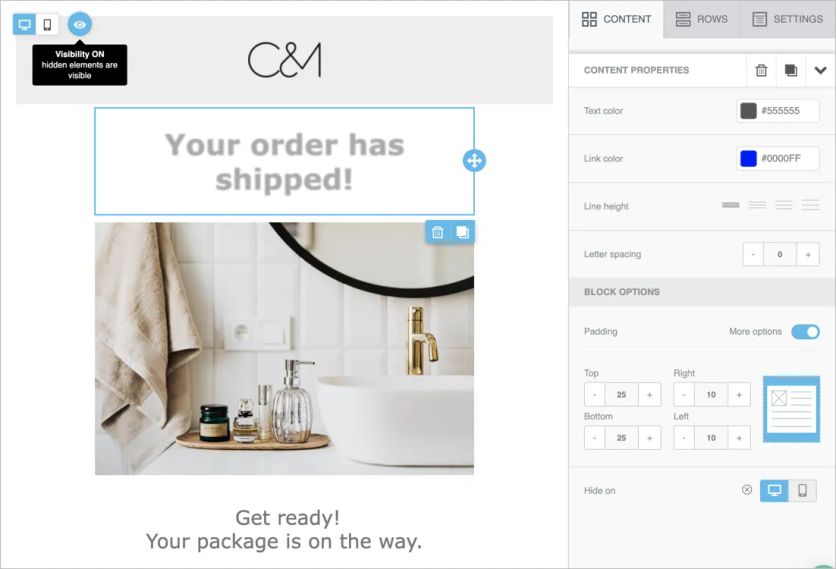
Iterable’s drag-and-drop email editor, here building a shipping-confirmation template
The template editor draws the opposite reaction from design-minded users: a designer reviewing in December found the three-level template system limiting, with the beginner tier “[not] sufficient for what needs to be done.”
Braze: AMP and IP Warming, a Bare-Bones Editor
Braze sends marketing and transactional email at volume, supports AMP for Email interactivity, and backs it with deliverability services and IP warming expertise. The gap sits in the composer: a CRM specialist wrote this June that “the drag-and-drop editor is fairly bare-bones, and putting together a campaign that genuinely looks polished tends to push me back into HTML.”
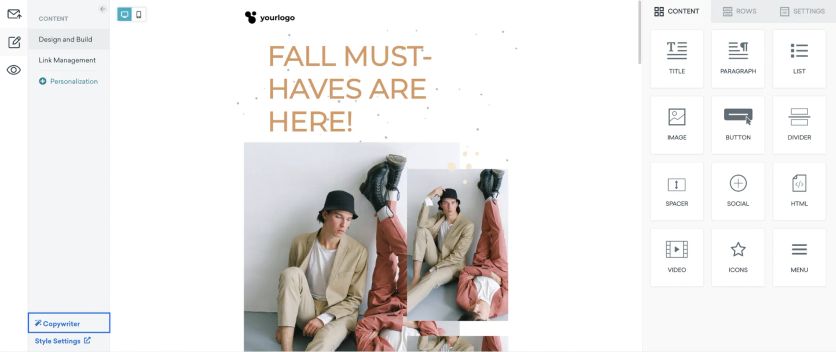
Braze’s drag-and-drop email editor, with an AI copywriter and a personalization panel
Email volume also lives inside Braze’s consumption model, so a bigger program means a bigger bill.
Maestra: No Send Caps, Up to 2 Million an Hour
Maestra treats email as an unmetered utility: unlimited sends on every plan, a proprietary composer, AMP for Email, and bulk campaigns that go out at up to 2 million emails per hour.
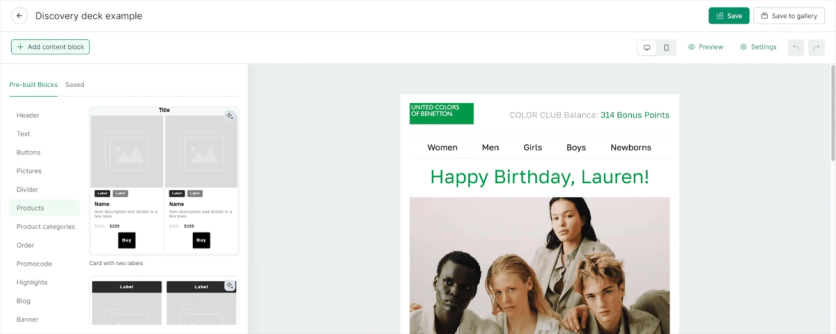
Maestra’s email composer pulls the reader’s loyalty balance into the header, next to pre-built product and promo-code blocks
The revenue evidence is specific and recent. Blue Q went from a weekly blast and two automated flows to welcome-to-win-back coverage, with selling blocks, promo codes, and recommendations built into its templates. Its email-driven sales rose 39% over the same August–December stretch a year before. Selkirk Sport grew email-attributed revenue 55% year over year on rebuilt segmentation and abandoned-cart flows.
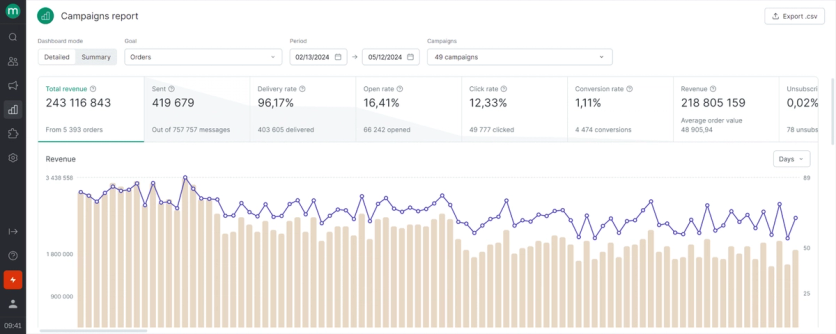
Maestra’s campaigns report attributes revenue to each campaign alongside deliveries, opens, clicks, and conversions
Iterable vs Braze vs Maestra: SMS & WhatsApp
Messaging channels winner: Braze – nobody else here matches its conversational-channel roster.
Iterable | Braze | Maestra |
|---|---|---|
⭐⭐⭐⭐ SMS and WhatsApp plus TCPA and CTIA compliance tools | ⭐⭐⭐⭐⭐ SMS, RCS, WhatsApp, LINE, KakaoTalk | ⭐⭐⭐⭐ Four channels, transparent US per-message rates |
Iterable: A Competent SMS and WhatsApp Lineup
Iterable covers SMS and WhatsApp alongside its app channels, with a suite of SMS compliance and list-growth tools built for TCPA, CTIA, and CAN-SPAM rules (Iterable) – a nod to how regulated the channel has become.
It’s a competent lineup rather than a differentiating one; the Asian messenger channels and RCS branding features Braze sells aren’t part of the story.
Braze: RCS, LINE, and KakaoTalk on Consumption Pricing
Braze’s channel list is the widest in this comparison: SMS, MMS, and RCS sold as one branded-messaging package, plus WhatsApp, LINE, and KakaoTalk Messenger. A brand running lifecycle programs across the US, Europe, and Asia can genuinely stay on one platform.
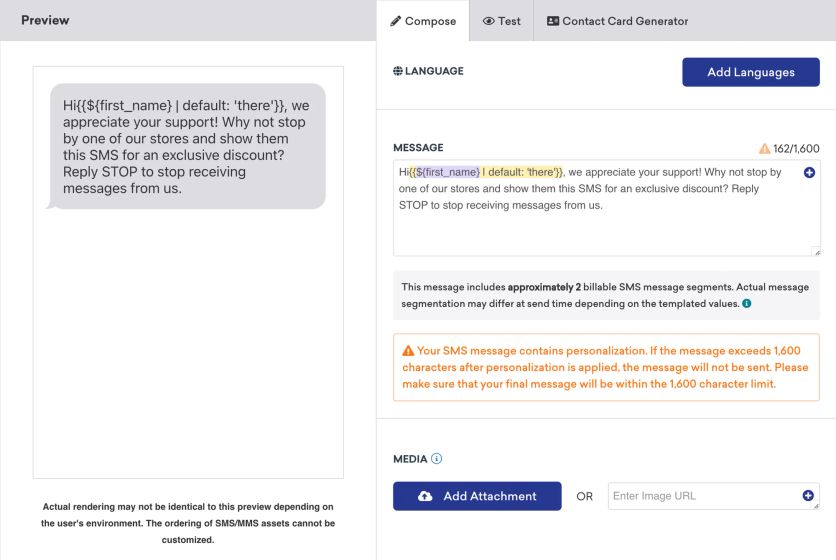
Braze’s SMS composer shows how many billable message parts a personalized text will use before it sends
That breadth participates in consumption pricing – a developer reviewing in May observed that “the per-message model scales unpredictably and add-on fees for webhooks, email, and contacts pile up fast.”
Maestra: A Published US Rate of $0.0035 per Text
Maestra sends SMS, MMS, RCS, and WhatsApp with US SMS rates published at $0.0035 per message plus carrier fees – a number you can budget before any sales call.
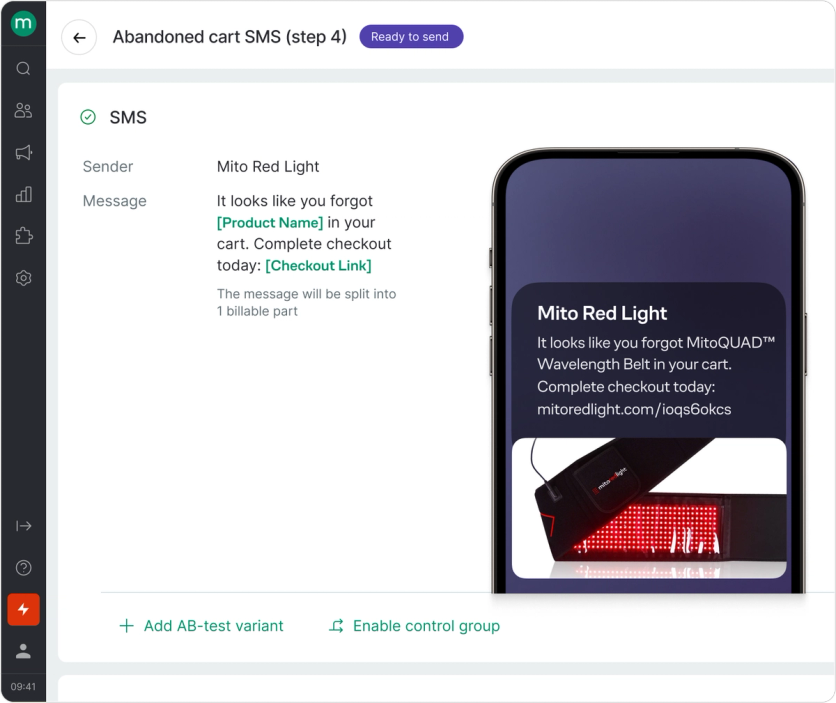
Maestra’s SMS editor fills in the product and checkout link, with an A/B variant and a control group one click away
Its strongest messaging story is operational. MPD lifted WhatsApp deliverability from 53% to above 80% – while cutting send costs 10% – with an opt-out and quarantine system built with Maestra’s team. Selkirk Sport’s texts brought in 149% more attributed revenue than a year earlier.
Iterable vs Braze vs Maestra: Mobile Push & In-App
Push and in-app winner: Braze – this is the territory it was born on.
Iterable | Braze | Maestra |
|---|---|---|
⭐⭐⭐⭐ Embedded Messaging ships content without app releases | ⭐⭐⭐⭐⭐ Live Activities, Content Cards, Feature Flags | ⭐⭐⭐ Push joins journeys; no app-infrastructure tooling |
Iterable: In-App Content Without an App Release
Iterable handles mobile push, in-app messages, in-browser messages, and web push, and its Embedded Messaging places native-feeling carousels, banners, and feeds inside apps and sites – updatable without an app-store release, working for anonymous and known users alike.
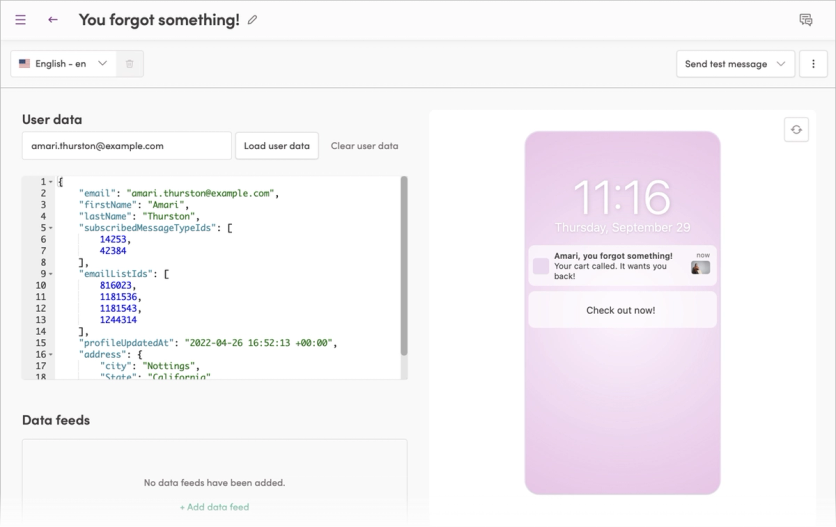
Iterable’s push editor previews a cart reminder on the lock screen using live user data
Braze: Built for Apps, From Content Cards to Surveys
Braze began as a mobile-engagement company, and the toolkit shows it: rich push, iOS Live Activities, in-app overlays and surveys, persistent Banners, Content Cards as an in-app inbox, and Feature Flags to stage rollouts by audience. For app-first brands, Braze doubles as app infrastructure.
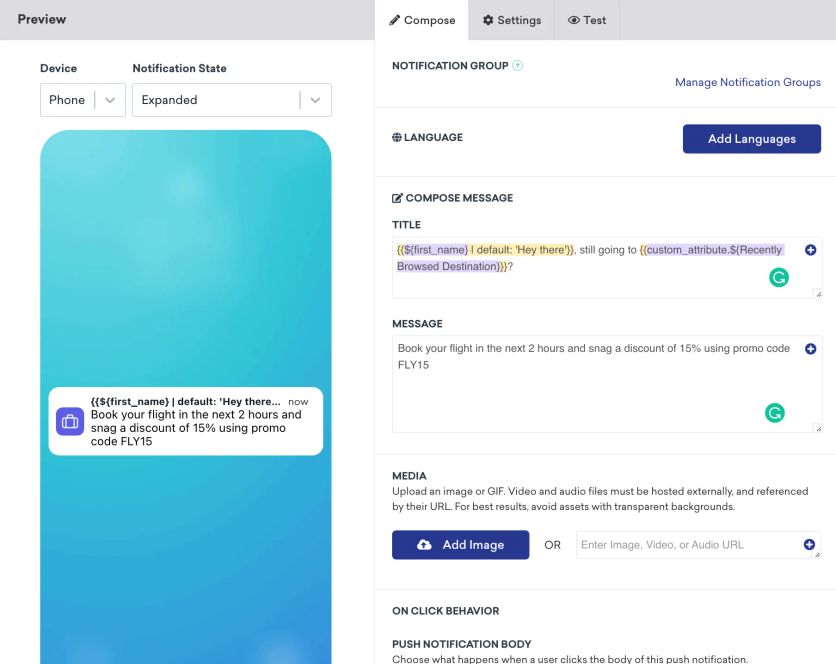
Braze’s push composer previews the notification on a phone and personalizes it with customer data
Maestra: Push Inside Journeys, No App-Platform Layer
Maestra includes mobile and web push as journey channels, sharing segments, frequency caps, and suppression rules with email and SMS. What it doesn’t offer is the app-platform layer – Live Activities, feature flagging, in-app surveys – because its center of gravity is the e-commerce storefront, not the app.
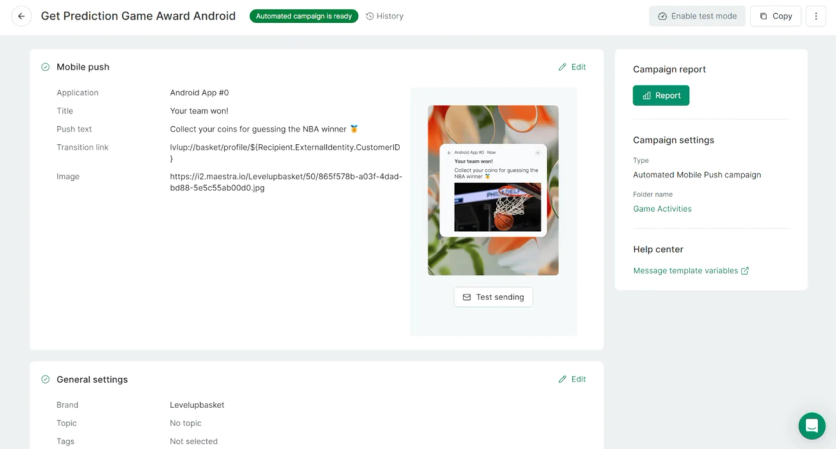
An automated Maestra push for Level Up Basketball deep-links app users straight to the coins they won
Iterable vs Braze vs Maestra: AI Capabilities
AI winner: Braze – its decisioning engine is generally available while rivals’ agents are still in beta or newly launched.
Iterable | Braze | Maestra |
|---|---|---|
⭐⭐⭐⭐ Nova is the boldest rebrand, with a short track record | ⭐⭐⭐⭐⭐ OfferFit-powered Decisioning Studio, GA | ⭐⭐⭐⭐ Recommendations and a daily send decision |
Iterable: Nova, Launched in April 2026
Iterable’s Nova launch in April 2026 (Business Wire) reorganized everything under three headings – Nova Insights, Nova Decisioning, and Nova Agents – with a Nova Agent that generates copy and Handlebars logic, builds journeys, and runs experiments. Channel Decisioning, Send Time Decisioning, and Predictive Audiences carry the older machine-learning work forward, and Iterable brands the whole approach “Glassbox AI”: explainable, governed, no black box.
It’s a coherent vision with a short track record – most of it shipped this spring.
Braze: OfferFit-Based Decisioning, Generally Available
BrazeAI’s centerpiece is Decisioning Studio, built on OfferFit, a deal announced at $325 million that closed in June 2025 (Braze press release). It’s a multi-agent engine that picks message, channel, and timing per customer, and it’s generally available today. Around it sit predictive churn and events, Intelligent Timing, and newer AI tools – Agent Console, Operator, and Content Optimizer – that come with every edition (Braze pricing).
The meter runs, though: some AI products consume Action Credits, and a product manager reviewing in April found that “the credit-based consumption or ‘AI-utility’ pricing can become unpredictable.”
Maestra: Recommendation Models and a Daily Send Decision
Maestra ships 14 prebuilt recommendation algorithms, from personal picks to category bestsellers. Next Best Action adds a neural network that reads each shopper’s views and purchases at different price points, plus their email opens and clicks, and once a day decides whether today is a good day to email them; a yes starts a flow with personalized product picks.
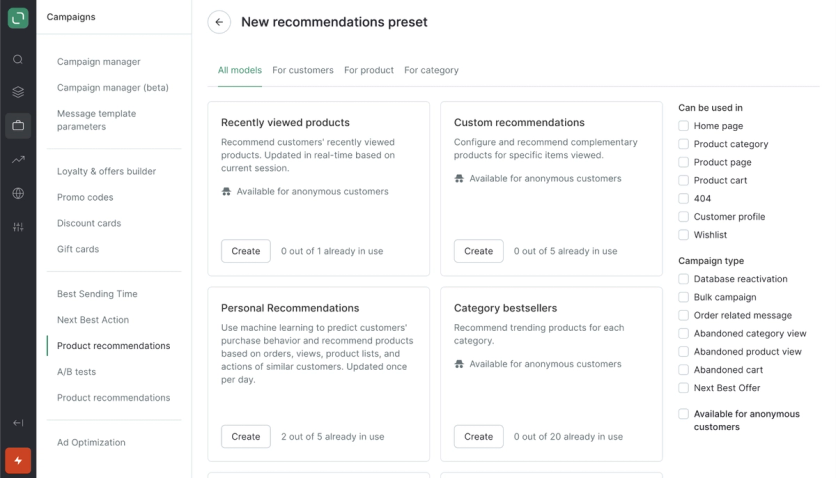
Maestra’s presets list recommendation models next to Next Best Action and Best Sending Time
The applied results are concrete: Enlightened Equipment runs Maestra’s AI-powered recommendations on its home page, product pages, cart, and 404 and empty-search pages, choosing products by each shopper’s behavior, gender, and frequently bought combinations. Compared with a control group in A/B testing, its website conversion rate grew 15%.
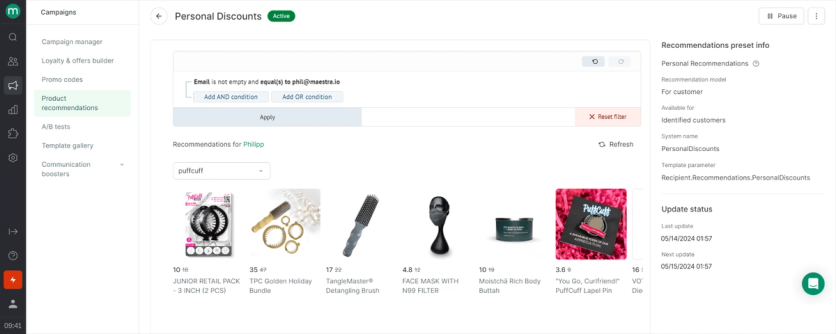
A Maestra personal-recommendations preset previews the picks for an individual shopper before it goes live
Iterable vs Braze vs Maestra: Site Personalization
Site personalization winner: Maestra – the only one of the three that changes the website itself.
Iterable | Braze | Maestra |
|---|---|---|
⭐⭐⭐ Native placements and anonymous-visitor targeting | ⭐⭐⭐ Overlays, banners, and no-code landing pages | ⭐⭐⭐⭐⭐ Catalog, PDPs, and minicart adapt in session |
Iterable: Placements on the Page, Anonymous Visitors to Google Ads
Iterable’s on-site tools deliver messages into pages – Embedded Messaging placements, in-browser messages, web push – rather than rewriting the pages themselves. The interesting 2026 addition is Unknown User Activation, which identifies high-intent anonymous visitors and now feeds a Google Ads integration.
Braze: Overlays and Landing Pages, Not Catalog Changes
Braze’s web surface follows the same messaging logic: in-browser overlays and slideups, persistent Banners, Content Cards embedded as feeds, and no-code Landing Pages. Useful campaign machinery – but reordering a catalog or personalizing product-page content per visitor sits outside the model.
Maestra: Store Pages That Adapt to Each Visitor’s Profile
Maestra personalizes the storefront itself: catalog pages, product detail pages, minicart, and promotional overlays all adjust to the visitor’s live profile, using the same segments that drive email and SMS.
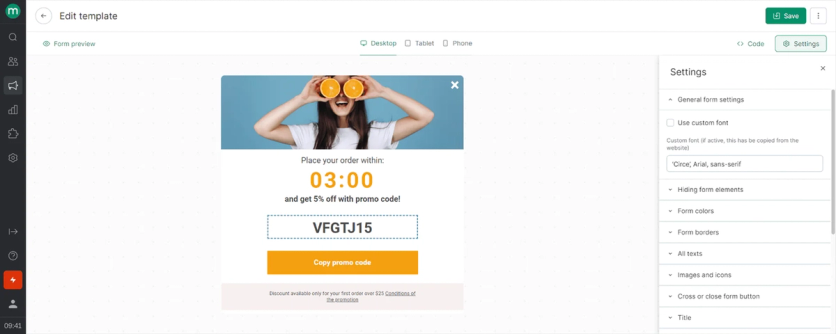
A Maestra countdown pop-up with a one-time promo code, edited in the on-site template builder
Blossom Flower Delivery generates 9% incremental revenue from website personalization – validated against control with Google Optimize – with social-proof notification blocks alone lifting conversion 34%.
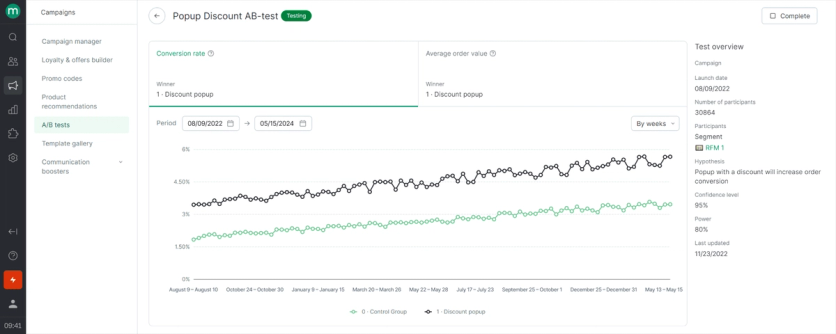
Maestra’s A/B test report tracks a discount pop-up against a control group week by week
Iterable vs Braze vs Maestra: Product Recommendations
Recommendations winner: Maestra – the only engine here with published share-of-sales numbers behind it.
Iterable | Braze | Maestra |
|---|---|---|
⭐⭐⭐ Catalog personalizes message content | ⭐⭐⭐ AI Item Recommendations inside campaigns | ⭐⭐⭐⭐⭐ On-site, email, and SMS with verified impact |
Iterable: Catalog-Fed Picks for Messages
Iterable Catalog stores product and content data and powers personalized picks inside messages. It does its job as a messaging-personalization layer; on-site merchandising isn’t the ambition.
Braze: AI Item Recommendations Through Liquid
Braze’s AI Item Recommendations draws on Catalogs data and inserts picks into any channel through Liquid and Connected Content – strong for back-in-stock and price-drop moments, but again scoped to messages rather than the storefront.
Maestra: Recommendations With a Measured Share of Revenue
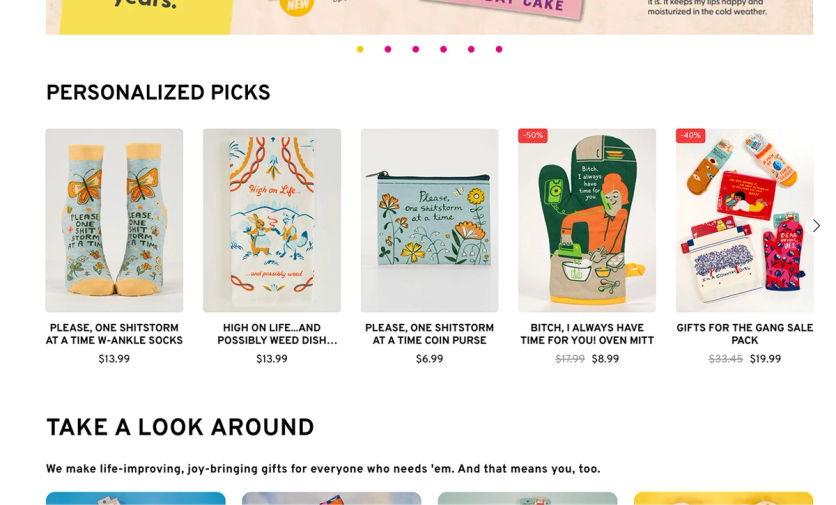
Maestra’s recommendations run everywhere the customer looks: website blocks, emails, and texts, all fed by the same real-time profile. At JOLYN, product recommendations influence 7% of sales; at Svaha USA, they assist 11.2% of total revenue.
Iterable vs Braze vs Maestra: Loyalty & Promotions
Loyalty winner: Maestra – a built-in program versus two partner directories.
Iterable | Braze | Maestra |
|---|---|---|
⭐⭐ Talon.One and Scrollmark integrations | ⭐⭐ Talon.One and Voucherify via Connected Content | ⭐⭐⭐⭐⭐ Loyalty on the same profile as messaging |
Iterable: Offers and Social Loyalty via Talon.One and Scrollmark
Iterable’s loyalty answer is a referral to its partner directory – Talon.One for offers and coupons, Scrollmark for social loyalty. Iterable positions itself as the messaging layer around your loyalty program, which is accurate and also the limitation.
Braze: Talon.One and Voucherify via Connected Content
Braze takes the same route with the same lead partner: Talon.One and Voucherify plug in through Connected Content. It works, and it means a second vendor, a second data model, and loyalty balances living outside the platform that talks to your customers.
Maestra: Loyalty Balances on the Same Profile as Every Message
Maestra’s built-in loyalty – points, tiers, referrals, promo codes, gift cards – shares a profile with every message and every on-site block, so flows award points and emails show balances without any integration at all.
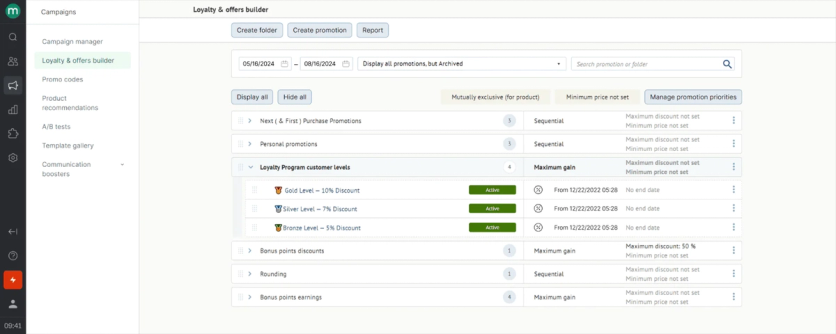
Maestra’s loyalty builder runs Gold, Silver, and Bronze tiers next to bonus-point rules and personal promotions
Urban Armor Gear retired Yotpo Loyalty (along with Klaviyo and Frosmo) in exactly this consolidation, cutting marketing-stack costs 64% – about $100,000 a year – and relaunching loyalty around a rule customers finally understand: “Instead of confusing rules, we have a simple 1 point = $1 offer.”
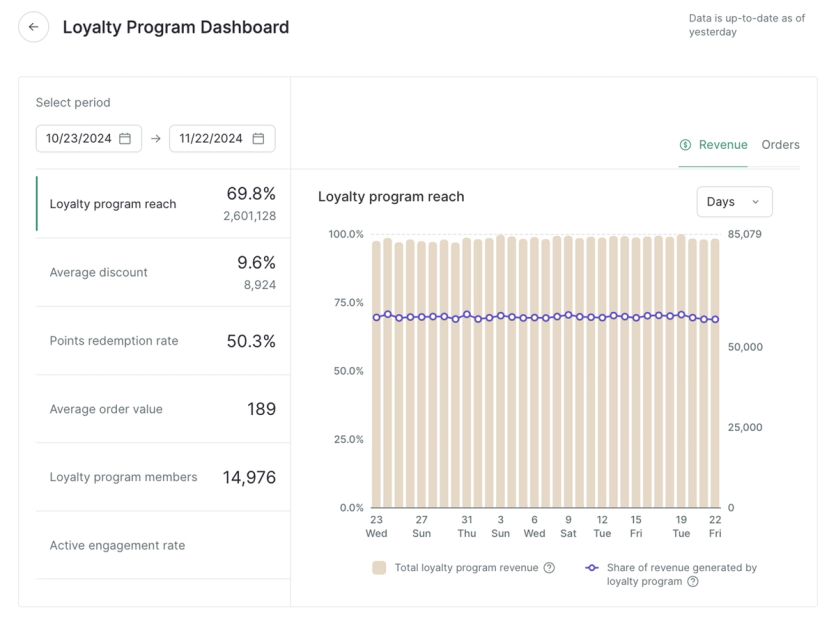
Iterable vs Braze vs Maestra: Reporting & Analytics
Reporting winner: Maestra – cross-channel revenue answers without standing up a BI project.
Iterable | Braze | Maestra |
|---|---|---|
⭐⭐⭐ Functional, but not a source of truth per its own fans | ⭐⭐⭐ Custom reports exist; cumulative impact doesn’t | ⭐⭐⭐⭐ Channel and flow revenue on one profile |
Iterable: Functional Reports, a Warehouse for the Hard Questions
The most telling critique of Iterable’s reporting comes from a five-star review: a senior marketing-ops manager wrote in June that reporting is “functional but not deep enough to be your single source of truth” – most mature teams end up connecting a warehouse or BI tool to answer leadership’s questions.
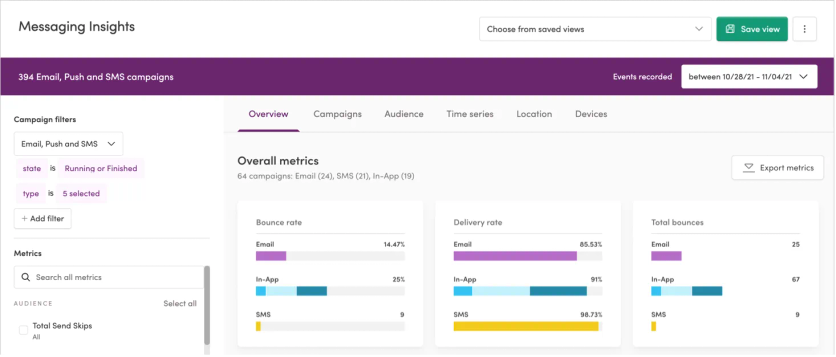
Iterable’s Messaging Insights compares bounce and delivery rates across email, push, and SMS campaigns
Braze: Query Builder and Holdouts, No Cumulative View
Braze offers custom reports and dashboards, SQL-powered Query Builder, and holdout-based impact reporting, with Currents streaming raw events to your warehouse for everything deeper. Reviewers still hit the ceiling – one wrote this July that “the biggest gap is reporting… no holistic way to see the cumulative impact of my lifecycle programs.”
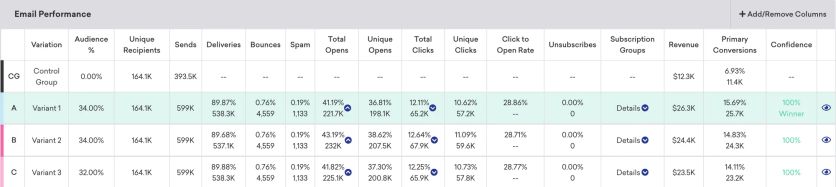
Braze’s email performance table compares variants against a control group and flags the winner by confidence
Maestra: Revenue Attribution With No BI Project
Maestra measures revenue per channel, campaign, flow, and segment against the same live profile that does the sending, so attribution comes built, not assembled. It’s how cases can publish numbers like D-Steimatzky’s – direct communications contributing 29.4% of revenue – as a standing dashboard figure rather than a quarterly analytics exercise.
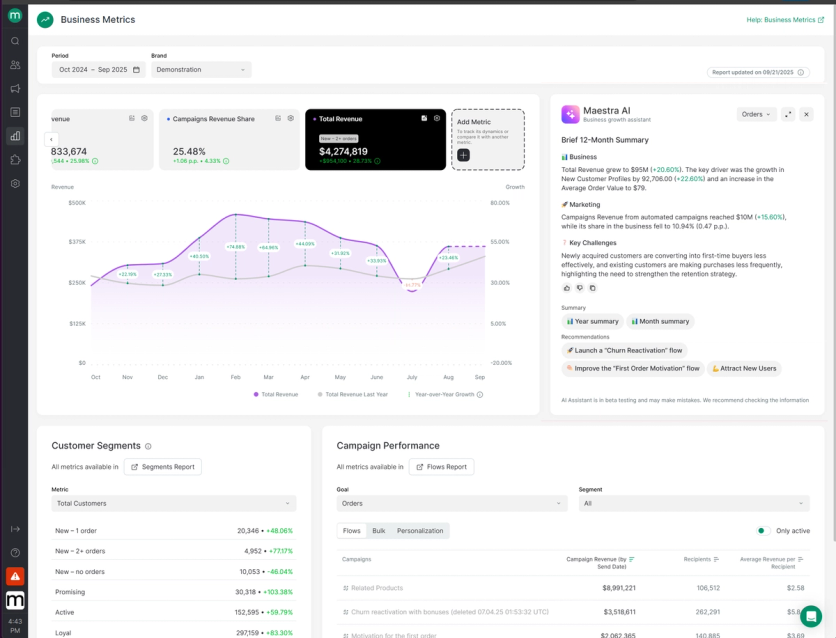
Maestra’s Business Metrics dashboard puts revenue, segment movement, and campaign performance on one screen, with an AI summary
App-style product analytics (funnels, uninstall tracking) isn’t the aim; marketing revenue accounting is.
Iterable vs Braze vs Maestra: Ease of Use & Implementation
Ease of use winner: Iterable – the fastest self-serve ramp of the two enterprise platforms, by its own users’ numbers.
Iterable | Braze | Maestra |
|---|---|---|
⭐⭐⭐⭐ Three months to implement, 11 to ROI on G2 averages | ⭐⭐⭐ Four months average; Liquid extends the climb | ⭐⭐⭐⭐ The included team compresses the ramp |
Iterable: The Quicker Ramp of the Two Enterprise Platforms
G2’s aggregate data gives Iterable a three-month average implementation and 11 months to ROI – a month faster than Braze on both counts – and “intuitive” is among its most-tagged strengths. Marketers repeatedly credit it for removing engineering from the loop.
The caution flag is setup quality: one November reviewer described “spending a lot of time and money undoing mistakes that happened last year during implementation” – early data-model decisions are the expensive kind.
Braze: A Longer Ramp and a Liquid QA Burden
Braze reviews tag ease of use more than any other strength, and day-to-day campaign work earns that. Getting to that day takes longer: a four-month average implementation on G2’s aggregate data, and a Liquid-heavy personalization layer that keeps QA burden high long after launch.
Maestra: Setup Built With You From Day One
Maestra’s answer to the ramp problem is staffing, not software claims: a dedicated Forward Deployed Marketer builds segments, flows, and integrations alongside your team from day one. German Kabirski launched 31 workflows within four months – the same window a typical Braze implementation needs just to go live – and reached 2,349% ROI.
Iterable vs Braze vs Maestra: Customer Support & Services
Support winner: Maestra – the only one where hands-on help is part of the subscription rather than a services catalog.
Iterable | Braze | Maestra |
|---|---|---|
⭐⭐⭐⭐ Loved support team, with turnover-era caveats | ⭐⭐⭐ Paid onboarding tiers, partner-led setup, slow tickets | ⭐⭐⭐⭐⭐ Forward Deployed Marketer, migration, and optimization included |
Iterable: The Most Praised Support, Paid Services on Top
Support is the single most common praise in recent Iterable reviews – one February reviewer called responses “thoughtful, timely, and solution-oriented – not just surface-level troubleshooting.” Even critical reviews concede the support team’s quality.
The caveats are structural: enterprise reviewers from last fall describe account-management churn and knowledge gaps they attribute to layoffs, and onboarding, adoption, deliverability, and education all sit in a paid professional-services catalog.
Braze: Onboarding Packages, Often Through Partners
Braze sells onboarding in tiered packages, often delivered through partners, and services for migration, deliverability, and creative are separate engagements. Recent reviews describe the downside case vividly – one lifecycle marketer reported “support tickets that take 2-3 days to be responded to when our I.P. warming is failing.”
Maestra: Migration and Ongoing Optimization Included
Maestra bundles what the others itemize: every plan includes a named Forward Deployed Marketer plus migration, implementation, and ongoing optimization, with no separate services price list – migration itself is free. Magnum Bikes moved over from Klaviyo; in 2025, its first year on Maestra, online orders more than doubled on unified customer profiles, flows built around specific bike models, and on-site personalization.
Iterable vs Braze vs Maestra: Integrations & Shopify
Integrations winner: Braze – the biggest partner ecosystem and the deepest warehouse plumbing.
Iterable | Braze | Maestra |
|---|---|---|
⭐⭐⭐⭐ Warehouse ingestion, 5 free syncs a month, strong CDP partners | ⭐⭐⭐⭐⭐ Alloys network plus five-warehouse ingestion | ⭐⭐⭐⭐ Native carts; custom integrations built for you |
Iterable: Warehouse Ingestion and CDP Partners Like Segment
Iterable’s data plumbing is a genuine selling point: Smart Ingest, co-developed with Hightouch, connects Snowflake and BigQuery without code and is free for up to five production syncs a month (Iterable). Segment, mParticle, and Shopify sit among roughly 230 partners in its directory (per Partnerbase’s third-party count – Iterable publishes no number itself).
Braze: The Alloys Network and Five-Warehouse Ingestion
The Braze Alloys network spans Shopify, Snowflake, Databricks, commercetools, Meta, and major agencies, with Braze citing 2,400+ customers running partner integrations. Cloud Data Ingestion reads from five warehouses plus cloud storage – the widest data-infrastructure surface in this comparison.
Maestra: Native Carts, Custom Integrations at No Charge
Maestra connects natively to Shopify, BigCommerce, Magento, and WooCommerce, and its team builds custom integrations during onboarding at no extra charge. The catalog is deliberately smaller: when loyalty, recommendations, and personalization ship in the platform, whole categories of partner apps become unnecessary.
Iterable vs Braze vs Maestra: Pricing
Pricing winner: Maestra – the only platform of the three that will tell you a price in writing.
Iterable | Braze | Maestra |
|---|---|---|
⭐⭐ Quote-only; no pricing page on the site | ⭐⭐ Four editions, MAU plus Action Credits, no figures | ⭐⭐⭐⭐ Published entry price, month-to-month |
Iterable: No Pricing Page, an $85,775 Median on Vendr
Iterable pricing: Custom pricing (contact sales). There is no pricing page on iterable.com at all – the only route is a demo request. For scale, negotiated-contract data puts the median Iterable contract at $85,775 per year across a roughly $27,000–$404,000 observed range (Vendr, a third-party estimate), with implementation fees on top.
Braze: Four Editions, Quotes Only
Braze pricing: Custom pricing (contact sales). Four editions – Go, Select, Pro, Enterprise – bill by monthly active users plus Action Credits, the consumption currency covering channels and certain BrazeAI products; a self-serve free trial is new. Third-party estimates put entry-level contracts around $30,000–$60,000 per year and Pro-tier deployments at $80,000–$250,000 (Vendr).
The add-on structure draws the sharpest recent review language: “they chunk up features as ‘add ons’ so when you get to the same state you’d be in with a competitor you’re likely paying way more.”
Maestra: $2,000/mo to Start, Billed Month to Month
Maestra pricing: From $2,000/mo (CDP + unlimited email; first 100,000 active profiles). Billing runs month-to-month with no annual lock-in, email sends are unlimited, US SMS is published at $0.0035 per message plus carrier fees, and the dedicated team comes with the subscription instead of a statement of work.
Between two platforms that won’t print a number, a published price is itself a feature.
Final Verdict: Iterable vs Braze vs Maestra
Choose Iterable if you’re a consumer brand that values time-to-value and a support team reviewers genuinely like, and your channels are the classic four – email, SMS, push, in-app. It implements faster than Braze, runs stably, and Nova gives it a credible AI roadmap; budget for professional services and get the data schema right the first time.
Choose Braze if you’re an enterprise with an app at the center, engineers committed to the stack, and audiences across WhatsApp, LINE, RCS, and beyond. Canvas and Decisioning Studio are the deepest orchestration and AI machinery in this comparison – priced, staffed, and metered accordingly.
Choose Maestra if you run an e-commerce brand, from mid-size to enterprise, and pay for an ESP, a CDP, loyalty, and personalization as separate subscriptions. Maestra puts these on one real-time profile, with the team that sets them up included; Urban Armor Gear cut its stack costs 64% this way. Maestra’s pricing page turns your active-profile count into a proposal.
FAQ
- The better choice between Iterable and Braze depends on the center of your stack. Braze is stronger for app-first enterprises: deeper journey orchestration, more channels (LINE, KakaoTalk, RCS), and a generally available AI decisioning engine. Iterable is stronger on speed to launch, platform stability, and support quality. E-commerce brands often outgrow the question – Maestra covers both platforms’ messaging core and adds a built-in CDP, loyalty, and site personalization. Sena runs a single version of every email flow for its US and EU audiences, routing each customer to their language automatically, and its campaign-driven revenue rose 8.6x year over year.
- Day to day, both Braze and Iterable earn “intuitive” tags from reviewers, but the ramps differ. G2’s aggregate data shows Iterable implementing in about three months versus four for Braze. Braze’s reliance on Liquid templating also adds a QA burden that reviewers flag well past launch. Maestra sidesteps the ramp question – a dedicated Forward Deployed Marketer builds flows and segments with every client. At German Kabirski, that help put 31 email and pop-up workflows live within the first four months, with a 2,349% ROI on the automation.
- Braze holds 4.5/5 on G2 and Iterable 4.4/5, from reviews over the past year. Braze reviewers praise cross-channel power and ease of use while criticizing add-on pricing, reporting gaps, and slow support. Iterable reviewers praise stability and standout support while criticizing shallow reporting, a rigid data schema, and implementation quality. Both crowds route serious analytics to a warehouse. Maestra holds 4.8/5 on G2 and keeps revenue reporting inside the platform: Selkirk Sport describes it as “reporting we can trust,” and its email-attributed revenue rose 55% year over year.
- Yes, Braze is a good alternative for teams that need more channels and deeper orchestration than Iterable offers. That’s the classic upgrade path, at a higher contract value and a longer implementation. Teams moving the other way trade depth for speed and support. E-commerce brands considering either should shortlist Maestra: it consolidates the stack both platforms expect you to assemble from partners. Coolibar’s email and SMS campaigns earned 33.6% more revenue year over year once they ran on smarter send logic, refreshed designs, and more precise segments.
- Neither Iterable nor Braze publishes prices. Vendr’s third-party estimates put the median Iterable contract at $85,775 per year and typical Braze entry contracts at $30,000–$60,000, scaling well past $250,000 at Pro and Enterprise tiers – both bill by audience size plus usage. Maestra publishes its entry price on its pricing page: from $2,000/mo for 100,000 active profiles, month-to-month, with unlimited email sends. Urban Armor Gear cut its marketing-stack spend 64%, saving about $100,000 a year, by running email, loyalty, and personalization on Maestra.