From 53% to 80%+ WhatsApp Deliverability: MPD Sends Fewer Messages, Pays Less – and Gets the Same Leads


Results
- 53% → 80%+
WhatsApp deliverability
- −10%
WhatsApp send costs
- Same lead volume
from a smaller, cleaner base
- Higher engagement
for stronger Meta reputation
Testimonial

How to Improve WhatsApp Deliverability: MPD’s Playbook
| Problem | Fix | Result |
|---|---|---|
| After migration, unsubscribe clicks stopped removing contacts from send lists | Fixed sync + added double opt-out confirmation | Clean list, fewer spam complaints |
| No exclusion for bounced numbers | Quarantine system: 30-day pause, permanent stop after 4 bounces | Stopped triggering Meta’s protective blocks |
| Inactive contacts dragging down reputation | Proactive exclusion after 6+ unanswered messages | Higher deliverability, lower costs |
| Excluded contacts = lost contacts | Dedicated reactivation segment with personalized messaging | Some of reactivated contacts became qualified leads |
If your WhatsApp deliverability is slipping, use MPD’s playbook as a checklist. We break down each fix below – what the team did, and what to check in your own setup.
✓ Fix the Unsubscribe Flow – Both the Tech and the Logic
MPD’s unsubscribe process had two problems – one technical, one strategic. Fixing both together rebuilt the whole flow.
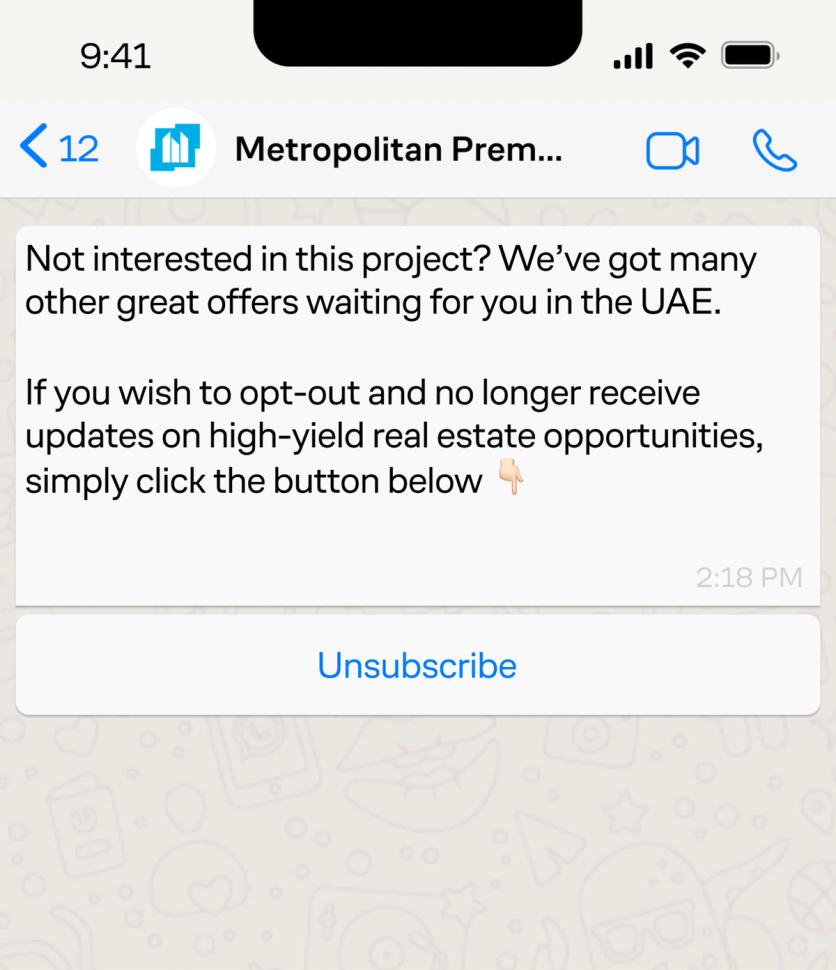
Make sure unsubscribes actually stick. After the migration, people who clicked “unsubscribe” stayed active in MPD’s base – the system kept messaging them, wasting budget and hurting sender reputation with Meta. A webhook now marks contacts as unsubscribed the moment they opt out, so campaigns and flows skip them automatically.
Give people a second chance to stay. A lot of people click “unsubscribe” on impulse. The team added a double opt-out flow – when someone clicks unsubscribe, they get a follow-up message asking to confirm. If they don’t confirm, they stay. That alone recovers a meaningful share of would-be unsubscribers.
✓ Quarantine Bounced Numbers Before They Hurt Your Reputation
Sending to bounced numbers over and over hurts your sender reputation. But removing people after one bounce is too harsh – phones die, networks drop, users go offline. You’d lose real contacts.
MPD chose the middle ground. A bounce triggers a 30-day pause. After four bounces, the number moves to an inactive segment – out of active campaigns, but saved for reactivation later. Bad numbers stop costing money; temporary issues get time to resolve.
✓ Stop Sending to People Who Stopped Reading
Bounces aren’t the only thing that hurts deliverability. People who receive every message and ignore it are just as bad. Meta tracks engagement – the more unengaged recipients in your sends, the worse your deliverability gets for everyone else.
MPD set up an automatic rule. After a set number of messages with zero engagement, the contact moves to an inactive segment and stops receiving regular communications. The remaining base gets smaller but healthier.

✓ Build a Separate Experience to Win Inactive Contacts Back
Inactive doesn’t mean lost. Before removing someone, give them a reason to come back.
A good reactivation track uses personal offers, invitations to big sales, or a direct “what’s changed?” question that surfaces new needs. In retail, product recommendations and loyalty program reminders work well. The point is to make the message feel relevant – not routine.
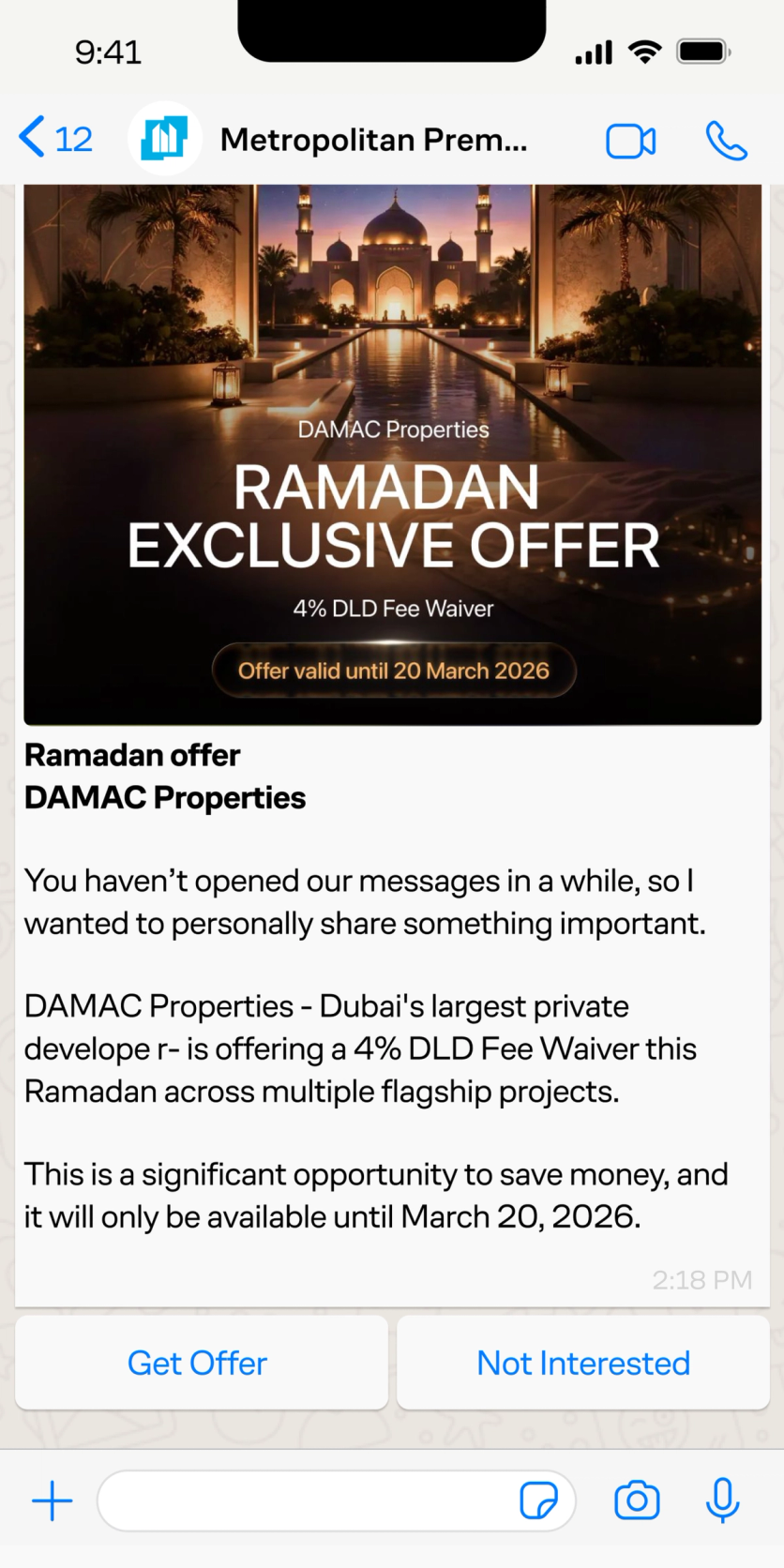
MPD runs reactivation campaigns manually, timing them to the strongest offers in the market. During Ramadan, for example, a top developer launched a standout deal on a prestigious residential complex – MPD sent it straight to the inactive segment. Contacts who’d gone silent didn’t just reopen messages; some came back as real leads requesting property searches. In a market where one deal runs into the millions, a handful of recovered contacts covers the cost of the whole program many times over.
✓ Pair Small Segments with Offers Built for Them
Blast sends to broad lists are the main reason WhatsApp deliverability tanks. The wider the audience, the more irrelevant messages hit, and the worse your reputation gets.
MPD pairs tight segmentation with content built for each segment. The base is broken down by behavior, property interest, and stage in the buying process – and each group gets specific offers tailored to who they are.
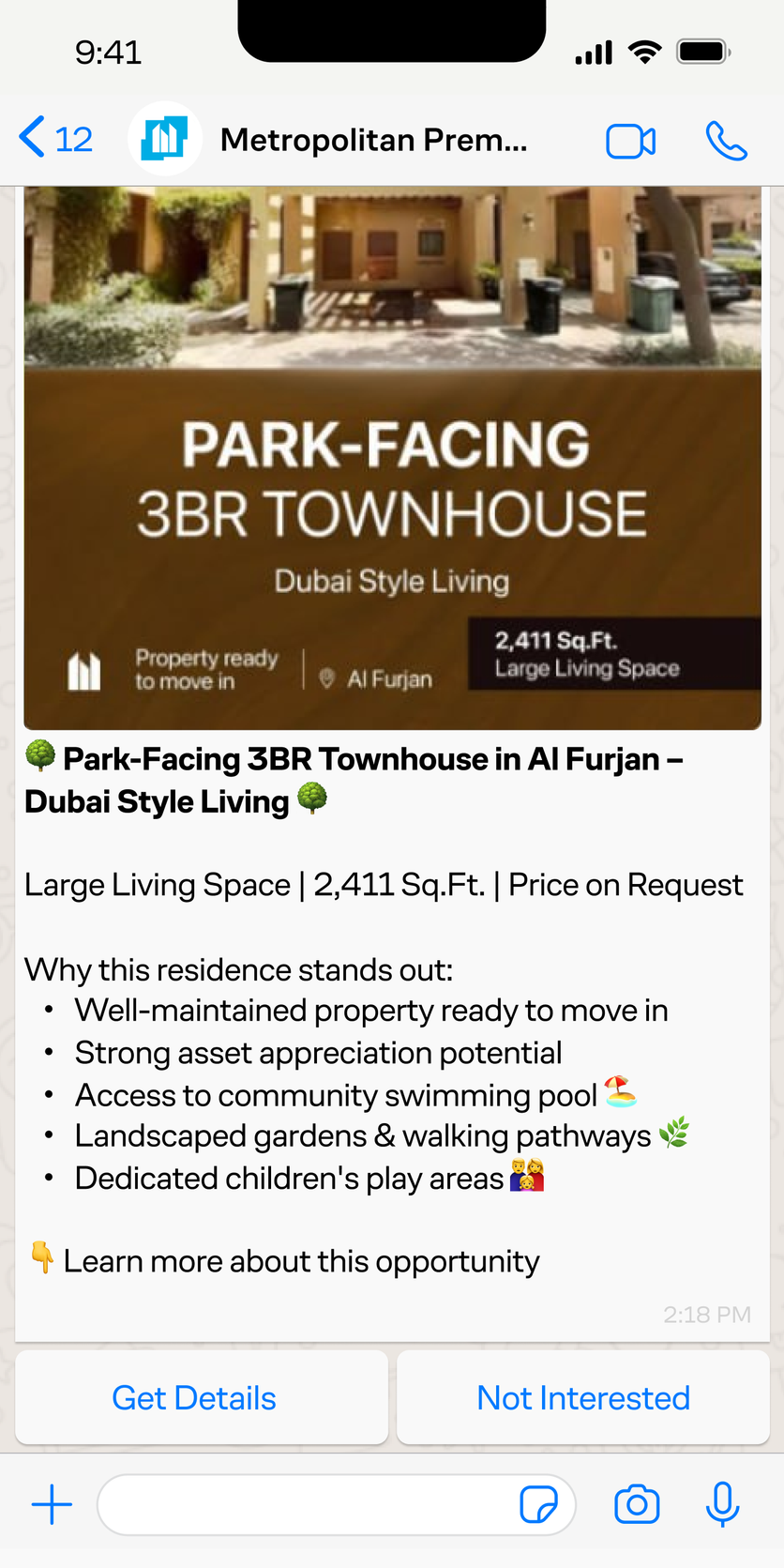
Take villa buyers. That audience doesn’t care about studios or small-unit investment offers – they want new villa launches in premium communities, family-focused neighborhoods, and developer incentives on villas specifically. MPD keeps a dedicated villa-interest segment and sends them only villa-relevant listings and promotions. Someone who asked about off-plan apartments gets updates on exactly that instead. Every message has a reason to exist for the person receiving it.
The Bottom Line
Five rules took MPD from 53% to over 80% WhatsApp deliverability – unsubscribe handling, bounce quarantine, inactive exclusion, reactivation, and micro-segmentation. Costs dropped by 10%, and lead volume stayed exactly where it was, just pulled from a smaller, cleaner base.
Another MPD case study worth a read – Metropolitan Group Generates 20.4% of Leads Through Precision-Targeted Marketing.