
Single Customer View: What It Is and Why Your Business Needs It

A single customer view (SCV) is one unified profile that brings together everything a business knows about a customer – purchases, website visits, email clicks, support tickets, store transactions – from every system that touches them. Instead of five tools each holding a fragment, every team works from the same complete picture.
That picture pays off. Aberdeen Group found that companies with strong omnichannel customer engagement retain 89% of their customers on average, while companies with weak engagement keep just 33%. And according to McKinsey, 71% of consumers expect personalized interactions from brands – personalization that’s simply impossible while customer data sits in disconnected tools.
This guide covers what a single customer view is, what data goes into it, what it changes for your business, and how to build one – with real numbers from brands that did it.
What a Single Customer View Is
A single customer view is a complete, consistent record of each customer, assembled from every data source a company has and stored in one place. You’ll also hear it called a 360-degree customer view, Customer 360, or a unified customer profile – different names for the same idea.
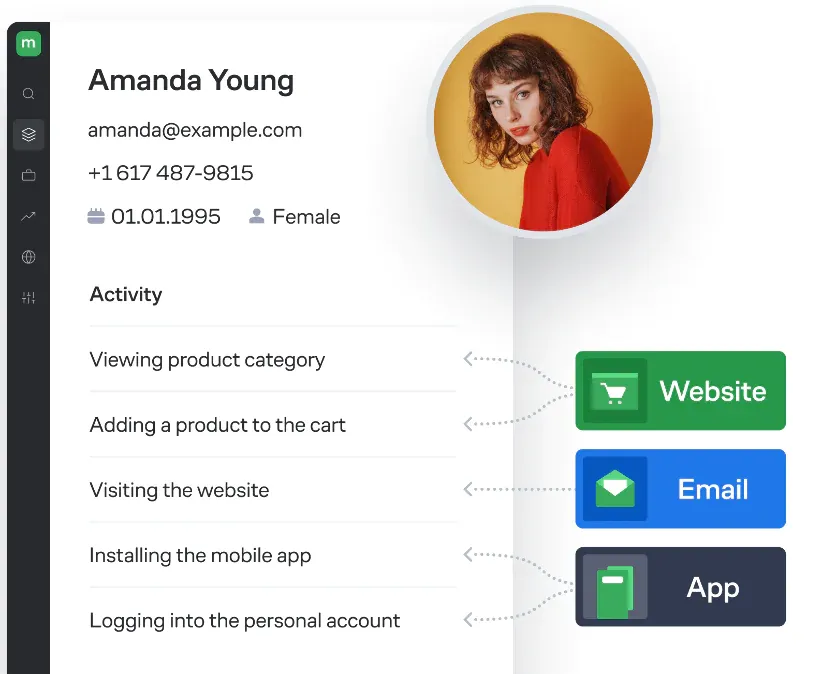
A single customer view in action: one profile brings together the customer’s identity and activity from every channel – website, email, and mobile app
Here’s the problem it solves. A typical ecommerce brand runs an online store, an email platform, a support desk, maybe a loyalty program and a couple of retail locations. Each system records its own slice of the customer. The email tool knows what she clicked. The store knows what she bought. The support desk knows what went wrong. None of them know the whole story.
A single customer view stitches those slices together. When the same person shows up in different systems – same email here, same phone number there – the platform recognizes them as one customer and merges everything into one profile. From that moment, every campaign, recommendation, and support conversation can rely on the full history instead of a fragment.
How a single customer view works
Building the view happens in three stages.
- Collection. Data flows in from every source: the website, mobile app, order system, email and SMS platforms, support desk, loyalty program, offline stores.
- Identity resolution. The platform matches records that belong to the same person – usually by email address, phone number, or customer ID – removes duplicates, and cleans up inconsistencies. This step is what separates a true single customer view from a pile of imported spreadsheets.
- Activation. The unified profile becomes available for action: segmentation, personalized campaigns, on-site recommendations, analytics.
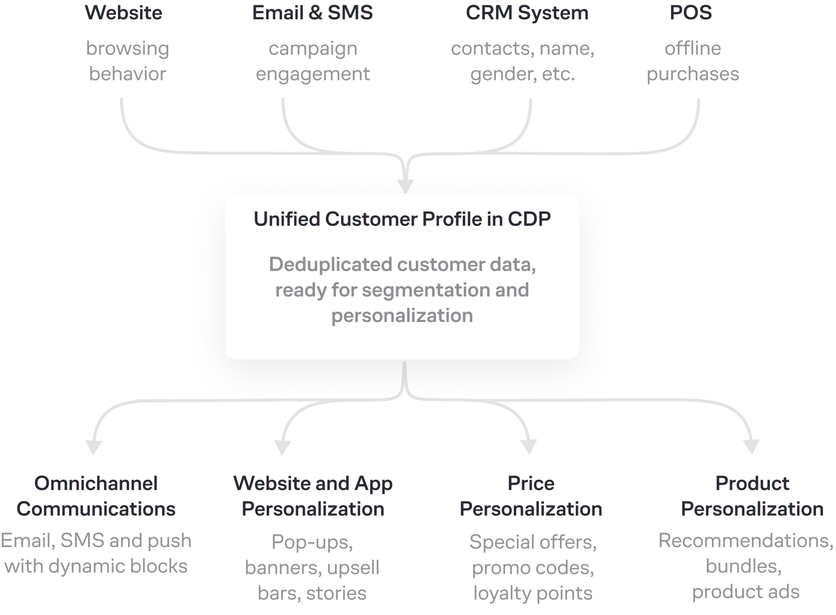
How a single customer view works: data from every source is deduplicated into one unified profile that powers communications and personalization
In practice, this is the job of a customer data platform (CDP). A good one updates profiles in real time: a customer adds an item to the cart, and a second later that action is already in their profile and can trigger a flow. Here’s what it looks like in Maestra’s real-time CDP – each profile keeps a live changelog of the customer’s actions across channels:
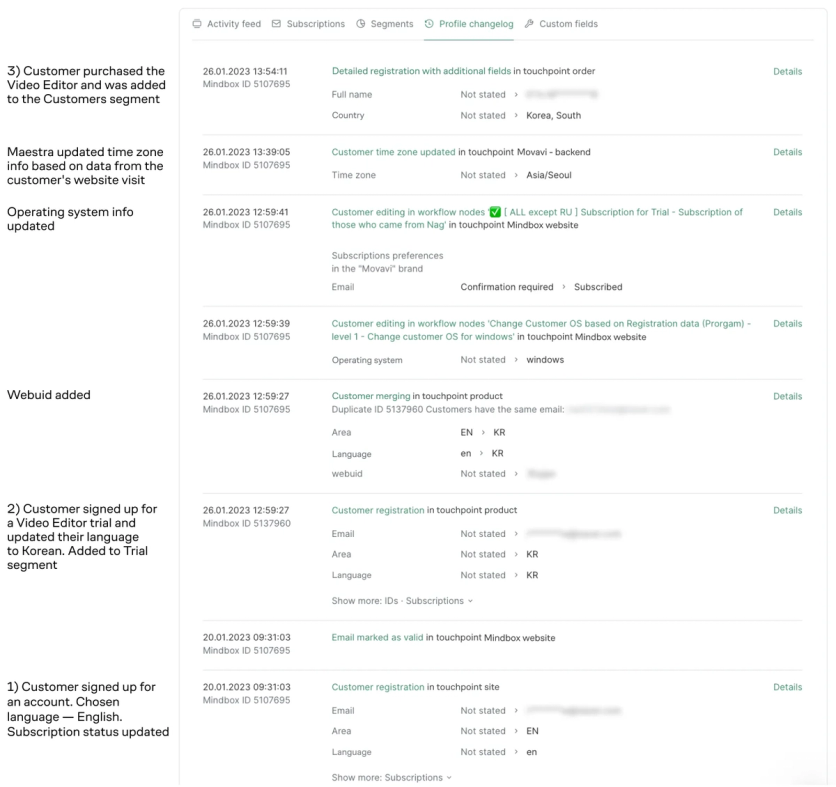
A real example from a real client profile: Movavi’s customer profile changelog in Maestra, where every action across channels lands in real time
What Data Goes Into a Single Customer View
A complete profile usually combines several kinds of first-party data:
- Identity and contact data – name, email addresses, phone numbers, postal addresses, device IDs.
- Behavioral data – pages viewed, products browsed, searches, app sessions, cart additions.
- Transactional data – online and offline orders, order values, returns, subscriptions and renewals.
- Engagement data – email opens and clicks, SMS replies, push notification interactions, responses to ads.
- Support and service data – tickets, chat logs, call notes, and how past issues were resolved.
- Consent – opt-ins and permissions for each channel, plus privacy choices. Under GDPR and CCPA you need a reliable record of who agreed to what, and a unified profile is the natural place to keep it.
- Preferences – language, interests, favorite categories, sizes: everything customers tell you about what they want to see.
The most valuable profiles also include data customers share on purpose: interests, sizes, and preferences collected through popups, quizzes, and surveys. Atlanta Cutlery, a retailer of historical replicas, asks about interests right in its signup popup – so every new subscriber is segmented before the first email is even sent:
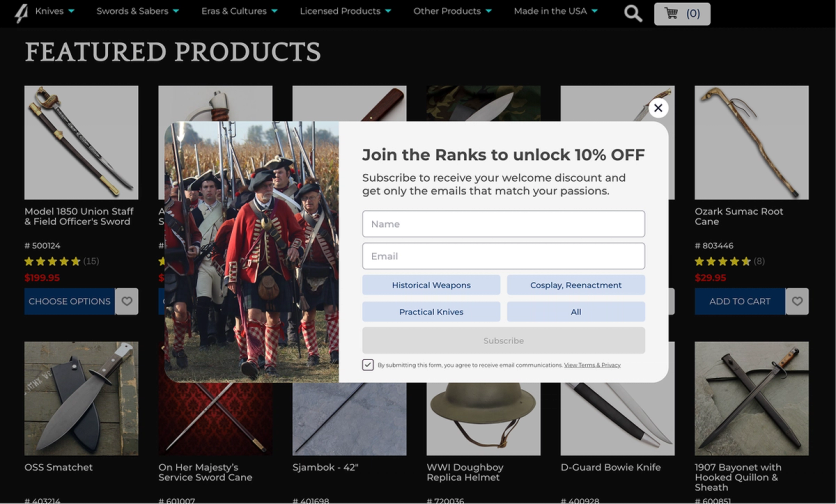
Atlanta Cutlery’s signup popup collects customer interests, so every new subscriber is segmented before the first email goes out
Why a Single Customer View Matters
A unified profile isn’t an IT project for its own sake – it changes how marketing, analytics, and customer service work every day. Four effects show up first.
Every team works from the same picture
Data silos are the default state of marketing. Each department picks a tool for its own job, each tool keeps its own database, and soon nobody can answer a basic question like “how much does this customer actually spend with us” without exporting three spreadsheets.
Motorcycle gear brand Sena saw this from the inside. Separate platform accounts for its US and EU stores meant that when a shopper relocated between regions, one account recorded churn while the other counted a brand-new customer – nobody saw a loyal customer who had simply moved. After merging both regions into one platform with unified cross-site tracking, lifetime value and retention reports became trustworthy again – and total revenue grew 2.2x.
The more brands, regions, and languages a business runs, the faster its customer data fragments – which is why a single customer view pays off most for multi-brand and international companies.
Personalization becomes possible
McKinsey’s personalization research found that 76% of consumers get frustrated when brands don’t personalize – but personalization is only as good as the data behind it. If your platform can’t tell a new customer from a loyal one, no amount of clever copy will fix it.
G-Plans, a personalized nutrition company with 7 million customers, hit exactly that wall: its previous platform couldn’t reliably separate new customers from returning ones, so even long-time program members were pushed through the same generic flows. After switching to real-time unified profiles, G-Plans personalized every step – returning customers now skip the intake appointment entirely – and doubled customer lifetime value in a year.

Retention improves across the whole lifecycle
Retention has the best economics in marketing: acquiring a new customer costs 5–25 times more than keeping an existing one, and Bain & Company research shows that lifting retention by just 5% increases profits by 25% to 95%.
And what makes customers stay is feeling recognized. People come back to brands that remember their sizes, their purchase rhythm, their preferred channels – and act on that knowledge without being asked. A unified profile turns that recognition from an accident into a system: every email, reminder, and reward is grounded in the customer’s actual history, not a guess.
That recognition compounds into repeat purchases. Swimwear brand JOLYN rebuilt its lifecycle marketing – abandonment recovery, personalized product recommendations, post-purchase flows – on one platform where every message draws on the same customer profile. Repeat domestic revenue grew 22%, with total revenue up 17%.
Marketing ROI grows
Fragmented stacks also hide what marketing actually returns: each tool reports its own numbers, attribution overlaps, and budget decisions turn into guesswork.
US furniture retailer Furniture Fair ran five separate tools that delivered underwhelming results – low open rates, ineffective on-site recommendations, and no coherent picture of the customer. After replacing all five with one platform built on unified data, marketing stack costs dropped 27%, email and SMS grew to drive 11% of total revenue, and automation now returns $75 for every dollar invested – a 7,543% ROI.
How a Single Customer View Improves Customer Experience
Customers don’t think in channels. They browse on a phone, buy on a laptop, walk into a store, and email support – and they expect the brand to remember them at every step. A single customer view is what makes that memory real:
- Consistent communication. Promotions, language preferences, and opt-outs follow the customer across email, SMS, push, and the website – no conflicting offers, no messages in the wrong language.
- Support without repetition. Agents see the full relationship – orders, past tickets, recent activity – so customers don’t retell their story every time they reach out.
- Recommendations that make sense. When browsing and purchase history live in one profile, product suggestions reflect what the customer actually wants.
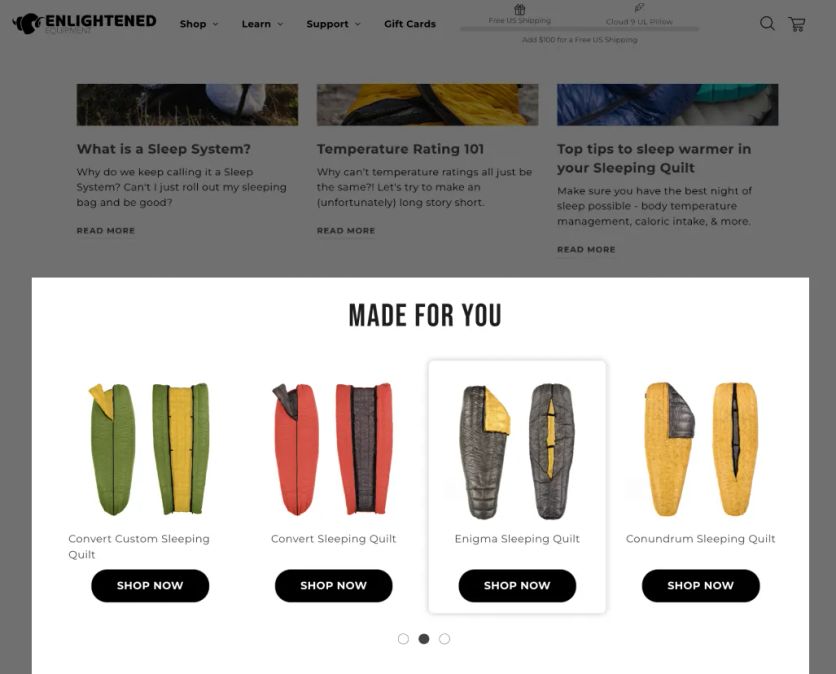
Outdoor gear manufacturer Enlightened Equipment put unified behavioral data to work in AI-powered recommendations across its website – main page, product pages, cart, even 404 pages. New visitors see bestsellers; returning visitors see products matched to their behavior and gender. In two months, A/B tests showed a 15% lift in website conversion and 8.7% growth in average order value.
How to Build a Single Customer View
Map your data sources
Start with the teams that already collect customer data – marketing, sales, support, analytics, IT – and list every system that holds a piece of the customer: the ecommerce platform, email and SMS tools, help desk, loyalty program, POS, ad platforms, data warehouse. Each one holds a fragment of identity that needs unifying. This list becomes your integration roadmap.
Choose a platform to unify the data
For most consumer brands, the practical choice is a customer data platform – software built to ingest data from any source, resolve identities, and make unified profiles available to other tools. (If you’re weighing it against a CRM, here’s how the two differ.) When evaluating, look for five things:
- Real-time ingestion and activation. A profile that updates overnight can’t power a cart-abandonment flow that fires in minutes.
- Identity resolution. Matching, deduplication, and merging should be built in, not a manual project.
- Native integrations with your ecommerce platform, channels, and existing stack.
- Privacy compliance. GDPR and CCPA support, with consent stored on the profile.
- Hands-on support. Unification means real technical work – integration, data migration, identity setup – and your dev team’s capacity is probably limited. A vendor that takes on the heavy lifting makes migration far faster and saves you from the mistakes that would otherwise hold the project back.
Maestra’s real-time CDP was built for exactly this job – and because it’s part of an all-in-one platform, the unified profile feeds email, SMS, and website personalization directly, with no extra integrations to maintain.
Integrate your systems
Connect the sources from your map to the platform – ecommerce backends, websites, apps, internal databases. This step is usually less painful than teams fear when the vendor does the heavy lifting: Sena’s integration took two weeks, Furniture Fair’s took three months including full campaign migration. Atlanta Cutlery connected two storefronts – sister brands Atlanta Cutlery and Museum Replicas – so both feed one customer view:
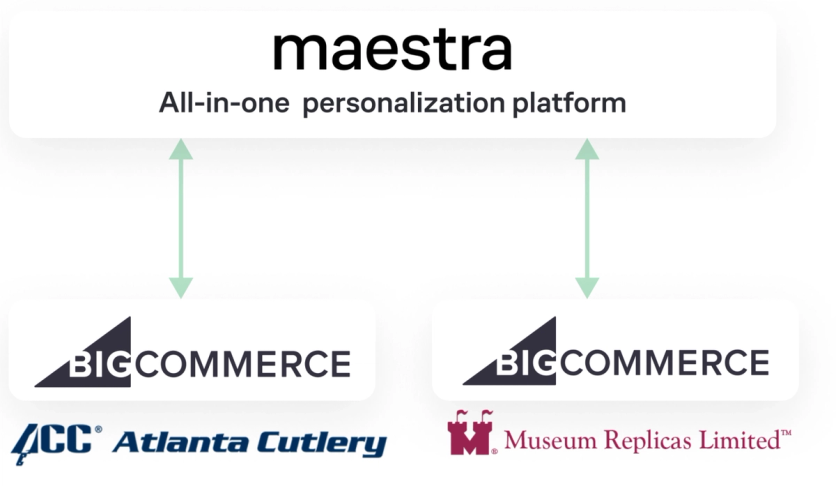
One platform connects both of Atlanta Cutlery’s BigCommerce stores, so sister brands share a single customer view
If integration still looks like the impossible part – say, your dev resources are already stretched thin – look at all-in-one platforms: a CDP at the core with the activation layer built in. Collecting data, cleaning it, and using it for marketing all happen inside one product, so instead of wiring up half a dozen tools you integrate just your store – plus the POS, if you sell offline. Maestra is built this way, and the team handles the integration itself, custom stacks included. Integration is rarely a business’s core expertise – and doing it alone is usually where unification projects stall.
Match identities across touchpoints
Decide which identifiers link records into one person: email, phone, customer ID, loyalty number. The platform then merges duplicates and keeps linking new records automatically – including the moment an anonymous browser logs in or makes a first purchase and their pre-purchase behavior joins the profile.
Here’s how this works in Maestra, for example. Profiles merge automatically when at least one unique identifier matches – an email, a phone number, a loyalty card, an external CRM ID, a device, even a tokenized payment card – and no other identifiers conflict. If two records share an email, they become one profile. If the phone matches but the emails differ, the system doesn’t guess: the records stay separate, and the contested contact goes to the higher-priority profile, ranked by confirmed contacts, order history, and recent activity. Anonymous browsing isn’t lost either – once a visitor identifies themselves, their earlier session history links to the profile retroactively.
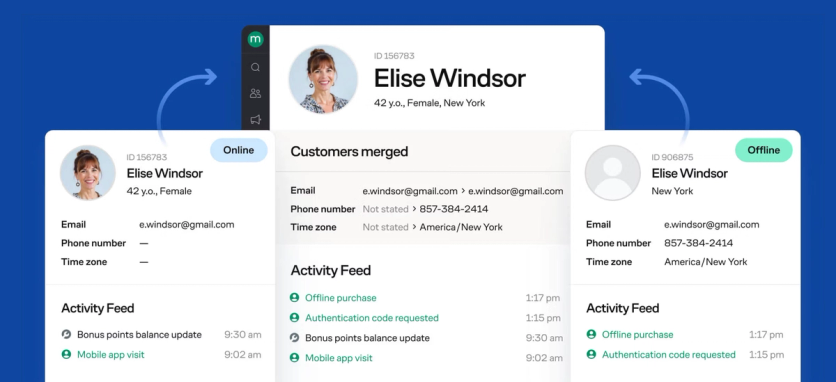
Two profiles merge into one when a unique identifier matches: the unified profile keeps the contacts, time zone, and combined activity history of both
Keep the data clean
Customer data ages quickly – data-quality research estimates contact data decays at roughly 2% per month as people change emails, phones, and addresses. Build hygiene into the routine: validate emails and phone numbers on entry, deduplicate continuously, monitor completeness and consistency, and remove contacts that have gone permanently inactive. Clean data isn’t a one-time migration task – it’s maintenance.
Common Challenges to Plan For
The most common challenges of building a single customer view are rarely about the software itself. Customer data integration projects usually run into four obstacles – data silos, poor data quality, legacy systems, and privacy compliance – and each one has a working remedy.
- Departmental silos. Teams own their tools and their data, and consolidation needs buy-in. The cure is involving every data-owning team from day one – the mapping step is as much organizational as technical.
- Data quality. Duplicates, typos, and decayed contacts skew segmentation and reporting. Automated validation and deduplication beat manual reviews, which are slow and rarely keep up.
- Legacy systems. Older tools may lack APIs or store data in incompatible formats. Plan for custom connectors or middleware where needed – and weigh whether the legacy tool should survive the migration at all. If your own developers are stretched, an API development company like Aalpha can build those connectors.
- Privacy compliance. GDPR fines reach up to 4% of global revenue, and CCPA gives California residents the right to know what data you hold. Centralizing data actually helps here: one profile with consent attached is far easier to govern than five databases with five consent states.
What a Single Customer View Delivers in Practice
To make it concrete, here are a few single customer view examples from real brands – each started with fragmented customer data, unified it on one platform, and measured what changed.
Magnum Bikes – the e-bike brand’s customer data lived in silos: online interactions, retail purchases, rentals, and product registrations were each tracked in a different system. Maestra pulled every touchpoint into one profile, so the team sees the whole journey – whether the customer bought online, rented before buying, or registered a bike through a dealer:
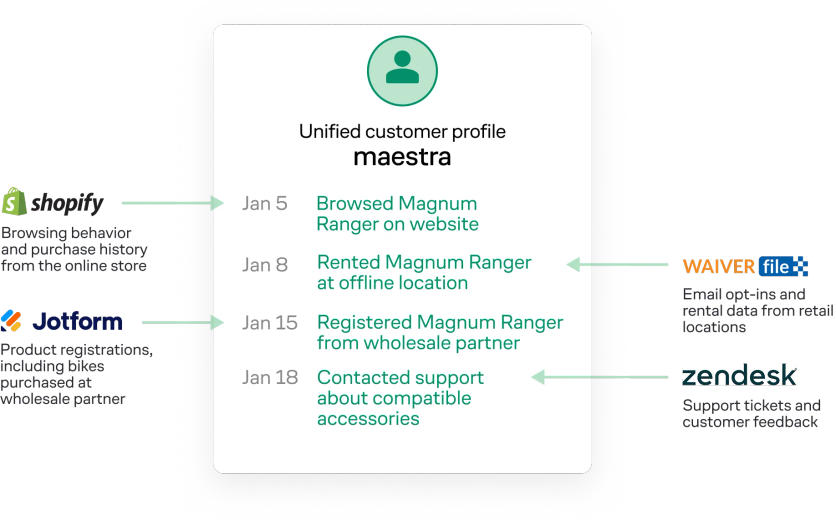
Magnum Bikes’ unified customer profile: website browsing, offline rentals, wholesale product registrations, and support tickets – one timeline for one customer
With one profile per customer, Magnum rebuilt its marketing around that complete view:
- Product-specific flows. Abandonment emails branch by what the customer actually engaged with – premium e-bike browsers get a feature-focused email, pre-owned browsers get a prominent link to the outlet.
- Geo-targeted campaigns. Location is detected from orders, popup signups, and in-store registrations, so local customers receive store event invitations, exclusive in-store deals, and new-store announcements.
- Omnichannel promotions. Major sales run as one coordinated sequence across email, SMS, and on-site banners and popups.
The first full year on the new platform was record-breaking: 56.6% online revenue growth and 111.7% more online orders.

Blossom Flower Delivery – the same-day flower delivery service had order history in one system and customer contacts in another, and the two didn’t always sync. Consolidating everything in a CDP surfaced about 200,000 “lost” customers who had been invisible to marketing. With order dates and occasions now in each profile, the team launched 38 automated campaigns in a month – including reminders timed to last year’s birthday and anniversary orders – and measured a 426% ROI on automation within the first 41 days.
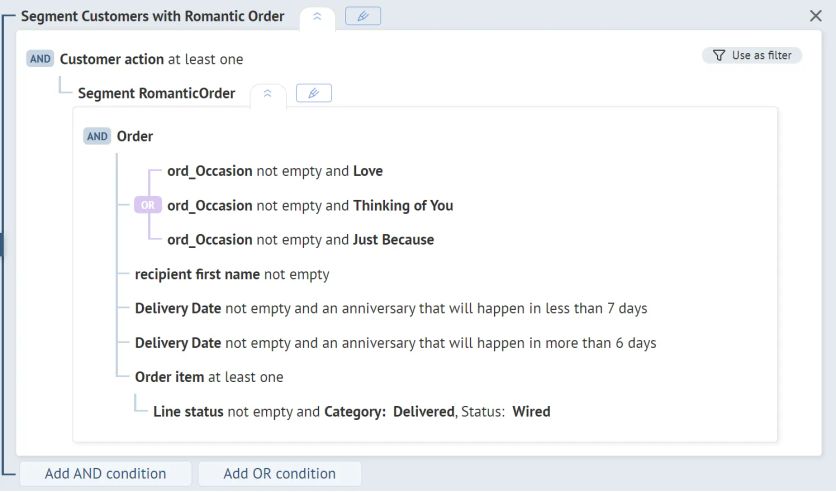
Selkirk Sport – the pickleball brand ran direct customers in one platform, B2B partners – influencers, tournament organizers, retailers – in another, and transactional emails through a third. And inside the main tool, filtering was so unreliable that one person could end up with four profiles and receive duplicate texts. Maestra brought every audience into one platform with one profile per person: D2C and B2B communications now run side by side without overlap, and integrated loyalty data feeds segmentation. The result – 55% email revenue growth and 149% SMS revenue growth year over year.
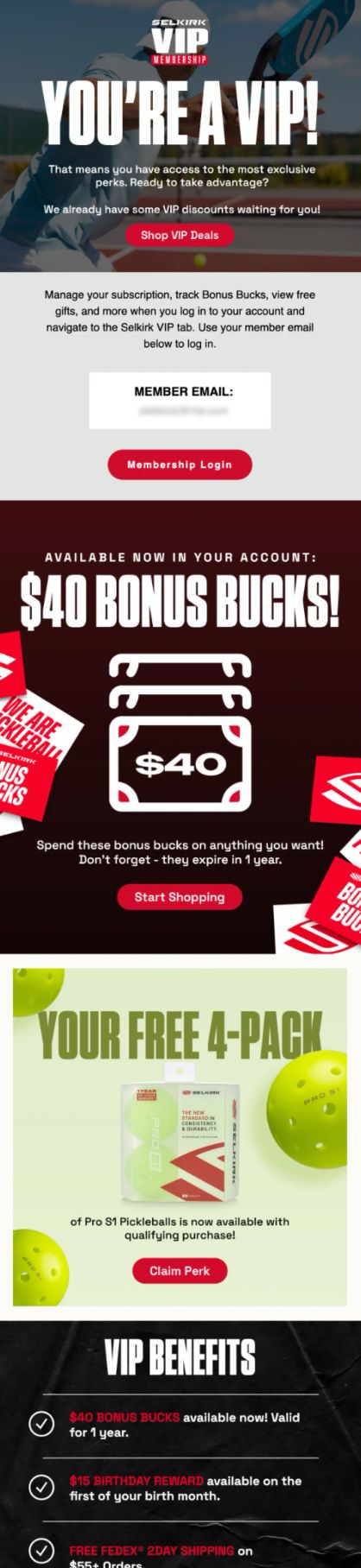
Welcome email for Selkirk VIP program members
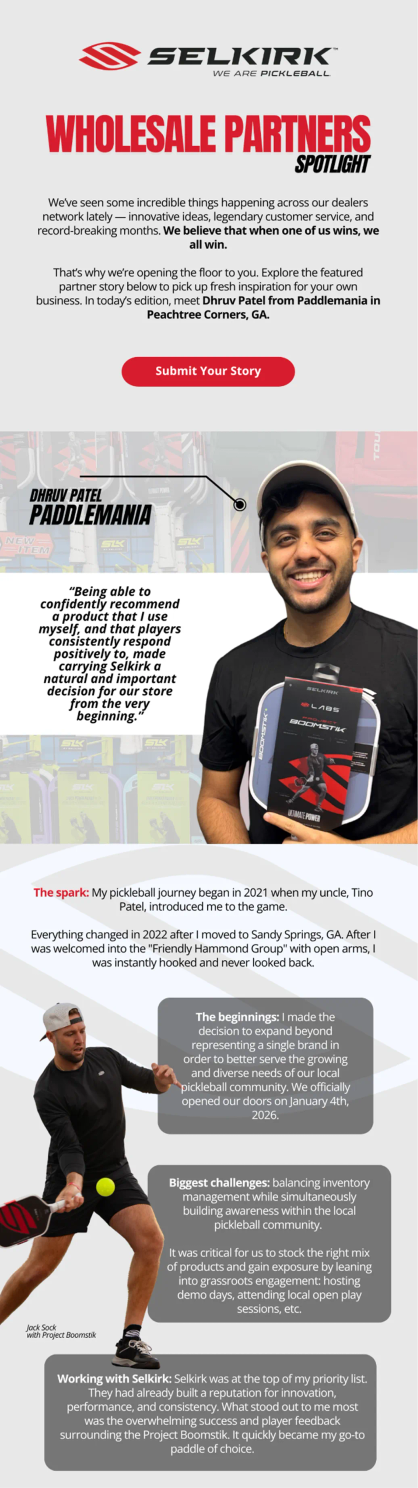
B2B email showcasing partner stories to the dealer network
Atlanta Cutlery and Museum Replicas – the sister brands ran three disconnected tools: email in one, SMS in another, loyalty in a third, with no shared view of the customer. One platform now tracks customers across both brands, loyalty points appear in every email, and behavioral data powers flows that weren’t possible before, like price-drop alerts and browse abandonment. Automation revenue per user grew 3x for one brand and 10x for the other, and stack costs dropped by a third.

Points expiry reminder

Loyalty level upgrade encouragement
Loyalty emails Atlanta Cutlery couldn’t send while the loyalty program ran in a separate tool
The Bottom Line
Brands that unify their customer data retain more customers, personalize at a level fragmented stacks can’t match, and trust their own analytics again.
The path there is concrete: map your data sources, pick a platform with real-time profiles and built-in identity resolution, integrate, and keep the data clean. And it’s faster than most teams expect – Sena and Atlanta Cutlery were live in two weeks, Furniture Fair in three months with full campaign migration.
If you want to see what your customer data could do in one place, explore the success stories or take a closer look at how Maestra’s real-time CDP works.
FAQ
- A single customer view is the outcome – one complete profile per customer. A customer data platform (CDP) is the technology that creates and maintains it: ingesting data from every source, resolving identities, and making profiles available for marketing and analytics. You can read more in our guide to what a CDP is and how it works.
- There’s no strict taxonomy here, but a complete profile usually includes identity and contact data, behavioral data (browsing and app activity), transactional data (orders, returns, subscriptions), engagement data (email, SMS, push, ads), support history, consent records (channel opt-ins and privacy choices under GDPR and CCPA), and preferences (language, interests, sizes). Much of the preference data is zero-party – customers share it themselves through popups, quizzes, and surveys.
- With a modern CDP and vendor support, weeks rather than years. Sena’s two regional stores were unified in two weeks; Furniture Fair replaced five tools in three months, including migrating all campaigns. Do-it-yourself builds on a data warehouse take considerably longer and need ongoing engineering support.
- Higher retention (companies with strong omnichannel engagement retain 89% of customers vs. 33% for weak engagement, per Aberdeen Group), personalization based on complete history, trustworthy analytics, faster customer service, and better marketing ROI. Real-world results range from G-Plans doubling customer lifetime value to Sena growing campaign revenue 8.6x.
- Departmental data silos, poor data quality (contact data decays at roughly 2% per month), legacy systems that resist integration, and privacy compliance under GDPR and CCPA. A platform with built-in identity resolution and consent management removes most of the technical burden – the organizational part, getting every team to share its data, is yours to lead.