
8 Best Client Engagement Platforms (Expert Picks)

Generic outreach no longer cuts it. Customers expect personalized and timely communication in their preferred channels. 88% of customers say the experience a company provides is as important as its products or services. Client engagement platforms solve this by enabling businesses to deliver consistent and connected experiences from a single system.
We compare 8 customer engagement platforms based on pricing and real-world performance to help you choose the best customer engagement software for your needs.
Best Client Engagement Platform for Every Use Case
Executive summary — the best client engagement platform for each use case, so you can jump straight to the options that fit.
Best all-in-one for e-commerce: Maestra — real-time CDP, omnichannel automation, loyalty, site personalization, dedicated CSM
Best for B2B marketing-sales alignment: HubSpot Marketing Hub — easy-to-use CRM with marketing, sales, and service under one roof
Best for enterprise B2C at scale: Salesforce Marketing Cloud — deep customization for complex cross-channel campaigns
Best for mobile-first engagement: Braze — real-time messaging at massive scale with superior mobile SDKs
Best for conversational AI support: Intercom — Fin AI agent resolves 67% of queries, built for SaaS
Best for enterprise helpdesk: Zendesk Suite — multi-brand ticketing with AI trained on 20 billion interactions
Starter email + SMS for Shopify: Klaviyo — solid for basic email and SMS, but costs climb as your list grows
Best composable CDP infrastructure: Twilio Segment — 750+ integrations, developer-first data routing
Content:
What Is a Client Engagement Platform
A client engagement platform is an integrated set of technologies that helps businesses understand and engage with customers across available channels. Where CRM systems manage customer data, a customer engagement platform orchestrates how you communicate with those customers through email, push notifications, SMS, in-app messages, chat, and platforms like WhatsApp.
These platforms unify customer data management, marketing automation, journey orchestration, and AI-powered decisioning into a single system. Traditional tools handle one function well. Customer engagement software brings data, decisions, and delivery together for seamless customer experiences.
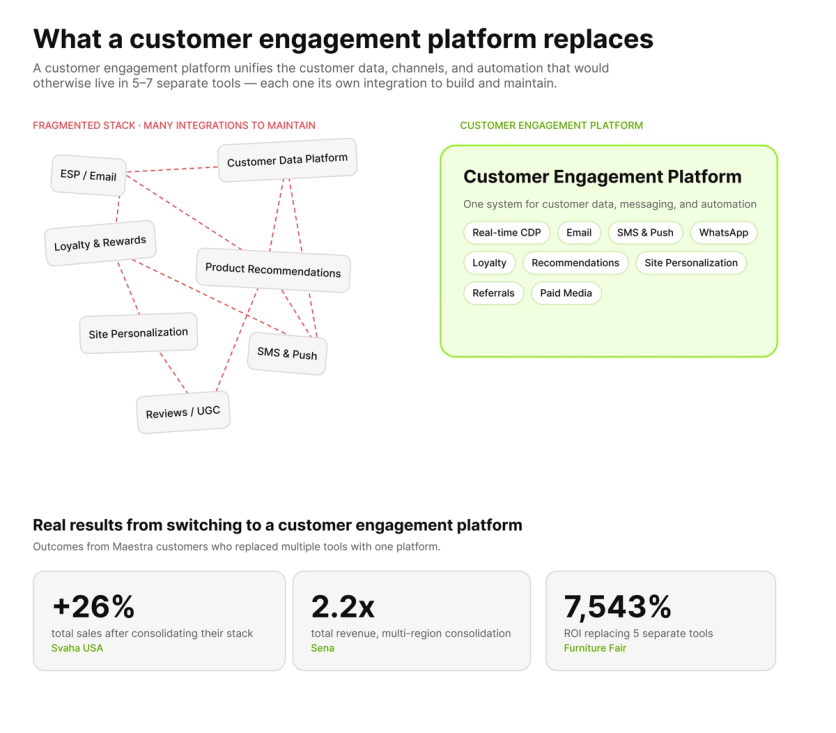
How a customer engagement platform replaces a fragmented stack
The core capabilities include omnichannel messaging coordinated through a single system, real-time event processing that responds to customer behavior as it happens, preference management that respects how customers want to be contacted, and journey orchestration that moves customers through sequences based on actions rather than time delays. Analytics measure engagement, not just delivery.
Common Pain Points with Client Engagement Platforms (And How to Avoid Them)
Platform adoption remains one of the biggest obstacles businesses face. Up to 70% of CRM implementations fail, with low user adoption the leading cause. You lose the customer insights needed to make informed decisions when teams resist using the system. This happens when employees feel the platform disrupts their workflow rather than improves it.
Data fragmentation creates another barrier. Customer information scattered across marketing automation platforms, e-commerce systems, support software and legacy CRMs leads to inconsistent or incomplete data. Sales teams lack marketing insights. Marketers miss customer support interactions. The result is disjointed experiences.
Personalization gaps damage retention rates. About 72% of customers expect businesses to recognize them as individuals and know their interests. Delivering this level of personalization requires pulling together relevant data from across the organization to inform each interaction with specific information.
Hidden costs add up quickly beyond the contract’s original terms. Many providers aren’t upfront about implementation fees, data migration charges, training costs or the expense of premium support. Some platforms require minimum annual commitments that push real starting prices well beyond the advertised rate.
Integration complexity slows deployment. CRMs rely on manual data entry while customer engagement platforms automate data ingestion from multiple sources. Different data structures, APIs and workflows make seamless exchange challenging. This leads to syncing delays or conflicting records.
Here’s how to avoid each one when you choose a platform:
| Pain Point | How to Avoid It |
|---|---|
| Low adoption | Choose a platform marketers can run without engineering tickets, with a dedicated CSM driving onboarding instead of a self-serve help desk. |
| Data silos | Pick a platform with a built-in real-time CDP that unifies data natively, so you are not stitching tools together with middleware. |
| Personalization gaps | Favor platforms where segmentation, recommendations, and site personalization run on one shared customer profile, not bolt-on add-ons. |
| Hidden costs | Ask for all-in pricing upfront — implementation, migration, support, and overage fees — and confirm migration is included, not billed separately. |
| Complex integration | Shortlist platforms with native integrations for your stack (Shopify, BigCommerce, and the rest) and managed setup, so go-live does not depend on your engineers. |
| Implementation delays | Look for managed migration with a clear timeline and billing that starts only after go-live, the way Maestra does it — so you are not paying during a slow rollout. |
Client Engagement Platform Comparison Table
| Platform | Starting Price | Best For | Key Strengths | Key Limitations | G2 Rating |
|---|---|---|---|---|---|
| Maestra | $2,990/mo (150K profiles) | Mid-market & enterprise e-commerce | All-in-one (replaces 5–7 tools), real-time data (<300ms), managed migration, 1 CSM per 10–15 accounts | Starting price targets mid-market+, e-commerce/DTC only, fewer marketplace integrations than developer-focused CDPs | 4.7/5 |
| HubSpot Marketing Hub | $890/mo + $3,000 onboarding | B2B and hybrid businesses | Easy to use, tight CRM integration, 2,000+ integrations, transparent pricing | Costs escalate with contacts/users, no loyalty engine or product recommendations, limited e-commerce | 4.4/5 |
| Salesforce Marketing Cloud | $1,500/mo (Growth) | Enterprise B2C cross-channel | Enterprise-grade email at scale, SQL/relational data modeling, tight Salesforce CRM integration | Steep learning curve (SQL/AMPscript), fragmented Studios, implementation costs reach $200K+ | 4.0/5 |
| Braze | $60K–$200K/year | Mobile-first companies at scale | Billions of messages, superior mobile SDK, sub-second triggers, real-time data streaming | Requires engineering support, 3–6 month implementation, data point-based billing, needs external CDP | 4.5/5 |
| Intercom | $29/seat (Essential) | SaaS conversational support | Fin AI resolves 67% of queries, modern UI, proactive in-app messaging | Pricing complexity (per-seat + per-outcome), underpowered SLAs, reporting accuracy issues | 4.5/5 |
| Zendesk Suite | $55/agent (Team) | Service-focused businesses | 60% faster implementation, 1,800+ apps, AI trained on 20B interactions, multi-brand architecture | Steep learning curve, fragmented modules, per-agent costs escalate | 4.3/5 |
| Klaviyo | $20/mo (500 contacts) | Small-to-mid Shopify stores | Real-time segmentation, 80+ pre-built flows, predictive analytics, free plan | Costs escalate with list growth, slow support, no loyalty/web push/site personalization | 4.6/5 |
| Twilio Segment | $120/mo (10K MTUs) | Data engineering teams | 750+ integrations, 99.999999%+ uptime, developer-friendly, composable architecture | No activation channels, steep learning curve, costs escalate with MTUs, no custom objects | 4.5/5 |
Maestra: Best All-in-One Platform for E-Commerce Engagement
Maestra is an all-in-one customer engagement platform built for mid-market and enterprise e-commerce brands running on Shopify, BigCommerce, WooCommerce, Magento, or custom platforms. The platform combines a real-time CDP, email, SMS, web and mobile push, paid media, on-site and in-app personalization, product recommendations, loyalty, and referrals in one system. Every subscription includes a dedicated Customer Success Manager who handles migration, strategy, and ongoing campaign setup.
Key Features
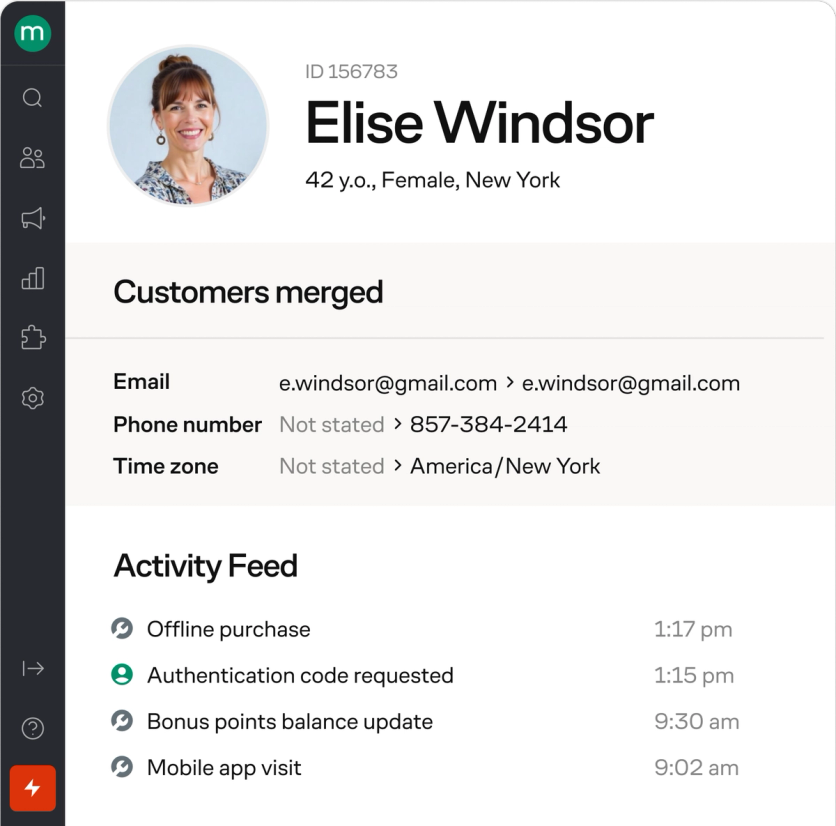
Real-Time CDP: Maestra’s CDP unifies customer data from all channels into a single profile that updates in under 300 milliseconds. Every interaction becomes available for segmentation and personalization right away, unlike middleware CDPs that sync on schedules. The platform handles databases of up to 65 million records with 150+ native integrations.
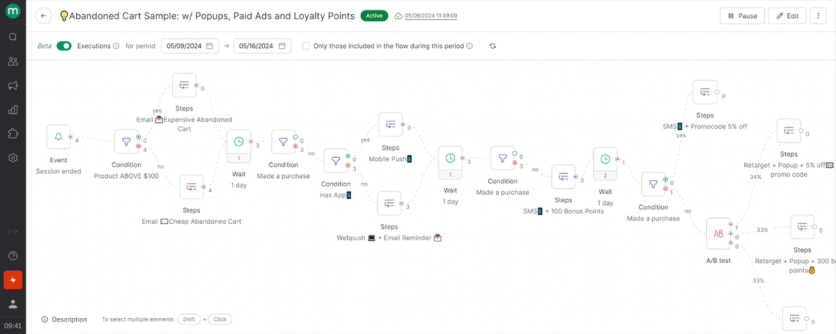
Omnichannel Flow Builder: The visual flow builder creates adaptive journeys across email, SMS, WhatsApp, web and mobile push notifications, on-site pop-ups, and paid media retargeting from one canvas. Flows branch based on real-time customer behavior. Channel selection happens dynamically based on engagement patterns. G-Plans doubled customer lifetime value in a year after switching from Klaviyo, driven by personalized retention flows across email, SMS, and mobile push.
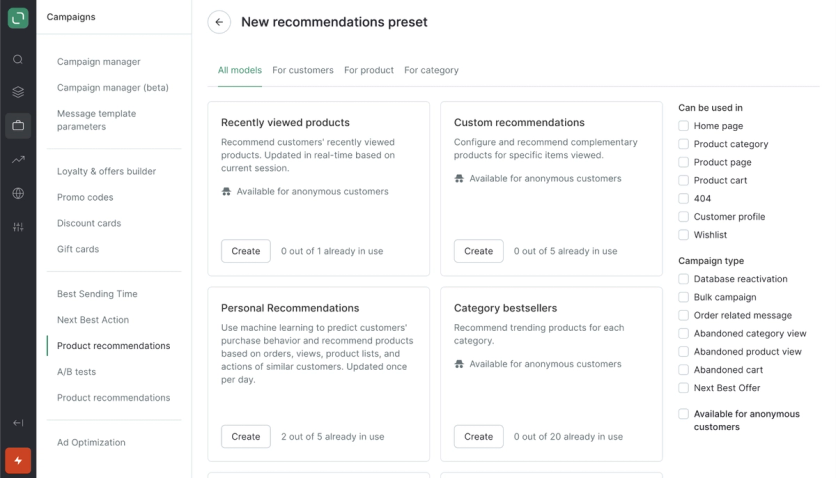
AI-Powered Product Recommendations: 14 AI algorithms power personalized product recommendations across email, site, and push notifications. Recommendations remain inventory-aware to avoid out-of-stock suggestions and support attribute-based matching for color and size. Product recommendations influence 7% of total sales at JOLYN and 8.9% at Defense Mechanisms.
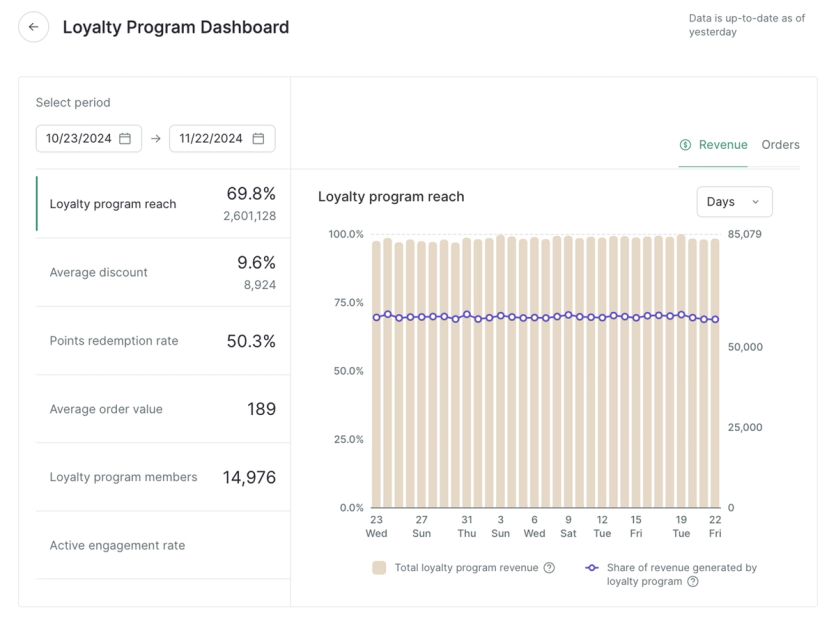
Native Loyalty Program Engine: Maestra includes a full loyalty engine with points, tiers, referral programs, personal coupons, and gamification as a core platform feature. Loyalty data feeds directly into segmentation and flows. This triggers targeted campaigns when customers reach new tiers or approach lapsing.
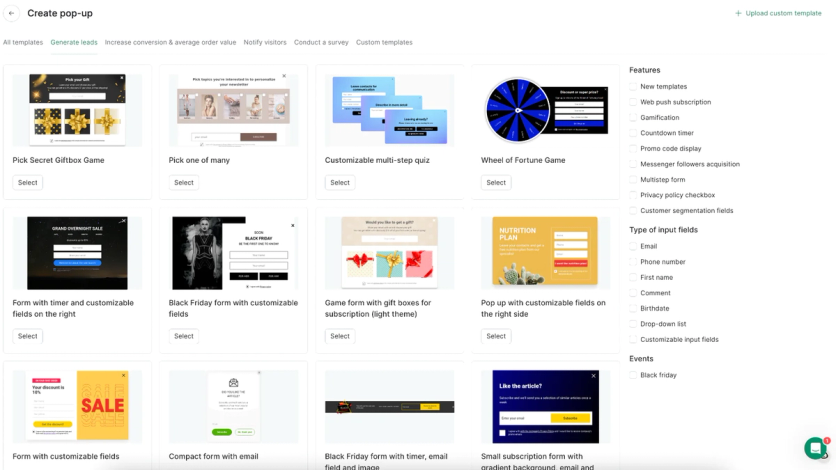
Site Personalization: No-code widgets adjust content, banners, product recommendations, and promotions based on visitor behavior and segment membership in real time. Enlightened Equipment grew lead capture rate from 0.37% to 6.1% and increased new subscribers 20x in two months using Maestra’s pop-ups with A/B-tested offers.
Pricing
Maestra starts at $2,990/month for up to 150,000 active customer profiles. This includes unlimited emails, unlimited user seats, all channels, all features, a dedicated CSM, and managed migration. The platform offers month-to-month billing with no annual contracts required.
Where Maestra Wins
Maestra consolidates 5–7 separate tools — ESP, CDP, loyalty, recommendations, site personalization, and SMS — into one platform. Real-time data processing under 300 milliseconds eliminates batch delays that plague other systems. Each account receives a dedicated CSM managing just 10–15 accounts versus the industry standard of 60–125.
Migration is managed at no additional cost. It completes in 2–8 weeks with billing starting only after go-live. Urban Armor Gear saved approximately $100,000 per year (64% stack cost reduction) consolidating Klaviyo, Yotpo Loyalty, and Frosmo into Maestra. Furniture Fair achieved 7,543% ROI replacing five tools, while Sena saw 8.6x campaign revenue growth after switching from Klaviyo.

Where Maestra Falls Short
Maestra targets mid-market and enterprise brands rather than small businesses or early-stage startups, starting at $2,990/month. The platform is purpose-built for e-commerce and DTC, which makes it unsuitable for SaaS, media, or non-retail verticals. Fewer third-party marketplace integrations exist compared to developer-focused CDPs like Segment. Maestra’s dedicated CSMs build custom integrations at no extra cost.
When to Switch to Maestra
Switch when running 3–5+ marketing tools and seeking consolidation into one platform with a single customer view. Maestra fits teams that need a real-time CDP that activates data across email, SMS, push, web, and ads — not just collects it. Brands scaling past the limits of Klaviyo, Attentive, or point-solution stacks benefit from omnichannel personalization. Teams wanting white-glove onboarding and ongoing optimization from a dedicated CSM instead of a help desk should consider Maestra. Brands requiring a built-in loyalty program tied to customer data and marketing flows find particular value.
HubSpot Marketing Hub: Best for B2B Marketing-Sales Alignment
HubSpot Marketing Hub has built its reputation as the go-to marketing platform teams can use without filing engineering tickets. The platform brings together email, forms, landing pages, workflows and CRM into a single interface that prioritizes usability over complexity. Built for B2B and hybrid businesses, HubSpot connects marketing, sales and service teams under one roof where every interaction shares the same database.
Key Features
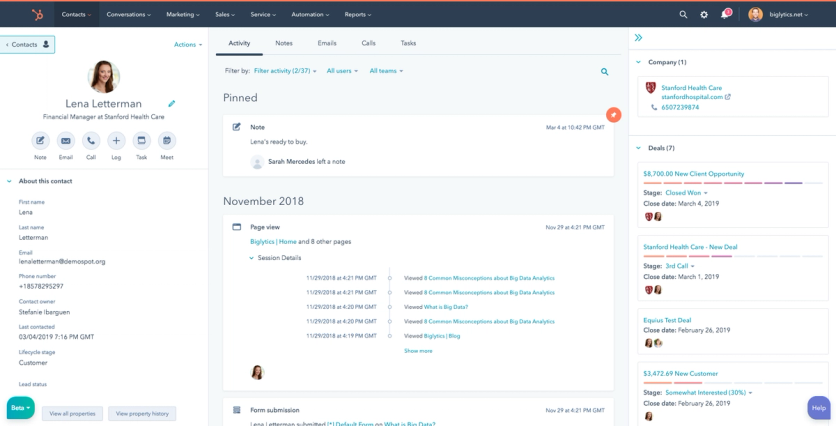
All-in-One CRM Integration: Marketing, sales and service tools share the same database with no sync issues or data silos between teams. Contact-level visibility appears at every touchpoint.
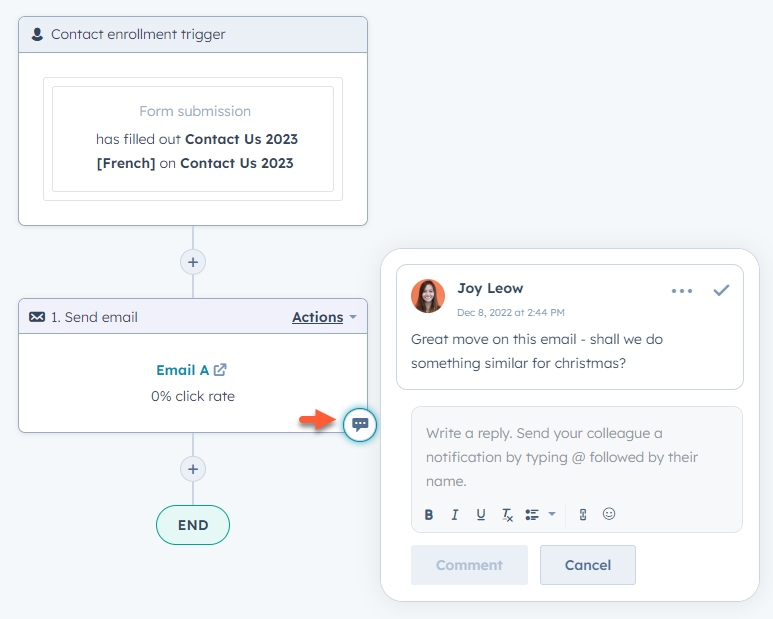
Workflow Automation: Visual workflow builder supports lead nurturing, customer onboarding, internal notifications and multi-step campaigns with branching, delays and conditional logic.
Breeze AI: HubSpot’s AI layer includes Customer Agent, Data Agent and Buyer Intent tools for lead scoring, content generation and customer journey analysis.
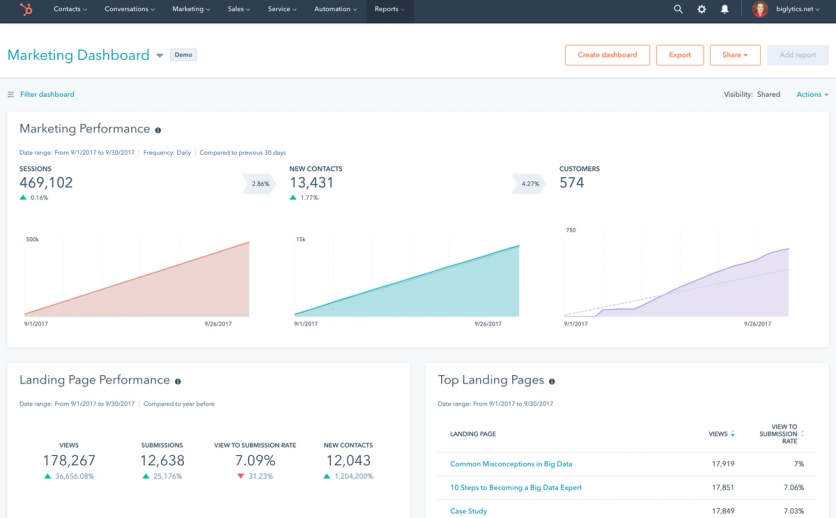
Content Tools: Landing page builder, blog platform, social media management, ad management and SEO tools eliminate the need for separate content systems.
Pricing
Professional starts at $890/month (annual) with 2,000 marketing contacts and 3 core seats, plus $3,000 one-time onboarding. Enterprise costs $3,600/month with 10,000 marketing contacts and 5 core seats, plus $7,000 onboarding. Additional seats run $45/month (Professional) or $75/month (Enterprise).
Where HubSpot Marketing Hub Wins
Marketing teams can self-serve without technical training. Tight integration between marketing, sales and service eliminates cross-team data silos. Over 2,000 integrations exist in the HubSpot marketplace. HubSpot Academy provides educational resources. Transparent, published pricing avoids surprises. G2 rating sits at 4.4/5.
Where HubSpot Marketing Hub Falls Short
Costs escalate as you add contacts and users. An Enterprise plan with 50,000 contacts costs substantially more than the base price. Less flexible customization than more complex platforms. Advanced reporting requires Professional or Enterprise tiers. Migration from other platforms takes time and resources. Not built for e-commerce use cases with no loyalty engine, no product recommendations and limited site personalization.
For typical medium-sized companies, migration takes 8 to 12 weeks from kick-off to productive go-live. The CRM remains untouched while marketing moves to HubSpot. Both systems can run in parallel during clearly defined migration steps.
Compared to Maestra
HubSpot is a generalist CRM platform while Maestra goes deep on e-commerce. HubSpot lacks a loyalty engine, product recommendation algorithms and advanced site personalization. For B2B companies or service businesses that need sales pipeline alignment, HubSpot is the natural fit. For e-commerce brands focused on retention and revenue, Maestra covers the use cases HubSpot can’t.
Salesforce Marketing Cloud: Best for Enterprise B2C at Scale
Salesforce Marketing Cloud is an umbrella name for multiple acquired products, now rebranded as Agentforce Marketing with Agentforce AI embedded in every edition. The platform targets enterprise B2C brands that manage complex, cross-channel campaigns at scale. Marketing Cloud Engagement (formerly ExactTarget), Account Engagement (formerly Pardot), and Agentforce Marketing represent three distinct products rather than unified offerings.
Key Features
Journey Builder orchestrates multi-channel campaigns across email, SMS, mobile push, and advertising.
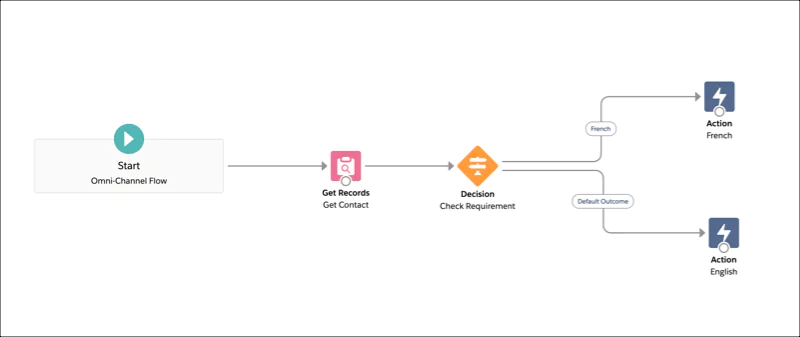
Data Cloud unifies customer information from multiple sources for real-time segmentation, though it requires separate licensing.
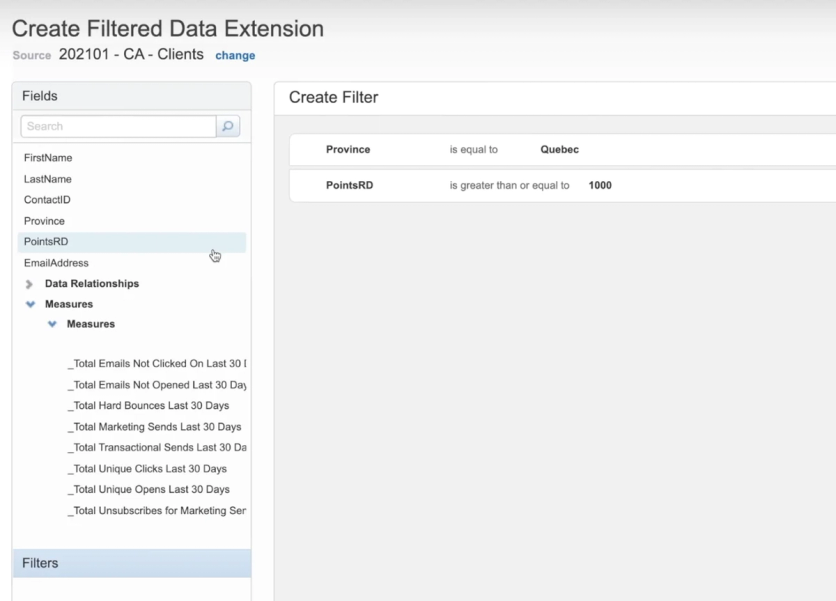
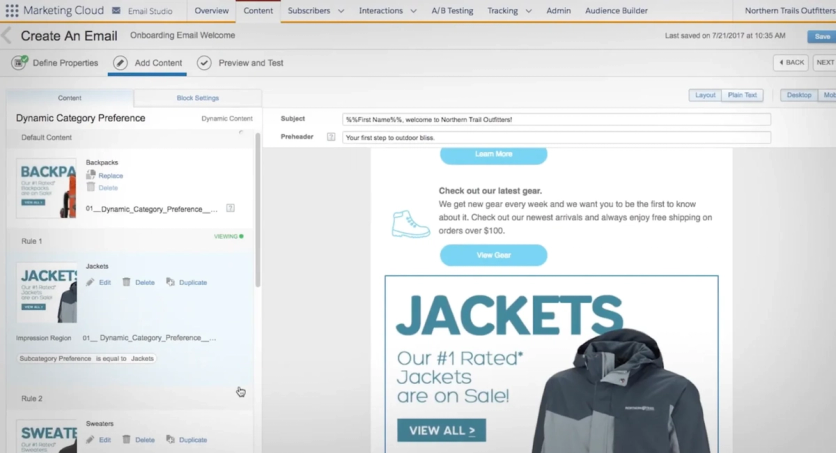
Email Studio supports dynamic content through AMPscript for advanced personalization.
Mobile Studio handles SMS through MobileConnect with opt-in management and keyword responses.
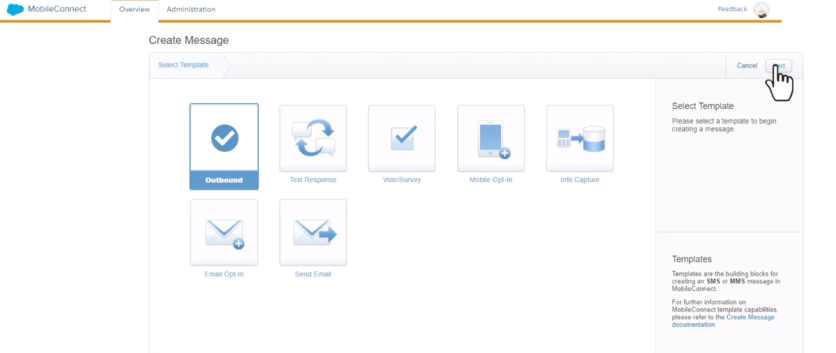
Einstein AI provides send-time optimization, predictive scoring, and content recommendations.
Pricing
| Edition | Monthly Cost | What’s Included |
|---|---|---|
| Starter Suite | $25/user | Simple email, lead management |
| Pro Suite | $100/user | Improved automation, forecasting |
| Growth Edition | $1,500/org | Agentforce campaigns, journey automation |
| Advanced Edition | $3,250/org | AI scoring, SMS/WhatsApp included |
Marketing editions use per-organization pricing rather than per-user. SMS and WhatsApp require additional credits starting at $10 per 1,000 credits, and actual per-message consumption varies by country and channel.
Where Salesforce Marketing Cloud Wins
Enterprise-grade email capabilities handle millions of sends with reliable infrastructure. SQL and relational data modeling enable sophisticated segmentation for complex requirements. Tight Salesforce CRM integration provides Connected Campaigns and unified dashboards. Advanced B2B Marketing Analytics aggregate data across products, though setup requires technical expertise.
Where Salesforce Marketing Cloud Falls Short
The steep learning curve requires SQL knowledge for advanced segmentation and AMPscript for email personalization. Journey Builder UI lags with complex workflows. Separate Studios for each channel create fragmentation without a unified customer view unless you add Data Cloud. Implementation costs easily reach $200,000. Consultant rates run between $90 and $250 hourly.
Compared to Maestra
Salesforce functions as an enterprise CRM ecosystem while Maestra specializes in e-commerce retention. Salesforce requires technical resources, separate modules, and lengthy implementations. Maestra delivers unified e-commerce features with managed migration and dedicated CSMs. Salesforce fits B2C enterprises that need deep Salesforce CRM integration. Maestra’s purpose-built approach delivers faster value for e-commerce brands focused on retention revenue.
Braze: Best for Mobile-First Engagement at Scale
Braze processes customer engagement at massive scale in real time. The platform was originally built for mobile-first companies and has expanded across email, SMS, push notifications, in-app messaging, WhatsApp and web. A Forrester Total Economic Impact study documented 457% ROI for Braze, which handles billions of messages through its real-time data engine and Canvas Flow experience builder.
Key Features
The data streaming infrastructure processes events the moment they happen and enables sub-second trigger accuracy. Canvas Flow orchestrates multi-step experiences with dynamic branching.
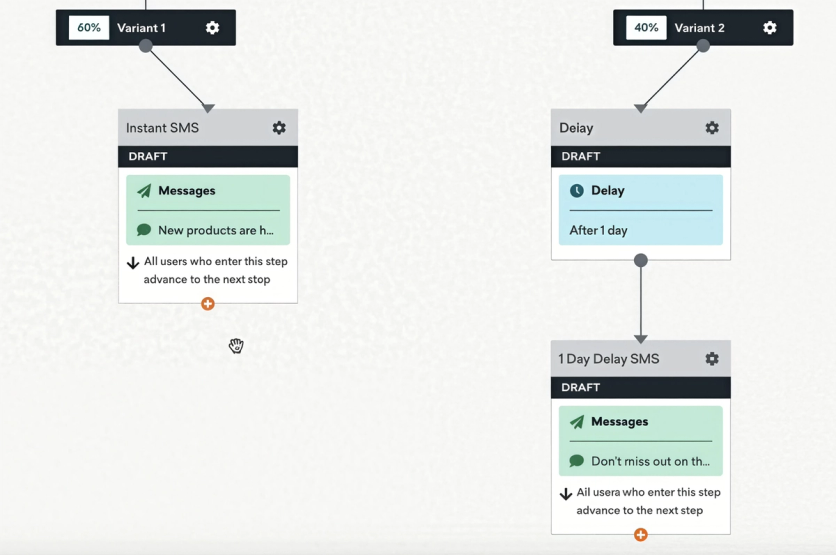
The mobile SDK supports iOS, Android and Web with deep integration for push notifications, content cards and in-app messages. BrazeAI suite includes Intelligence Suite for send-time optimization, Predictive Suite for churn scoring and BrazeAI Operator for natural-language campaign building.
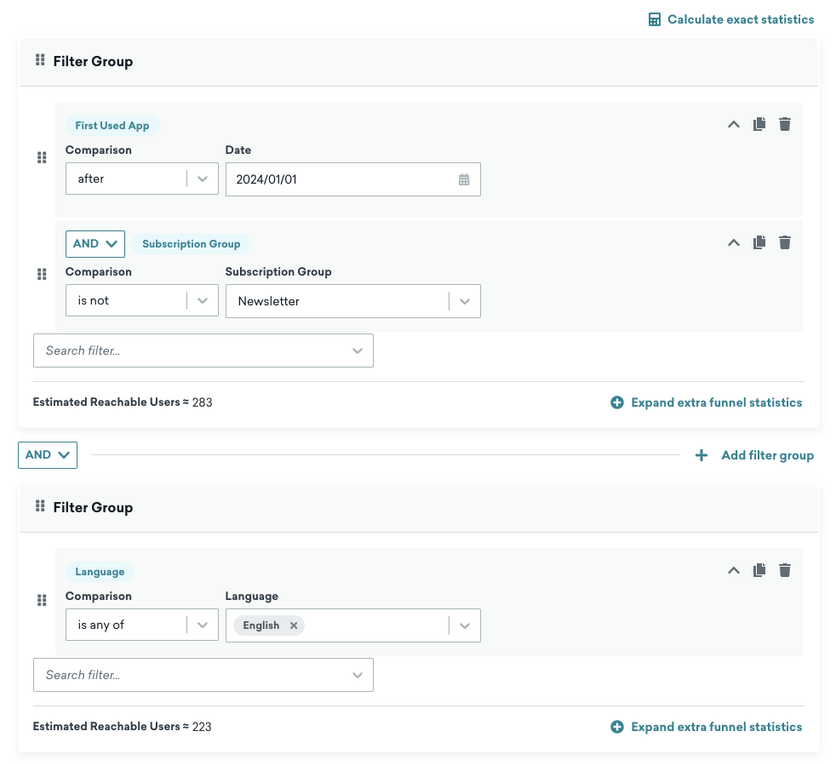
Cross-channel messaging spans email, push, in-app messages, Content Cards, SMS, WhatsApp, and RCS, all coordinated within a single Canvas. Liquid personalization with Connected Content pulls real-time data — including responses from external APIs — into individual messages. Currents streams engagement events to your data warehouse and analytics tools in near real time, while Catalogs store product and inventory data for dynamic, personalized recommendations.
Pricing
Braze doesn’t publish pricing. Annual contracts run from $60,000 to over $200,000, based on monthly active users, message volume, and platform edition. The model is value-based — it scales on MAU, flexible cross-channel message credits, and platform sophistication rather than per-seat licenses.
Where Braze Wins
Braze handles higher message volumes with infrastructure designed for billions of messages. G2 rating of 4.5/5 is driven by user-friendly design and strong customer support. Superior mobile optimization comes with SDK capabilities that include silent pushes and deeplinks. Personalization happens in real time through Liquid templating and event-driven triggers.
Where Braze Falls Short
Complexity and learning curve overwhelm small teams without engineering support. Implementation runs three to six months with ROI not visible until year two. Billing is based on data points, so every logged event and attribute update counts against your contract allotment. Segmentation requires external CDP tools like Segment or Hightouch for functionality that should exist natively.
Compared to Maestra
Braze delivers cross-channel messaging with mobile-first strength, whereas Maestra goes deep on e-commerce retention. Braze handles messaging well but most e-commerce teams still need separate platforms for loyalty, product recommendations and site personalization. Maestra unifies these functions natively. Braze fits mobile app-driven businesses or enterprises requiring sub-second triggers. Maestra delivers integrated value for e-commerce brands consolidating their marketing stack into one platform with built-in loyalty and recommendations.
Intercom: Best for Conversational AI Support
Intercom positions itself as an AI-first customer service platform built around conversational AI rather than traditional ticketing. The platform was designed for business messaging but now combines live chat, helpdesk, marketing automation and proactive support for SaaS companies and startups that prioritize real-time communication.
Key Features
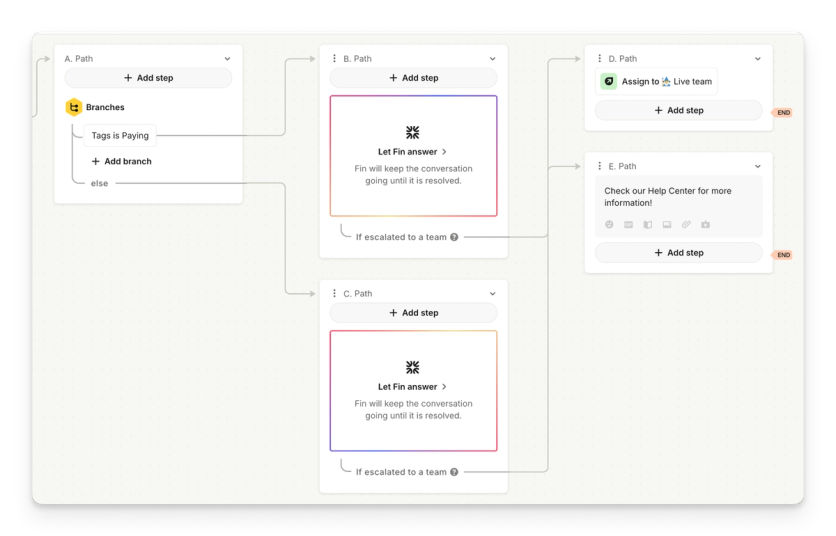
Fin AI Agent resolves 67% of queries at $0.99 per outcome and handles complex, multi-step requests by connecting to external systems.
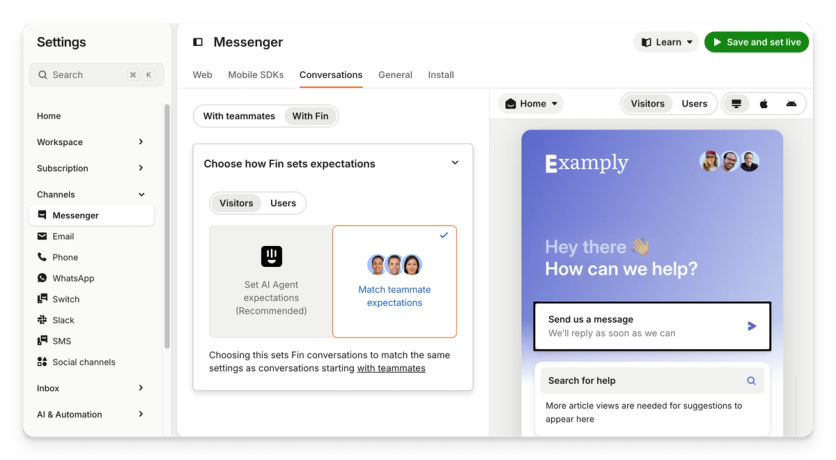
Fin AI Copilot works inside the Inbox as an AI assistant for agents, drafting replies and surfacing instant answers from your connected knowledge sources.
Omnichannel Inbox & Help Desk brings email, chat, phone, WhatsApp, and social into one feed, with AI-enhanced ticketing that auto-categorizes, prioritizes, and routes conversations.
Conversational Messenger & Outbound powers proactive support — in-app messages, product tours, checklists, tooltips, and banners targeted by user behavior.
Knowledge Hub & Help Center is a no-code, fully customizable Help Center that powers customer self-serve and feeds Fin’s answers.
Workflows & Reporting include a no-code automation builder for rules, triggers, and assignment logic, plus dashboards and AI-powered conversation insights for quality monitoring.
Pricing
| Plan | Annual Price | Key Features |
|---|---|---|
| Essential | $29/seat | Shared inbox, simple chatbots, ticketing, help center |
| Advanced | $85/seat | Workflows, multiple inboxes, multilingual help center |
| Expert | $132/seat | SLAs, workload management, SSO, advanced security |
Fin AI Agent charges $0.99 per successful outcome on all plans.
Where Intercom Wins
Fin provided better answers 80% of the time versus Zendesk’s bot in Intercom’s own head-to-head testing and answered 2x more complex questions. The modern, easy-to-use interface feels like consumer apps customers already use. Proactive support through in-app messages, product tours and banners sets Intercom apart from reactive-only platforms.
Where Intercom Falls Short
Pricing complexity frustrates users as Fin charges per resolution on top of seat costs. Some teams report bills jumping from $4,000 to $9,000 monthly as AI usage scales. Teams report underpowered SLAs and lightweight workflows. Add-ons are needed to handle core support processes. Reviewers report accuracy issues in analytics, and the platform lacks native QA. Feature gating places SLAs behind the highest Expert tier.
Compared to Maestra
Intercom focuses on customer support and service conversations. Maestra specializes in e-commerce retention marketing. Intercom lacks loyalty programs, product recommendation engines and advanced site personalization that e-commerce brands require. Intercom fits SaaS companies needing a support helpdesk with conversational AI. Maestra delivers integrated value for e-commerce brands consolidating marketing, loyalty and recommendations.
Zendesk Suite: Best for Enterprise Helpdesk and Ticketing
Zendesk Suite centralizes customer support operations through a ticketing system that combines inquiries from email, chat, phone and social media into one workspace. The platform serves over 160,000 customers worldwide and delivers enterprise-grade capabilities with AI trained on about 20 billion service interactions.
Key Features
Ticketing system assigns unique IDs to track customer queries through resolution stages, with automated routing and SLA management.
Omnichannel support unifies email, messaging, live chat, voice, and social into continuous threads inside a single Agent Workspace.
AI agents resolve about 50% of customer interactions autonomously, while Agent Copilot suggests replies and surfaces knowledge for human agents.
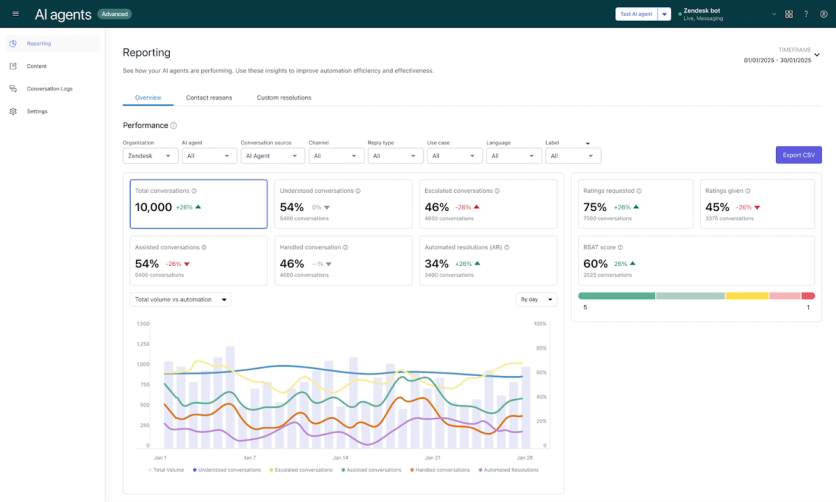
Zendesk Explore provides analytics with pre-built dashboards that measure response times, CSAT scores, and agent productivity.
The knowledge base supports self-service with articles and community forums, though multilingual content requires higher-tier plans.
Workforce management and QA add AI-powered scheduling and forecasting plus automatic quality scoring across both human and AI conversations.
Pricing
| Plan | Price/Agent/Month | Key Features |
|---|---|---|
| Suite Team | $55 | Ticketing, email, chat, social, help center |
| Suite Professional | $115 | 5 help centers, skills-based routing, HIPAA compliance |
| Suite Enterprise | $169 | Custom roles, sandbox, advanced AI, 300 help centers |
AI Copilot adds $50 per agent monthly.
Where Zendesk Suite Wins
Zendesk says its customers achieve 60% faster implementation than industry peers. Zendesk reports that organizations migrating from Freshworks see 15% higher admin productivity. Integration with 1,800+ apps supports existing tech stacks.
Where Zendesk Suite Falls Short
Steep learning curve requires technical expertise for complex automations and custom workflows. The platform’s multiple acquisitions create fragmented experiences as users navigate between Support, Explore, Chat and Guide modules. Per-agent costs escalate as teams grow. Customer support responsiveness disappoints despite selling support software.
Compared to Maestra
Zendesk focuses on customer service ticketing while Maestra specializes in e-commerce retention marketing. Zendesk lacks loyalty engines, product recommendations and site personalization that e-commerce brands require. For service-focused businesses needing strong helpdesk infrastructure, Zendesk fits. For e-commerce brands combining marketing and loyalty into one platform, Maestra delivers integrated value.
Klaviyo: Best for Small-to-Mid Shopify Stores
You’re reading this on Maestra’s blog, so why include Klaviyo? Because for Shopify stores under 10,000 contacts that need solid email and SMS with strong segmentation, Klaviyo is genuinely a good fit. We’d rather point you to the right tool than pretend one size fits all.
Klaviyo functions as a marketing automation and B2C CRM built for e-commerce brands wanting to connect email and SMS campaigns to store revenue. More than 193,000 brands use Klaviyo, with over 50,000 switching from Mailchimp. The platform integrates with Shopify, WooCommerce, BigCommerce, and Magento, pulling purchase history and browsing data for personalization.
Key Features
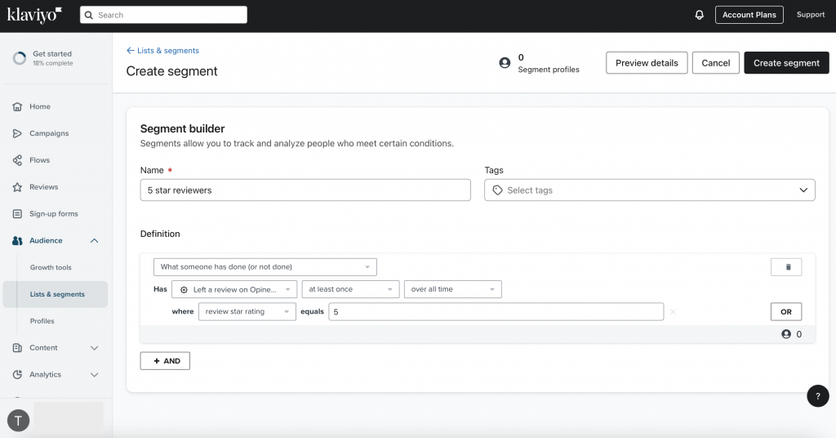
Dynamic segmentation updates based on behaviors, purchase history, and custom properties in real time.
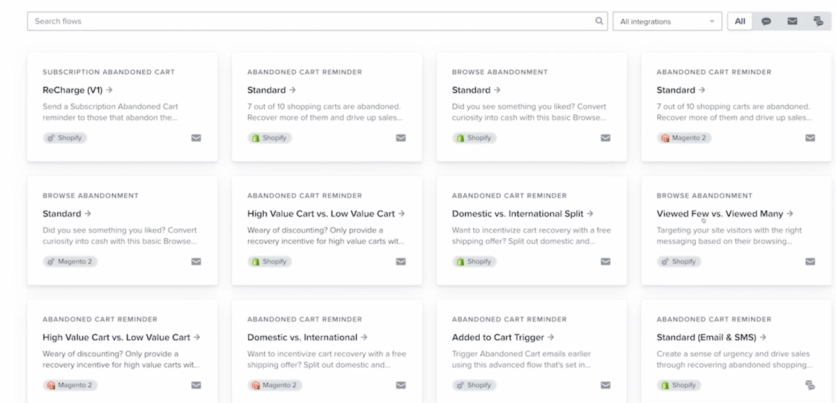
Automated workflows include 80+ pre-built flows for abandoned cart, welcome series, and post-purchase follow-ups.
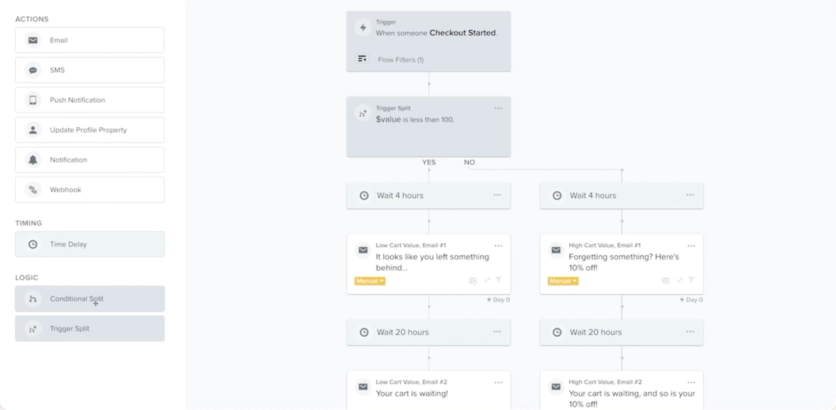
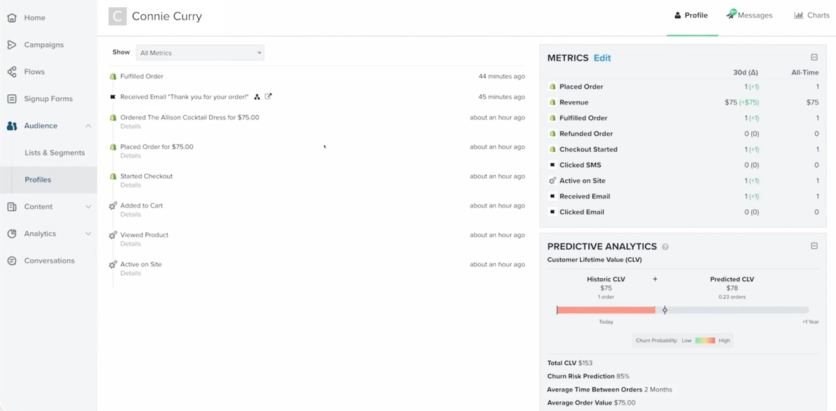
Predictive analytics forecast customer lifetime value, churn risk, and expected next order date using machine learning.
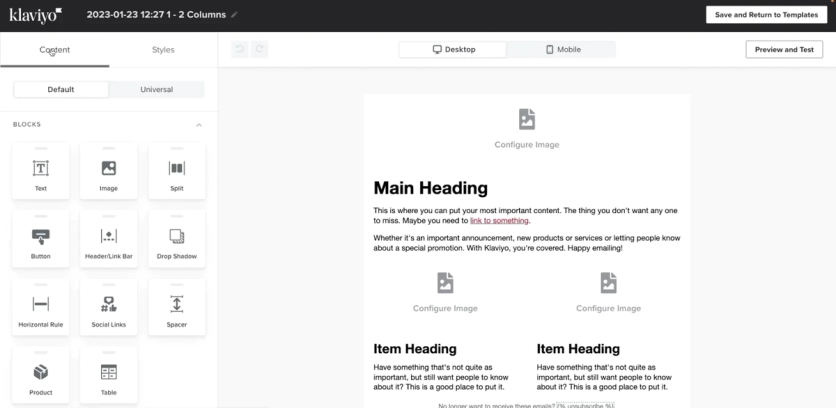
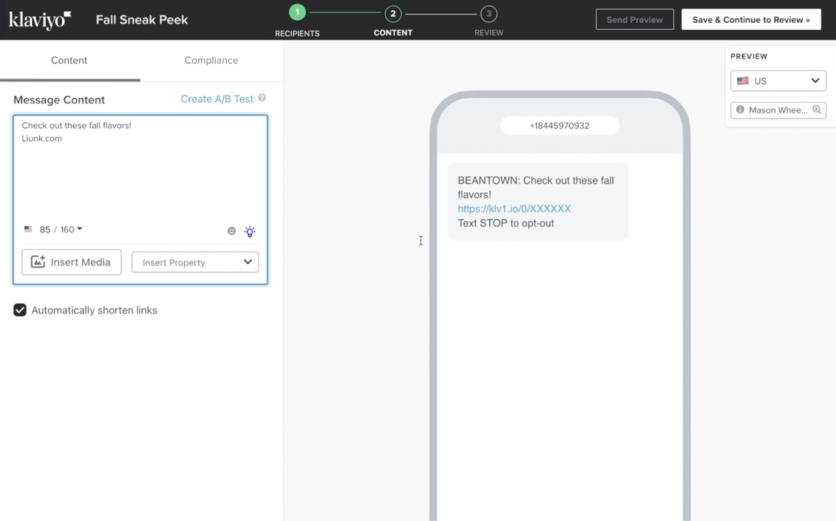
The drag-and-drop builder requires no coding for email and SMS campaigns.
Pricing
| Plan | Contacts | Monthly Cost |
|---|---|---|
| Free | 250 | $0 |
| 500 | $20 | |
| 10,000 | $150 | |
| Email + SMS | 500 | $35 |
Pricing scales with active profiles, reaching $720/month for 50,000 contacts. SMS costs $15/month minimum for 1,250 credits.
Where Klaviyo Wins
The free plan includes all email features with only send volume limits. Segmentation adjusts as customer behavior changes, unlike static lists. Predictive analytics help prioritize high-value customers. Revenue attribution ties campaigns to sales for clear ROI measurement. The platform syncs segments to Facebook and Google Ads for retargeting.
Where Klaviyo Falls Short
Costs escalate as lists grow, with $350/month for 15,000 contacts versus $200 for Mailchimp. Customer support responses can be slow, with complaints about long wait times. The platform lacks loyalty programs, on-site personalization, and web push notifications. Email design options feel limited compared to competitors. Active profile pricing means paying for all contacts even if you don’t email them.
Compared to Maestra
Klaviyo delivers powerful email and SMS marketing for small to mid-sized online businesses, especially Shopify stores. But it lacks on-site personalization and loyalty programs. Maestra unifies email, SMS, loyalty, product recommendations, and site personalization in one platform with dedicated CSMs. For e-commerce brands needing only email and SMS with simple automation, Klaviyo provides an affordable entry point. For brands consolidating their entire marketing stack with built-in loyalty and white-glove support, Maestra delivers integrated value.
Twilio Segment: Best for Composable CDP Infrastructure
Twilio Segment operates as composable CDP infrastructure that collects, unifies, and routes customer data to 550+ downstream destinations. Segment serves over 25,000 companies that need flexible data pipelines feeding their existing marketing and analytics stacks. Twilio acquired it for $3.2 billion.
Key Features
Event Collection Infrastructure: Connections captures data from websites, mobile apps, and servers in real time. It federates this data to downstream tools through event data collection and routing.
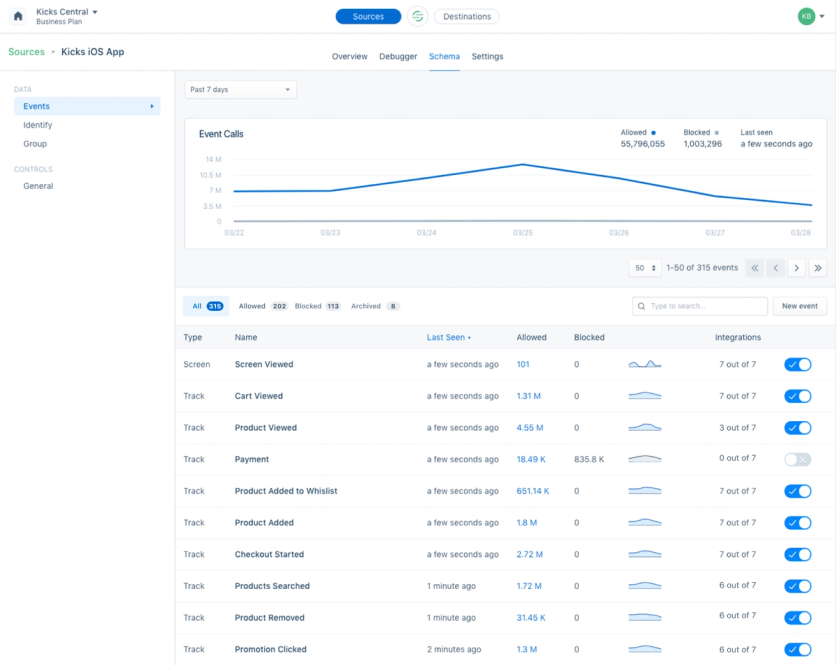
Identity Resolution & Profile Unification: Unified profiles merge behavioral data from multiple sources through deterministic identity resolution and update with each new interaction. The system resolves identities by stitching together every customer interaction into a single profile in real time.
Composable Architecture: Four base products work independently or together: Connections (event collection), Protocols (data governance), Unify (identity resolution), and Twilio Engage (audience building and activation). You can adopt each component separately based on specific needs.
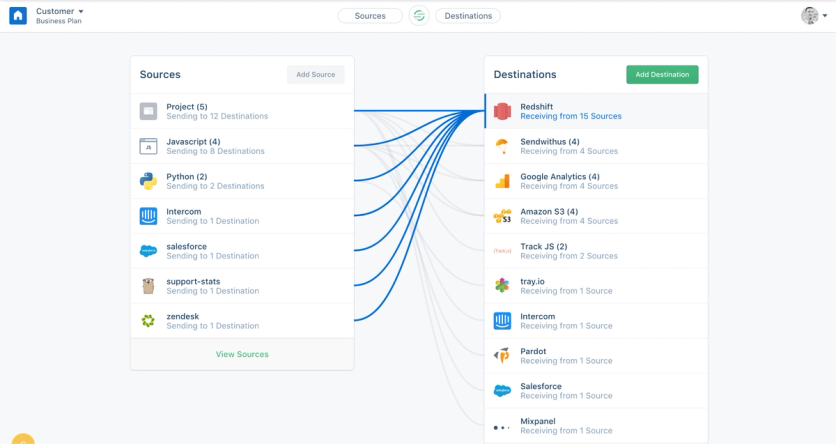
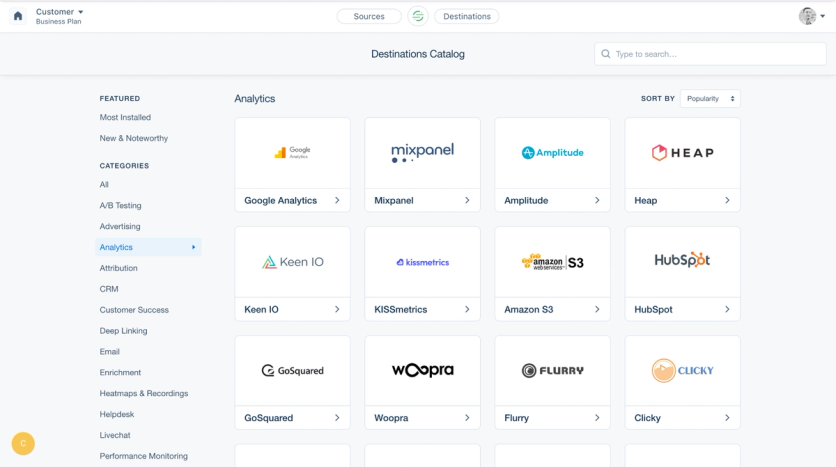
Integration Depth: 700+ pre-built integrations span analytics tools, marketing platforms, data warehouses, and customer support systems. The API-first design simplifies custom integrations for engineering teams without modifying source code for each tool.
Pricing
| Plan | Monthly Cost | MTUs | Features |
|---|---|---|---|
| Free | $0 | 1,000 | Limited sources, 550+ destinations |
| Team | $120 | 10,000 | Unlimited sources, $10 per additional 1,000 MTUs |
| Business | Custom | Custom | Full CDP with Unify + Engage |
Where Twilio Segment Wins
Segment processes 1 trillion events monthly with 99.999999%+ uptime and 30 millisecond response times. The developer experience remains unmatched with clean SDKs and extensive documentation. Setup is praised as the best among CDP vendors. The integration catalog of 550+ destinations eliminates custom engineering for each downstream tool. A free tier allows startups to adopt without procurement barriers. G2 rating sits at 4.5/5 driven by ease of integration and deployment.
Where Twilio Segment Falls Short
The data model prevents custom objects and limits flexibility for complex use cases. Implementation timelines stretch for complex setups. Non-technical users face steep learning curves. High-traffic businesses face escalating costs as MTU volumes grow. Segment doesn’t store customer data natively and relies on downstream tools for storage. Multiple reviewers report that since Twilio’s acquisition, customer treatment has declined.
Compared to Maestra
Segment is data infrastructure; Maestra is an execution platform. Segment collects and routes data but doesn’t send emails, trigger SMS, personalize websites, or run loyalty programs. It requires separate tools for activation. Maestra includes a real-time CDP plus every activation channel in one platform. For e-commerce teams wanting to act on data without managing 5+ integrations, Maestra provides faster time-to-value. Segment suits data-driven engineering teams needing a flexible CDP foundation to feed existing tools. For e-commerce brands focused on retention revenue with built-in execution, Maestra eliminates the need for Segment.
Honorable Mentions — Other Client Engagement Platforms Worth Considering
Several customer engagement platforms deserve consideration beyond our detailed reviews:
- Mixpanel — best for SaaS teams that want messaging driven by analytical insights across every channel, backed by powerful first-party data.
- Pendo — focuses on mobile and web app engagement with exceptional product analytics.
- Userpilot — serves SaaS businesses needing in-app product engagement, with no-code onboarding flows and AI-assisted A/B testing.
- Nextiva — combines voice, video, and live chat in one interface with AI-driven automation and smart IVR.
- ChurnZero — targets customer success teams at mid-market and enterprise SaaS companies managing defined books of business.
- Front — is a collaborative, team-based inbox for support and account management teams.
- MoEngage — specializes in mobile-first engagement with strong analytics and AI-powered optimization through Sherpa. Pricing starts around $999/month.
- Iterable — focuses on cross-channel marketing automation with a user-friendly interface and solid email deliverability. Entry contracts typically run $20,000–26,000 per year.
- CleverTap — competes in mobile-first engagement with real-time analysis, uninstall tracking, and predictive segmentation. The Essentials plan starts at $75/month for 5,000 monthly active users, with free startup programs for the first year.
Each platform serves a specific niche within the broader customer engagement software landscape.
Which Client Engagement Platform Is Right for You
Start with what you actually need instead of feature checklists. Map your customer journey first — where do customers interact with you, where do they get stuck, and which channels matter most to your audience? The right platform addresses your specific gaps rather than offering the longest feature list.
Business model determines platform type. E-commerce brands needing loyalty programs and product recommendations require platforms built for retail. SaaS companies prioritizing in-app messaging need different architecture. B2B organizations focused on pipeline orchestration benefit from CRM-native solutions.
Technical resources shape realistic options. Platforms requiring SQL knowledge or AMPscript coding demand engineering support. No-code builders suit marketing teams that operate independently. Composable CDPs assume developer bandwidth for custom integrations.
Integration compatibility prevents new silos. Check connections with your existing CRM, data warehouse, e-commerce platform, and analytics tools before committing. Pre-built integrations accelerate deployment. API-first designs support custom needs.
Scalability matters more than current size. Choose platforms that grow with you rather than ones you’ll outgrow in eighteen months. Review pricing structures as contact volumes increase. Consider whether you need enterprise features like multi-brand management or advanced permissions as you scale.
Security and compliance requirements narrow options for regulated industries. For a step-by-step evaluation framework, see our guide to selecting marketing automation software.
Quick Selection Guide
Choose Maestra if: You’re an e-commerce brand consolidating 3–5+ tools and need built-in loyalty and product recommendations. You want white-glove onboarding with a dedicated CSM and require a CDP with all activation channels unified.
Choose HubSpot if: You’re a B2B company needing marketing-sales-service alignment and prioritize ease of use over advanced features. You want transparent pricing with strong educational resources.
Choose Salesforce if: You’re an enterprise already invested in the Salesforce ecosystem and have technical resources for SQL/AMPscript. You need deep customization for complex global campaigns.
Choose Braze if: You have a mobile app where engagement depends on push notifications and need sub-second trigger accuracy at billions-of-messages scale. You have dedicated marketing engineers.
Choose Intercom if: You’re a SaaS company prioritizing conversational AI support and want proactive in-app engagement. You prefer a modern interface over traditional ticketing.
Choose Zendesk if: You need strong helpdesk infrastructure with multi-brand support, HIPAA compliance and enterprise-scale ticketing capabilities.
Choose Klaviyo if: You’re a small to mid-sized e-commerce brand needing affordable email/SMS with strong Shopify integration and predictive analytics.
Choose Segment if: You’re building composable data infrastructure to feed existing tools and have engineering resources. You need flexible event collection with 550+ downstream destinations.
Conclusion
The right platform comes down to your business model and technical resources — not the longest feature list. If you’re an e-commerce brand tired of stitching five to seven tools together, that’s exactly what Maestra is built for: a real-time CDP, every activation channel, loyalty, and a dedicated CSM in one system.
And if we’re not the right fit, we’ll say so — this guide is here to point you to the platform that is. But if consolidation and retention are your goals, we’d love to show you what one unified system can do. Book a demo with our team today.
Frequently Asked Questions
- Zoho Desk provides 3 free user accounts with automated ticket management. Freshdesk offers a cloud-based free plan that supports email, phone, chat and social media engagement. Klaviyo includes all email features in its free plan for up to 250 contacts, with only send volume limits.
- Maestra, Braze and Twilio excel at SMS and WhatsApp engagement. WhatsApp open rates far exceed email, which makes the channel effective for cart recovery, win-back, and post-purchase flows. WhatsApp also supports end-to-end encryption and GDPR compliance.
- Maestra assigns dedicated Customer Success Managers who handle just 10–15 accounts each. They manage migration, strategy and ongoing campaigns at no extra cost. Other platforms use help desks where CSMs manage 60–125 accounts.
- Yes — every platform on this list supports migration, but the experience varies widely. Most ask you to export and remap your data yourself, or charge extra for migration and onboarding, and the real risk is downtime and broken automations during the cutover. Maestra takes a different approach: managed migration is included in every plan and handled by a dedicated CSM who rebuilds your flows, segments, and integrations for you. Transfers typically complete in 2–8 weeks, and billing only starts once you’re live, so you never pay for two platforms at once. Brands like Urban Armor Gear consolidated several tools into Maestra this way without losing historical data.
- Maestra runs multiple brands from a single account — Atlanta Cutlery and Museum Replicas consolidated two brands on one platform and grew automations ARPU 3x and 10x. Salesforce Loyalty Management runs multiple programs within one platform for different brands and initiatives. It supports both B2B and B2C programs. Zendesk Suite supports up to 300 help centers on Enterprise plans with separate workflows per brand.
- Maestra includes a native loyalty engine with points, tiers, referrals, personal coupons and gamification that feeds into segmentation and automated flows. Salesforce Loyalty Management provides enterprise-grade capabilities with AI-powered predictive dashboards and cross-industry partner management.