Best Marketing Automation for E-commerce – 11 Platforms That Drive Sales
Most e-commerce brands start marketing automation in their email tool and add SMS and push later, often in separate apps.
Shoppers, meanwhile, move between all of them. A cart left on mobile works best as one sequence: a push 20 minutes later, a WhatsApp reminder the next day, a banner when the shopper returns. Few platforms run that whole sequence from one flow.
This guide compares 11 marketing automation platforms for e-commerce. Maestra fits brands that want every channel in one flow, with a Forward Deployed Marketer who runs it. Klaviyo and Omnisend are simpler picks for Shopify stores led by email and SMS.
Quick Verdict: Best Marketing Automation Platforms by Category
For e-commerce, the top marketing automation platforms are Maestra, Klaviyo, Braze, Omnisend, and Salesforce Marketing Cloud – the right one depends on your main channel and stage. Maestra is the strongest all-in-one choice for brands unifying customer data and every channel in one place; Klaviyo and Omnisend fit Shopify stores led by email and SMS; Braze and CleverTap suit mobile-app-first brands; and Salesforce Marketing Cloud serves enterprises already on Salesforce.
Best for omnichannel e-commerce: Maestra – unified CDP + flows across all channels
Best for mobile-first messaging: Braze – real-time push, in-app, and email for app-driven brands
Best for WhatsApp marketing: WANotifier – WhatsApp-native automation
Best for mobile analytics: CleverTap – behavioral analytics with engagement tools
Best for Salesforce ecosystem: Salesforce Marketing Cloud – enterprise CRM-integrated marketing
Best for Shopify email/SMS: Klaviyo – self-serve e-commerce automation
Best for small Shopify stores: Omnisend – lightweight email and SMS
Best for growth teams: Iterable – cross-channel campaigns with AI optimization
Best for website personalization: Insider One – AI-powered on-site and cross-channel journeys
Best for mobile push at scale: MoEngage – push-first customer engagement
Best for small business CRM: ActiveCampaign – email automation + sales CRM
What Is Marketing Automation for E-Commerce
Marketing automation for e-commerce is software that runs your campaigns automatically – it triggers multi-step flows based on what each shopper does (browsing, abandoning a cart, or buying) and delivers the right message across email, SMS, push, and on-site, without anyone hitting send.

At its core, a marketing automation platform does four things:
- Triggers flows from what customers do – a product view, a cart, a purchase
- Runs multi-step journeys with branching and timing, not one-off blasts
- Delivers across channels – email, SMS, push, and on-site – from one flow
- Personalizes every message using your customer data
For e-commerce, that usually means flows like abandoned cart, browse abandonment, welcome series, post-purchase, and winback – all running in the background and tied to real-time behavior.
It’s not the same as a CDP. A customer data platform unifies your data; a marketing automation platform acts on that data to send the messages. Many all-in-one tools in this guide include both.
Marketing Automation Platforms Compared at a Glance
| Tool | Best For | Price | Notable Pros | Notable Cons |
|---|---|---|---|---|
| Maestra | Rapidly scaling e-commerce, retail, DTC brands | Modular pricing from $2,000 a month (CDP + unlimited email); pay only for the channels you use and only for active profiles | • Real-time CDP with omnichannel communications • Built-in loyalty program and web personalization • Product recommendations across all channels • Dedicated Forward Deployed Marketer included • Complete all-in-one solution with strategic guidance • Purpose-built for commerce; only active profiles are billed | • Best suited for advanced marketing strategies • May be overkill for simple email campaigns |
| Braze | Enterprise-level brands | Custom, quote-based pricing; the median contract is about $89,000 a year (Vendr data) | • Canvas visual journey builder with real-time event streaming • Advanced mobile engagement and Liquid templating • Exceptional scalability and real-time capabilities • Superior mobile engagement features with powerful API integration • Advanced segmentation capabilities and strong analytics | • Very high enterprise pricing • Steep learning curve requiring technical expertise • Complex implementation • Often requires integration with separate tools |
| WANotifier | WhatsApp-driven e-commerce and scaling brands | Monthly subscription starting at ~$69 with 0% markup on API charges | • 0% markup on official WhatsApp API charges • End-to-end lifecycle automation (abandoned cart, order updates) • Seamless e-commerce and webhook integrations • High-speed delivery for broadcast campaigns | • Exclusively focused on WhatsApp (lacks email/SMS) • No native web personalization features • Multi-channel brands will need a separate email platform |
| CleverTap | Mobile-focused businesses | Pricing by monthly active users; the entry Core plan starts at about $85 a month | • TesseractDB analytics with Clever.AI predictions • Omnichannel messaging and visual journey builder • Behavioral analysis capabilities • Combined analytics and engagement platform • AI-driven segmentation with low-code interface • Affordable pricing with strong mobile engagement | • Limited web capabilities compared to mobile • Basic email tools versus dedicated platforms • No built-in loyalty features • Limited Western market presence • E-commerce platform integration needs work |
| Salesforce Marketing Cloud | Large multi-brand corporations | Published per-org pricing: Pro+ from $2,000 a month, Corporate+ $5,500, Enterprise+ $30,000 | • Journey Builder with Einstein AI and cross-channel campaigns • Deep CRM integration with enterprise-grade features • Exceptional Salesforce CRM integration • Comprehensive marketing capabilities with advanced AI features • Extensive third-party ecosystem and strong role-based access controls | • Complex implementation requiring specialists • Steep learning curve • High pricing structure • Interface feels dated compared to newer platforms • Multiple disconnected “studios” |
| Klaviyo | E-commerce and DTC brands | Pricing by active profiles, from a free tier to a few thousand a month. Quickly becomes expensive as your list grows | • Deep e-commerce integrations with behavioral targeting • Email/SMS automation with revenue attribution • Pre-built automation flows and extensive template library • User-friendly interface with strong ROI tracking • Flexible pricing that grows with business | • Still email/SMS-centric – newer push, WhatsApp, and RCS channels less mature than mobile-first rivals • Higher pricing for large databases • Basic personalization compared to enterprise platforms • Implementing all features requires resources |
| Omnisend | Small to mid-sized eCommerce | Budget-friendly tiered pricing from $16 a month with generous free tier | • Email campaigns, SMS marketing, and web push notifications • Pre-built automation templates • User-focused interface with complete multi-channel tools • Tight integration with e-commerce platforms • 24/7 email support and live chat | • Simpler segmentation than enterprise options • Basic personalization features • SMS features don’t match dedicated platforms • Limited customization for larger companies |
| Iterable | Sophisticated B2C marketing teams | Custom, quote-based pricing; median contract about $92,000 a year (Vendr data) | • Cross-channel orchestration with Catalog (paid add-on) • Visual workflow editor and flexible segmentation • Advanced analytics and reporting • Great cross-channel campaign coordination • Strong API and integration options with advanced A/B testing | • Custom enterprise pricing • No free tier available • Takes time to learn all features • Setup requires technical knowledge • Complex segments can run slowly |
| Insider One | Mid-sized to enterprise e-commerce | Custom, quote-based pricing; median contract about $225,000 a year (Vendr data) | • AI-powered predictive segmentation with Web suite • Cross-channel orchestration and Architect Journey Builder • Advanced AI-powered segmentation with comprehensive capabilities • Resilient personalization engine and dedicated customer success management | • Higher cost than simple automation solutions • Time required to master platform capabilities • No free tier or self-service option • Setup requires dedicated resources |
| MoEngage | Mid-sized to enterprise focused on analytics | Priced by monthly tracked users (MTU); Growth from $750 a month for up to 25,000 MTUs on AWS Marketplace, Enterprise quote-based | • RFM analysis with cross-channel capabilities • AI-powered analytics and visual journey designer • Cohort analysis tools with powerful analytics visualization • Solid RFM segmentation for retail applications • Cross-channel orchestration with AI channel selection | • Higher price point than entry-level tools • Learning curve for analytics capabilities • Large data volumes can cause latency • Limited customization for reporting dashboards |
| Active Campaign | Small to mid-sized businesses | Contact-based pricing from $15 a month (Starter, annual); costs increase with list growth | • Email marketing with CRM integration • Machine learning capabilities and visual workflow builder • 1,000+ app integrations • Balances usability with sophisticated features • Exceptional automation capabilities with budget-friendly pricing • Strong CRM and marketing integration | • Prices increase with contact list growth • Higher-tier plans needed for advanced reporting • Email builder less intuitive than competitors • Complex automations may face performance issues |
Maestra – Best for omnichannel e-commerce
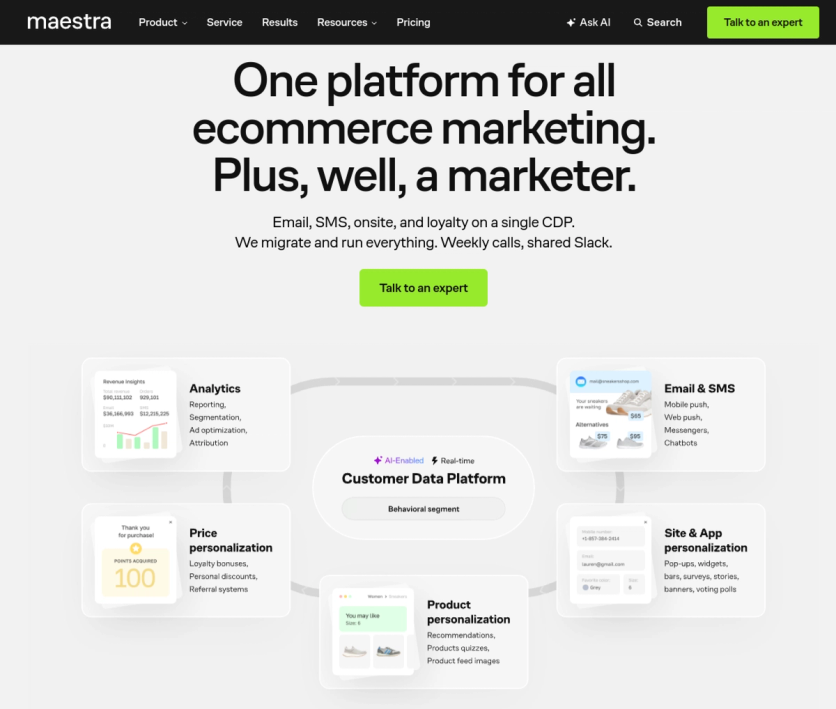
Maestra leads the pack in e-commerce marketing automation. It’s a complete solution for brands that want to move beyond using multiple marketing tools. This platform combines advanced omnichannel capabilities with expert guidance. It’s perfect for ambitious e-commerce businesses that want to unite their marketing operations.
Maestra Features
Maestra works as a unified marketing hub that brings together several significant components. The platform runs on a real-time Customer Data Platform (CDP) that tracks and processes customer behavior right away. This helps marketers create tailored campaigns based on customer data and buying patterns.
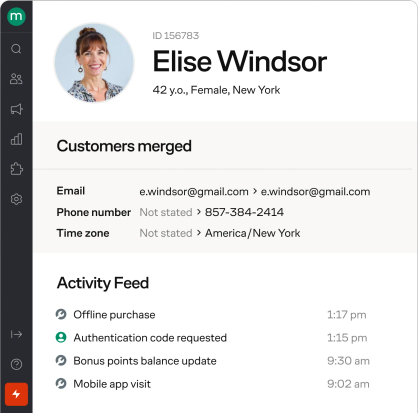
Customer profile in Maestra
The platform shines when it handles multiple marketing channels at once. Many competitors focus on specific channels, but Maestra lets you communicate smoothly through:
- Email marketing automation
- SMS messaging
- Mobile and web push notifications
- On-site and in-app personalization
- Paid advertising integration
- Loyalty program management
The platform’s flow builder lets you create sophisticated multi-step customer experiences. A business can set up an abandoned cart recovery sequence that starts with an email. If customers don’t open it, they get an SMS. When they return to the site, they see personalized content and might earn loyalty points to complete their purchase.
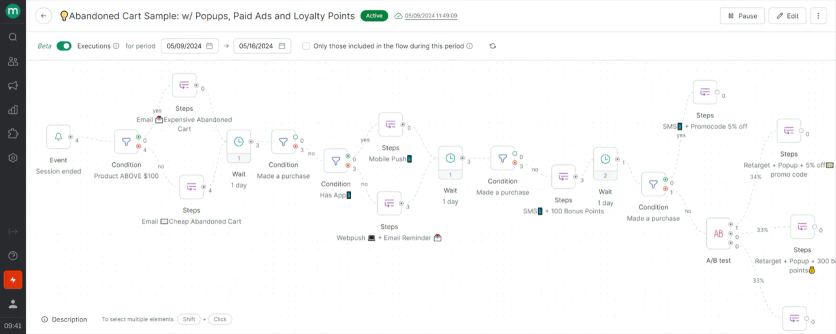
Maestra’s flow example: abandoned card flow with emails, mobile and web pushes, pop-ups, paid ads and loyalty points
The platform has a built-in loyalty and rewards engine, so you won’t need separate software. This integration keeps customer engagement data and loyalty status in one place. You’ll get a better view of how customers interact with your brand.
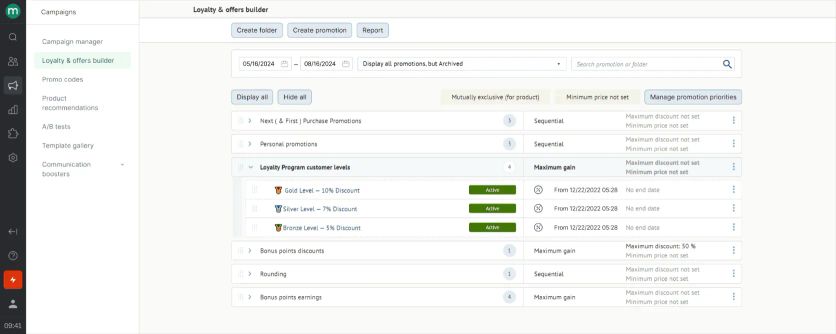
Maestra’s promotions rule engine
Most brands tap only a slice of these features. Apparel brand Svaha USA uses almost all of them – loyalty, product recommendations, email, SMS, and on-site personalization – after replacing Yotpo and Rebuy with one platform, and grew total sales 26%.
Maestra Pricing Plans
Maestra’s pricing is modular, starting at $2,000 per month for the most common package – the customer data platform plus unlimited email. The first 100,000 active profiles are included, and dormant contacts are stored free. You can build your own estimate on the Maestra pricing page.
Maestra offers better value through its all-in-one approach. Every subscription includes a dedicated Forward Deployed Marketer (a marketer who works as part of your team) and all features – no extra costs for loyalty programs, web personalization, or product recommendations.
Companies replace multiple tools with one platform, eliminating separate expenses for email, SMS, loyalty, and website tools. Many businesses reduce their total marketing costs after switching to Maestra.
Maestra publishes its prices and makes advanced features available to mid-market brands without six-figure commitments.
Each plan includes a dedicated Forward Deployed Marketer. That’s great value compared to platforms that charge extra for strategic guidance.
Maestra Support
Maestra stands out with its hands-on support model. Every client gets a dedicated Forward Deployed Marketer who helps develop and implement strategies. They do more than technical support – they actively guide your marketing approach and optimize campaigns.
Your Forward Deployed Marketer becomes part of your marketing team. They offer strategic advice and help build effective automation flows. Teams with limited in-house marketing resources can get results faster. This approach is different from Braze or MoEngage, which provide basic support but expect clients to have stronger technical skills or work with agencies.
E-commerce brands without marketing automation experts can implement and optimize the platform easily. The service-oriented approach helps them get value from the platform faster.
Testimonial: Kyle Cannon, Digital Marketing Manager, Furniture Fair
Maestra Pros and Cons
| Pros | Cons |
|---|---|
| All-in-one solution combining CDP, marketing automation, loyalty, and product personalization | Less specialized for mobile app-first businesses compared to platforms like Braze |
| Dedicated strategic guidance through assigned Forward Deployed Marketer | Not as deeply integrated with Salesforce ecosystem as Salesforce Marketing Cloud |
| Built specifically for e-commerce use cases with retail-focused features | |
| Strong omnichannel capabilities across email, SMS, push, web, and ads | |
| Native loyalty program management eliminates need for separate systems | |
| Unified customer data across all touchpoints without requiring external CDP |
Maestra balances powerful capabilities with ease of use. Braze might give more technical flexibility to developer-heavy organizations. But Maestra delivers a united solution with built-in strategic guidance.
The platform works best for ambitious e-commerce brands that want to unite their marketing stack and get expert guidance. Retail businesses looking for an integrated approach to customer engagement across channels will find Maestra compelling. Its mix of technical capabilities and strategic partnership makes it stand out among top marketing automation tools.
Braze – Best for mobile-first messaging
Braze has become a major player in customer engagement, serving big consumer brands and tech companies with large user bases. The platform’s real-time event-streaming architecture helps create sophisticated cross-channel marketing campaigns that respond right away to user actions.
Braze Features
Canvas sits at the heart of Braze's system. This visual trip builder lets marketers coordinate multi-step campaigns on channels of all types. Teams can create complex customer flows with branching logic, A/B testing, and control groups from a single screen. They can design sequences that trigger based on specific behaviors, like finishing a game level or adding items to a cart.
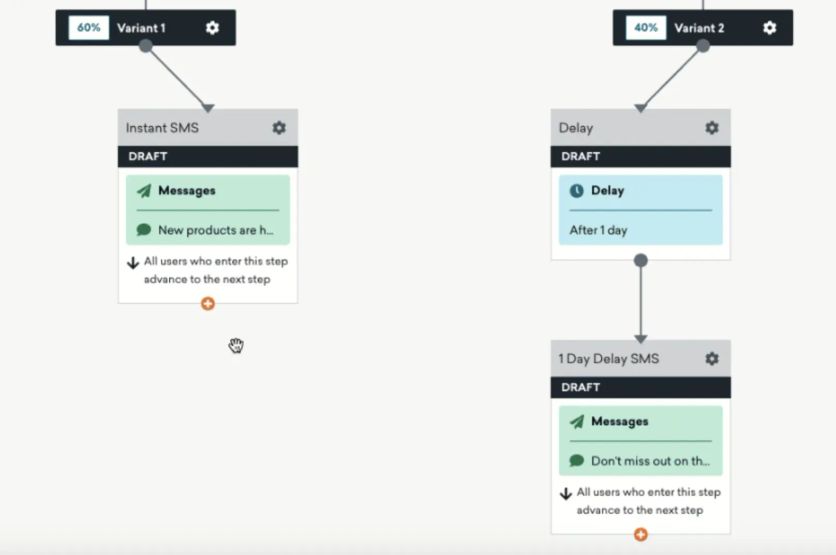
Braze’s Canvas tool
The platform really shines in mobile engagement with strong features for:
- Push notifications with rich content support
- In-app messaging that responds to user actions
- Dynamic content delivery inside mobile applications
- Real-time messaging triggered by behavioral events
Braze supports email, SMS, web notifications, and integrates with other services through webhooks. All the same, its mobile-first approach makes it perfect for fintech, gaming, and on-demand service companies where smartphone interactions drive business results.
The platform processes data streams instantly, which sets it apart from competitors. This quick processing lets campaigns trigger almost immediately based on user actions. Companies find this invaluable during flash sales or abandoned cart recovery.
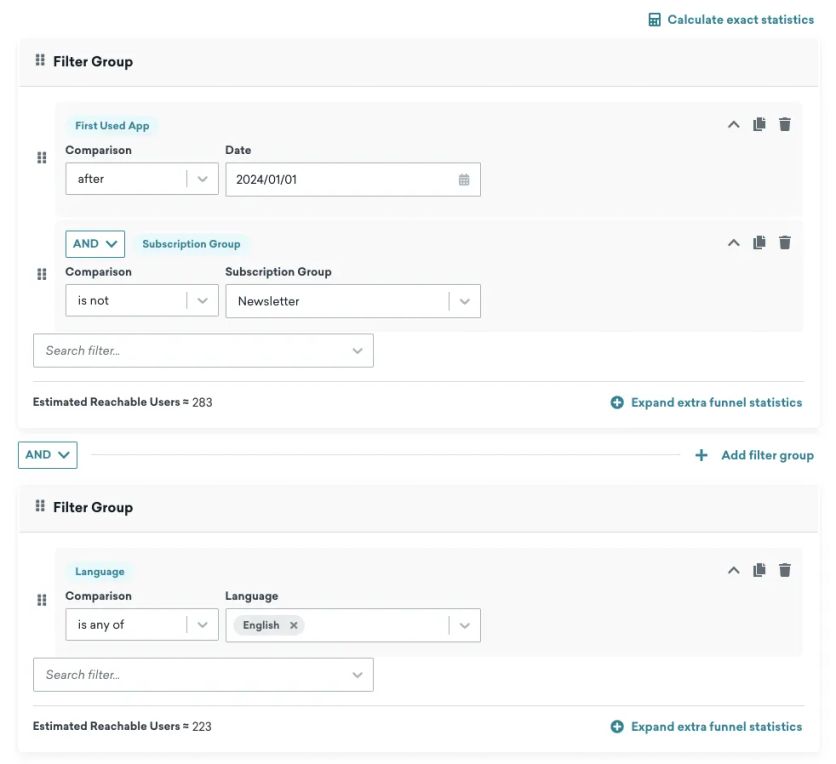
Creating a segment in Braze
Braze’s Liquid templating language helps create advanced personalized content. Marketers can add dynamic elements like product recommendations or conditional content blocks right in their messages if they have the user data they need.
Braze Pricing Plans
Braze doesn’t publish its prices. Every client gets a custom quote based on user base size, message volume, and feature needs, and contract data from Vendr puts the median Braze deal at about $89,000 a year.
Small businesses or startups can’t usually afford Braze unless they’re well-funded and focused on mobile engagement from the start. The high cost reflects Braze’s ability to handle huge message volumes and complex campaigns at scale – features that global brands with millions of customers need but mid-market businesses might find excessive.
Braze Support
Enterprise-level support matches Braze’s pricing tier, including dedicated customer success teams. The support model works differently from Maestra’s approach. Maestra gives clients dedicated Forward Deployed Marketers who help develop strategy and build flows. Braze expects clients to have stronger in-house technical skills or work with external consultants.
Extensive documentation, training resources, and technical support come with the platform. Many organizations still find they need special expertise to get the most out of Braze. This often means hiring Braze-experienced marketers or working with agencies who know the platform well.
Teams with strong technical resources and developer support thrive with this model. Organizations with limited technical staff might struggle to use Braze’s full capabilities without extra help.
Braze Pros and Cons
| Pros | Cons |
|---|---|
| Exceptional real-time data processing for instant campaign triggers | Enterprise-level pricing (median contract about $89K a year) makes it too expensive for smaller businesses |
| Powerful trip coordination through Canvas | Takes time to learn and needs technical expertise |
| Strong mobile engagement features across push, in-app, and content | No built-in loyalty program |
| Strong API and integration options for developer flexibility | Complex interface slows down campaign launches |
| Handles millions of users and messages easily | Often needs extra tools for complete marketing features |
| Advanced segmentation using behavioral data | Hard to use for marketers without technical background |
| Great analytics and testing capabilities |
Braze works best for organizations with mobile-first strategies and technical resources to use its capabilities. Enterprise businesses that manage millions of customer interactions across channels will find the scale, reliability and sophistication they need for complex engagement campaigns.
The platform serves organizations that need real-time engagement across multiple channels, especially when mobile apps play a key role in their customer experience strategy. Its position as a technically advanced platform makes it ideal for companies with strong development resources or budget for specialized implementation support.
WANotifier – Best for WhatsApp marketing

WANotifier has emerged as a specialized powerhouse for e-commerce brands leaning heavily into conversational commerce. As an official Meta Tech Partner, it focuses exclusively on WhatsApp marketing automation, providing an environment where businesses can manage the entire customer lifecycle without the typical overhead costs associated with messaging platforms.
WANotifier Features
While platforms like Maestra or Iterable provide broad omnichannel orchestration, WANotifier masters a single, highly lucrative channel: WhatsApp. E-commerce businesses leverage its high-performance infrastructure to reach customers where they are most active, typically seeing open rates upwards of 90%.

Create and Upload Contacts in campaign
The platform’s core e-commerce capabilities include:
- Automated abandoned cart recovery sequences sent directly to WhatsApp
- Real-time transactional alerts, including order confirmations, shipping updates, and OTPs
- High-volume marketing broadcasts for product launches and flash sales
- Interactive two-way messaging for customer support and sales inquiries
WANotifier offers a smooth integration experience with major e-commerce platforms, CRMs, Google Sheets, and webhooks. The workflow builder allows marketers to create automated sequences that trigger instantly based on customer actions, keeping the brand responsive without manual intervention.

Campaign performance analytics
WANotifier Pricing Plans
WANotifier disrupts the typical messaging platform pricing model with radical transparency. The platform charges a flat subscription fee (starting at around $69 per month) and offers a 0% markup on official WhatsApp API charges.
Unlike competitors that levy a “success tax” by marking up the cost of every message sent, WANotifier ensures businesses only pay Meta’s direct rates. This makes it an exceptionally budget-friendly choice for scaling e-commerce brands sending high volumes of marketing broadcasts or transactional alerts.
WANotifier Support
The platform provides a highly reliable support ecosystem, reflected in its 4.8/5 Trustpilot rating. Customer support is handled via responsive ticketing and comprehensive documentation.
For onboarding, WANotifier offers a dual approach: a simplified “embedded signup” flow allows non-technical e-commerce merchants to get live in minutes, while advanced technical teams can plug in their own API credentials for deeper control. While it doesn’t offer dedicated Forward Deployed Marketers like Maestra, its focused nature means the learning curve is relatively gentle.
WANotifier Pros and Cons
| Pros | Cons |
|---|---|
| 0% markup on Meta API fees keeps high-volume messaging affordable | Limited exclusively to the WhatsApp ecosystem (no email or SMS fallback) |
| Exceptional open and conversion rates compared to traditional channels | Lacks native on-site personalization or loyalty program management |
| End-to-end e-commerce automation for both transactional and marketing messages | Multi-channel brands must use it alongside a separate email marketing tool |
| Reliable Meta Tech Partner infrastructure ensures account security | Chatbot logic can be somewhat basic on entry-level subscription tiers |
| Flexible onboarding allows for both no-code and custom API setups | Western markets may find less audience penetration compared to email |
CleverTap – Best for mobile analytics
CleverTap stands out as an all-in-one customer engagement and retention platform with powerful analytics capabilities. Mobile-focused businesses will find it especially useful. This tool fills a unique spot among marketing automation solutions by combining deep behavioral analysis and multi-channel campaign execution in one user-friendly interface.
CleverTap Features
The platform shines with its smooth integration of analytics and engagement functions. Most tools keep these features separate, but CleverTap lets marketers learn about insights and turn them into practical campaigns right away. Users don’t have to jump between different analytics and messaging platforms anymore.
TesseractDB, CleverTap’s proprietary big-data store, powers its analytics engine. It captures and processes huge amounts of user events and tracks millions of interactions per user. This solid foundation helps with:
- Detailed funnel analysis to spot conversion bottlenecks
- Cohort tracking to measure retention across user segments
- RFM (Recency, Frequency, Monetary) segmentation to target marketing
- Behavioral analysis to spot engagement patterns

CleverTap’s funnel dashboard
Clever.AI brings AI capabilities to the platform. It analyzes user behavior and predicts outcomes like churn likelihood or conversion probability. Marketers can target at-risk customers before they leave.
The platform offers detailed omnichannel outreach through:
- Mobile push notifications
- In-app messaging
- Email campaigns
- SMS delivery
- Web notifications
- WhatsApp messaging
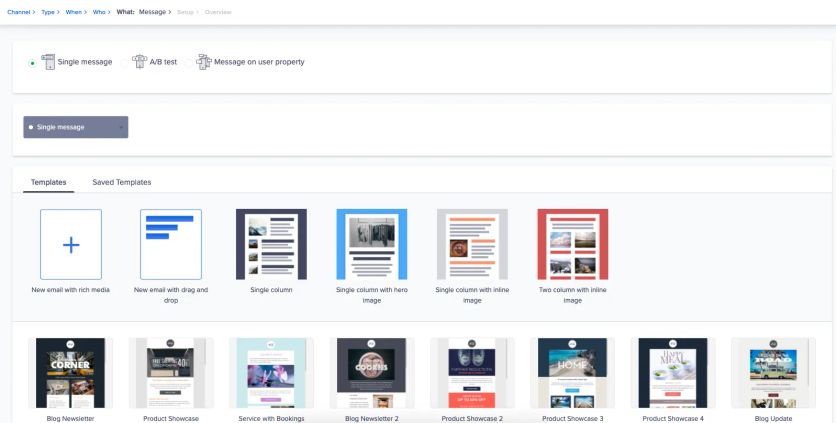
Creating an email with Clever.AI’s recommendations
Marketers can create complex multi-step campaigns across these channels with the visual journey builder. A push notification might go out first, followed by an email if the initial message stays unopened. An abandoned cart sequence could start with an app notification, send an email reminder later, and finish with a special SMS offer.
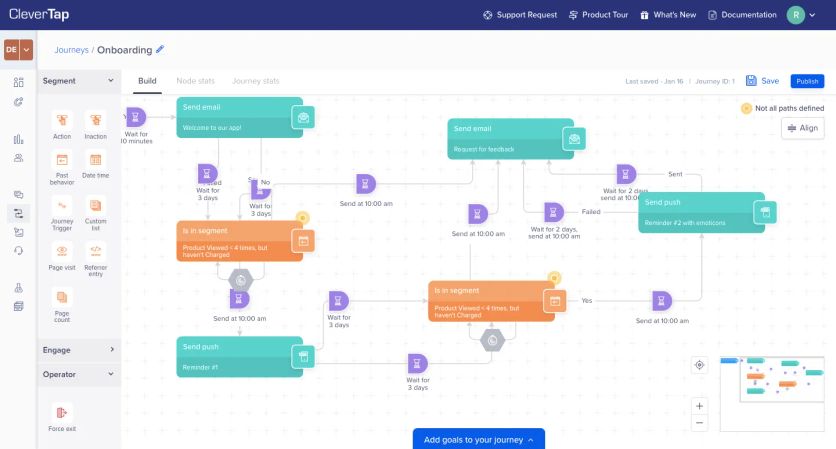
CleverTap’s flow builder
The platform uses a no-code/low-code approach. Team members without technical backgrounds can create sophisticated campaigns and experiments without complex queries.
CleverTap Pricing Plans
CleverTap prices its plans by monthly active users (MAUs). The entry Core plan starts at about $85 a month for up to 5,000 MAUs, and prices vary by region. That still makes it easier to start with than enterprise solutions like Braze.
The higher Pro and Ultimate plans are quote-based.
Companies can start with basic features and grow their investment over time. This approach matches CleverTap’s market position – serving both new mobile-first companies and 10-year old enterprises.
CleverTap Support
CleverTap provides documentation and a knowledge base on every plan, and its plan comparison also lists dedicated customer success and technical account managers. Maestra includes a Forward Deployed Marketer in every plan, who builds and runs campaigns with the client’s team.
The platform started in Asia and keeps expanding worldwide. North American and European companies might find fewer local agencies or experts familiar with CleverTap compared to Braze or Salesforce Marketing Cloud. This gap keeps getting smaller.
Teams with strong technical skills can make the most of this support model. Others might want to check if they have enough internal resources to use the platform well.
CleverTap Pros and Cons
| Pros | Cons |
|---|---|
| Rich analytics and engagement tools work together in one interface | Web engagement features don’t match mobile capabilities |
| Clever.AI offers smart segmentation and predictive analytics | Email design tools can’t match dedicated email providers |
| TesseractDB handles data processing really well | Built-in loyalty or referral programs aren’t included |
| Mobile-first features help with app engagement | Western markets have fewer support options |
| Visual journey builder creates smart multi-channel campaigns | E-commerce platform integration needs work |
| Lower starting price than enterprise options | |
| User-friendly interface needs minimal technical knowledge | |
| Smart timing sends notifications when users are most likely to respond |
Mobile app-focused businesses will get the most from CleverTap. Product teams that want to improve in-app experiences and keep users engaged will love how it combines analytics with engagement. Fintech apps, mobile games, and on-demand services can use immediate behavior tracking to create relevant user experiences.
Email marketing or web personalization-focused companies might find better options elsewhere. Organizations that just need loyalty program management should look at all-in-one platforms like Maestra instead.
Salesforce Marketing Cloud – Best for the Salesforce ecosystem

Salesforce Marketing Cloud stands as a complete enterprise-level solution that builds on Salesforce’s leading position in the CRM industry. Unlike standalone marketing platforms, this tool works as an integrated part of the Salesforce ecosystem. Companies already using Salesforce’s CRM infrastructure find this particularly appealing.
Salesforce Marketing Cloud Features
SFMC serves as an enterprise marketing automation suite with extensive marketing capabilities. The Journey Builder tool serves as the life-blood of the platform. Marketers can build detailed customer trips with multiple touchpoints and decision splits. These trips respond to customer actions, priorities, and CRM data points.
SFMC’s core marketing functions include:
- Email marketing with advanced segmentation and template options
- Mobile engagement with SMS and push notification capabilities
- Social media management for content publishing and audience targeting
- Advertising audience creation for coordinated digital ad campaigns
- Cross-channel campaign orchestration through visual journey mapping
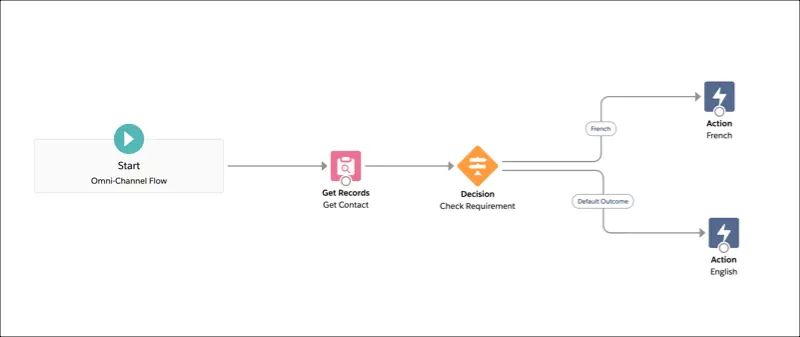
Salesforce Marketing Cloud flow builder
SFMC’s deep data handling capabilities give it a real edge. The platform uses Salesforce’s data model and talks directly to CRM objects. Customer profiles stay consistent across sales and marketing touchpoints. This creates a single view of customer interactions that other platforms can’t match.
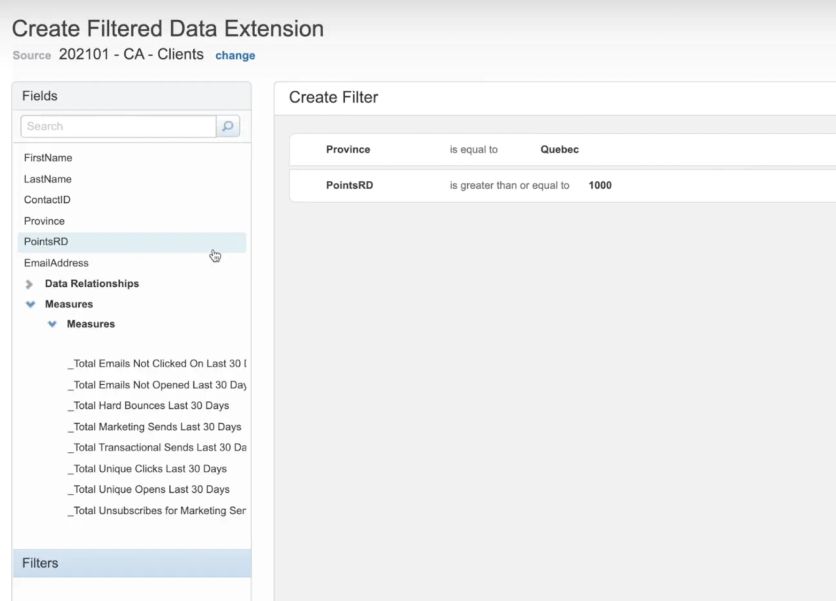
Salesforce Marketing Cloud: user segmentation
The platform also features Einstein AI to improve marketing results through predictive capabilities. Users can optimize send-times, identify high-value prospects, and get content recommendations based on behavior patterns.
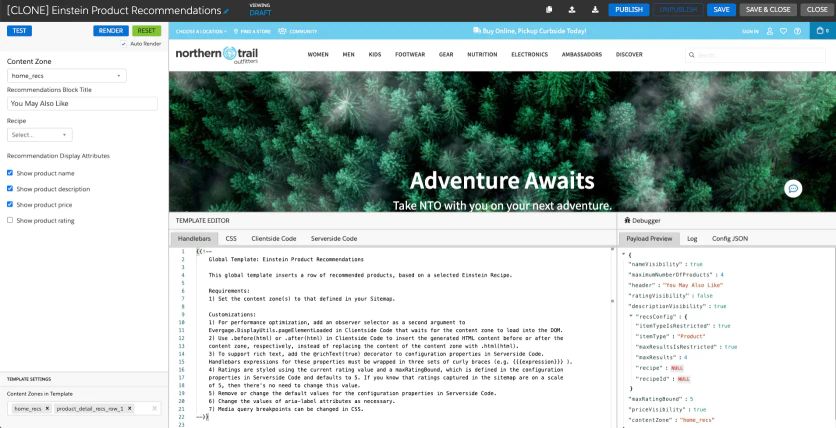
Salesforce Marketing Cloud’s Einstein product recommendations setup
SFMC started as an email marketing tool (ExactTarget) before growing into broader marketing automation. The platform shines at batch campaigns and scheduled journey campaigns, unlike Braze which focuses on real-time, event-driven marketing.
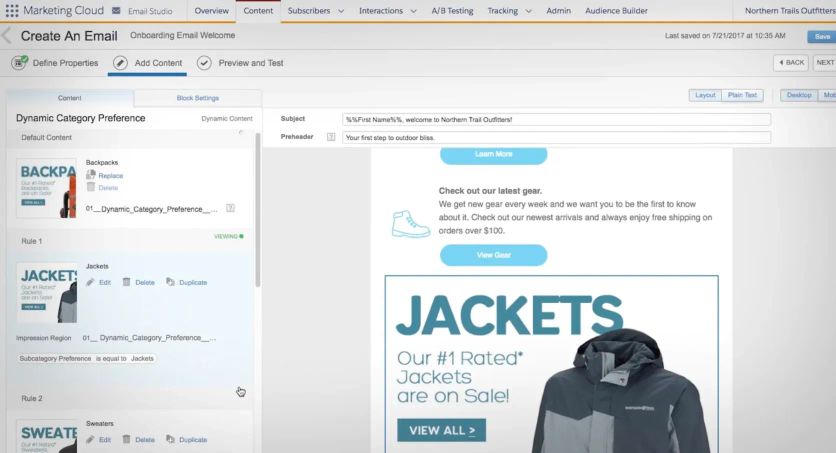
Salesforce Marketing Cloud’s email builder
Salesforce Marketing Cloud Pricing Plans
SFMC sits in the premium pricing tier and publishes per-org list prices: Pro+ starts at $2,000 a month, Corporate+ at $5,500, and Enterprise+ at $30,000. Large deals still come with custom contracts based on features and usage volumes.
Each edition bundles tools like Email Studio, Journey Builder, Automation Studio, and Content Builder, and higher editions add volume and features. Companies can start small and grow, but costs add up for full implementations.
The platform costs more than Braze for similar features. Yet, existing Salesforce customers often justify this through better integration and consolidated data.
Companies typically sign annual contracts. This matches SFMC’s focus on long-term enterprise partnerships rather than monthly flexibility. Mid-market and enterprise organizations with big marketing budgets make up the main user base.
Salesforce Marketing Cloud Support
SFMC’s complexity demands special expertise. Companies need certified SFMC consultants or dedicated specialists to get the most value. Many businesses hire SFMC experts or work with specialized agencies for implementation.
New users face a steeper learning curve than with Braze or CleverTap. Even marketing veterans need substantial training to master SFMC’s tools and data model.
Standard enterprise support includes knowledge bases, community forums, and technical help. Yet, most organizations need extra expertise – either in-house or through partners.
Companies familiar with Salesforce administration adapt more easily. Those new to Salesforce might struggle more, even with formal support resources.
Salesforce Marketing Cloud Pros and Cons
| Pros | Cons |
|---|---|
| Exceptional Salesforce CRM integration for unified customer data | Steep learning curve needs specialized expertise |
| Complete marketing capabilities across email, mobile, social, and advertising | High prices put it out of reach for smaller companies |
| Powerful journey orchestration through Journey Builder | User-friendly interface lags behind newer marketing platforms |
| Advanced AI capabilities through Einstein for optimization and predictions | Implementation often needs consultants or agencies |
| Extends through the broader Salesforce ecosystem and AppExchange | Real-time, event-triggered marketing falls short of mobile-first platforms |
| Resilient infrastructure for complex customer segmentation | Multiple modules can complicate comprehensive implementation |
| Large marketplace of implementation partners and consultants | Some components feel dated compared to newer platforms |
SFMC offers a robust solution for enterprises that want deep CRM integration with marketing automation. The platform works best for organizations managing complex customer trips across channels while keeping sales and marketing aligned.
Klaviyo – Best for Shopify email and SMS
Klaviyo has grown into the leading marketing automation platform for e-commerce businesses over the past decade. The platform caters to direct-to-consumer (DTC) brands and separates itself from competitors through its e-commerce integrations and evidence-based campaign features that boost revenue.
Klaviyo Features
The platform’s unified customer view sits at its heart. It creates detailed profiles of website behavior, email engagement, purchase history, and custom attributes. This united data helps target customers based on their actual shopping patterns instead of basic demographics.
Seamless e-commerce integration makes Klaviyo stand out. One-click connections to Shopify, WooCommerce, and Magento automatically sync product, order, and customer data. Users don’t need manual setup like they do with standard marketing tools.
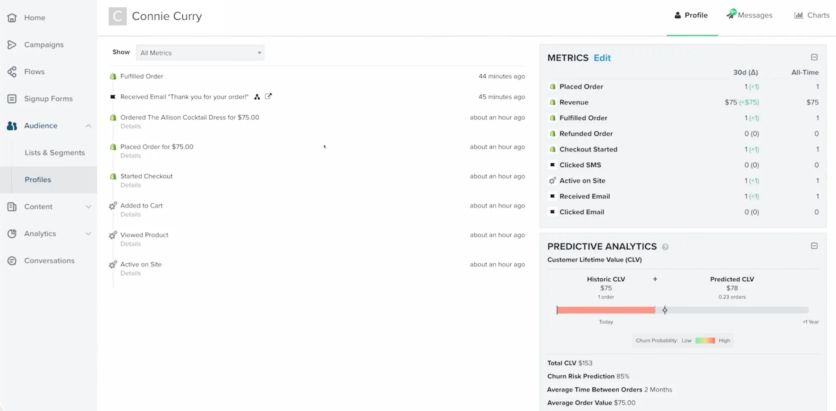
Customer profile in Klaviyo
Klaviyo shines brightest through its email and SMS marketing capabilities. The platform offers:
- Pre-built automation flows (Welcome Series, Abandoned Cart, Winback)
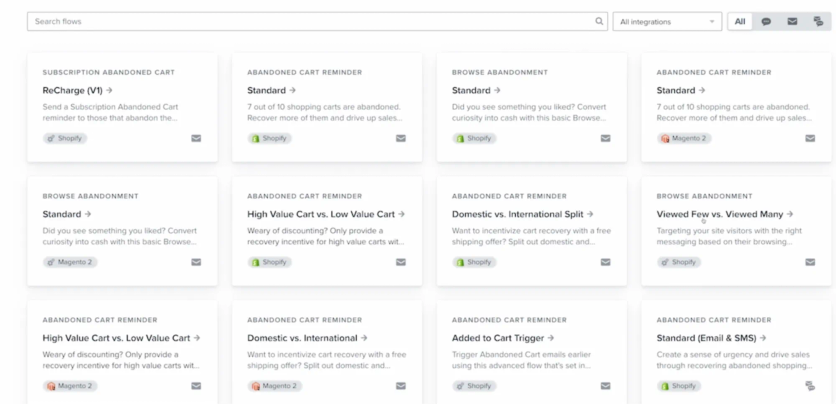
Flow templates in Klaviyo
- Dynamic product recommendations within message content
- Personalized content based on browsing and purchase history
- Revenue attribution tracking for each campaign element
- Automated segmentation based on purchase behavior
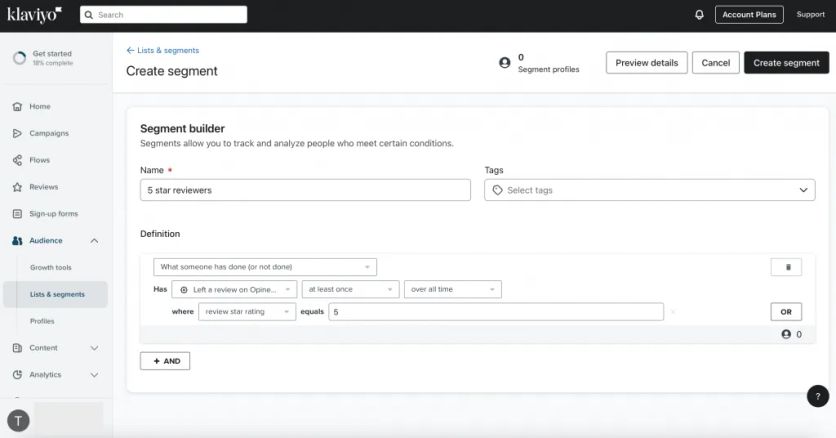
Creating a segment in Klaviyo
The campaign builder comes with user-friendly workflow creation and customizable templates. Marketers can create sophisticated multi-step sequences without technical knowledge. AI-driven tools help determine the best send times and channels for each customer.
Klaviyo Pricing Plans
The platform’s flexible pricing starts with a free tier for small businesses with smaller contact lists. Prices increase based on contact numbers, making it available to growing businesses.
Klaviyo doesn’t require long-term commitments. Businesses can adjust their investment as they grow without enterprise contract lock-ins. This approach differs from platforms like Braze (custom contracts, with a median around $89K a year) or Salesforce Marketing Cloud (from $2,000 per org a month for Pro+, rising to $5,500 for Corporate+ and $30,000 for Enterprise+).
The platform costs less than enterprise solutions while offering specialized e-commerce features that justify its higher price compared to simple email providers.
Klaviyo Support
Educational resources form the backbone of Klaviyo’s support system. Active community forums let users share strategies and solutions. Regular webinars cover both simple platform basics and advanced marketing techniques.
The platform provides detailed marketing guides and industry standards to help businesses track their performance. New users can implement and adopt the platform quickly without needing dedicated specialists, unlike Salesforce Marketing Cloud which often requires certified experts.
This self-service support works well for Klaviyo’s target market of smaller businesses that might not have resources for specialized consultants.
Klaviyo Pros and Cons
| Pros | Cons |
|---|---|
| Built specifically for e-commerce with specialized triggers and workflows | Push, WhatsApp, and RCS are newer and less mature than its email and SMS |
| User-friendly interface balancing power and simplicity | Smaller scope than multi-channel platforms like Maestra or Braze |
| Strong ROI focus with per-campaign revenue statistics | Might need external tools for loyalty programs or on-site personalization |
| Deep integration with major e-commerce platforms | Template and visual email builder less flexible for complex layouts |
| Fair pricing that grows with your business | |
| No specialized technical expertise needed | |
| Advanced targeting similar to enterprise solutions |
Klaviyo excels at e-commerce revenue generation through email and SMS channels. While platforms like Maestra offer loyalty and web personalization, and CleverTap focuses on mobile engagement, Klaviyo provides deeper e-commerce communication features instead of covering the entire customer experience.
Online retailers looking for marketing automation tools with direct ROI impact and simple implementation will find Klaviyo a perfect match. Its blend of power and ease of use has made it a leader among e-commerce marketing platforms.
Omnisend – Best for small Shopify stores
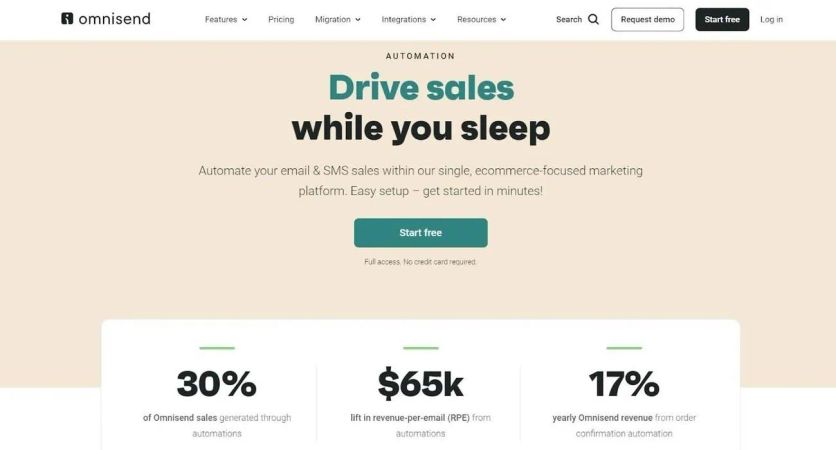
Omnisend is a specialized marketing automation tool designed specifically for e-commerce businesses. It’s different from regular marketing platforms because it focuses only on what online retailers need, making it a great choice for businesses that want to boost their digital sales.
Omnisend Features
Omnisend gives you a detailed set of features built for online stores. You can create professional-looking emails without any coding skills thanks to its accessible drag-and-drop builder. The automation workflows let you map your customer’s experience with smart conditional splits based on how subscribers behave.
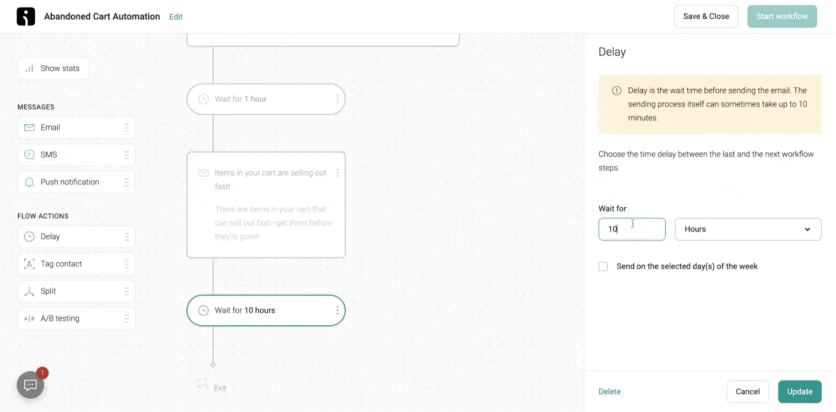
Omnisend’s pre-build abandoned cart automation
The platform really shines when it comes to segmentation. You can target customers based on:
- Shopping behavior (products viewed, cart abandonment, purchase history)
- Campaign engagement (email opens, clicks, website visits)
- Customer lifecycle stage (new subscribers, first-time customers, loyal shoppers)
- Custom events and properties
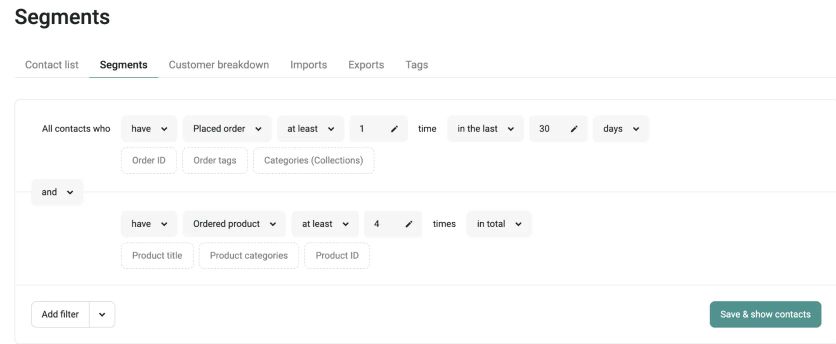
Omnisend’s segment builder
The platform’s pre-built automation templates help you quickly set up proven strategies that generate revenue. These include welcome series, abandoned cart recovery, browse abandonment, order confirmation, and post-purchase sequences. The platform also offers SMS marketing, web push notifications, and Facebook/Google ad integration to create a complete omnichannel experience.
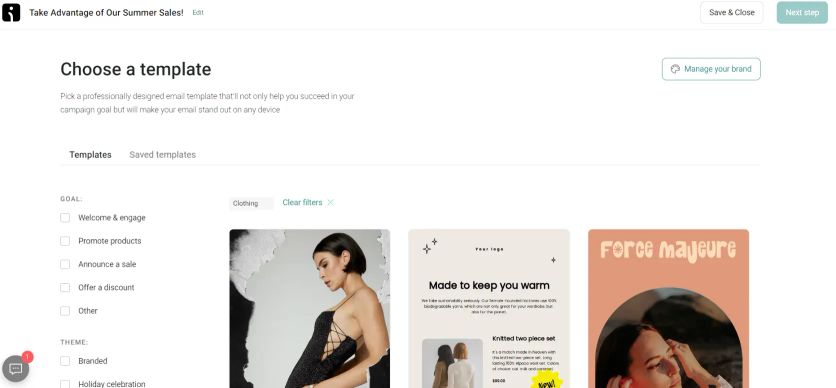
Omnisend’s email templates
You can connect Omnisend smoothly with most major e-commerce platforms like Shopify, WooCommerce, BigCommerce, and Magento. This smooth connection makes sure your product data, customer information, and purchase history automatically flow into marketing campaigns.
The platform uses dedicated IP addresses and reputation management tools to help your messages land in inboxes instead of spam folders. On top of that, it lets you test different subject lines, content, and send times to maximize engagement through A/B testing.
Omnisend Support
Omnisend offers 24/7 live chat and email support on every plan, including the free one. It says chat replies usually come within 3 minutes.
Brands spending $400 or more a month on the Standard or Pro plan also get a dedicated Account Expert.
Omnisend helps you learn through its help center, a blog on e-commerce marketing, and Omnisend Academy with free online courses.
Omnisend Pricing
The pricing works based on how many subscribers you have and what features you need:
| Plan | Monthly Price | Features | Email Sends | SMS |
|---|---|---|---|---|
| Free | $0 | Email campaigns and signup forms for up to 250 contacts | 500/month | None |
| Standard | From $16/month | Email automations, unlimited web push | 12× your contact count | Not available for accounts created since May 4, 2026 |
| Pro | From $59/month | Everything in Standard, plus SMS | Unlimited | Paid add-on, from about $0.007 per SMS |
| Enterprise | Custom | Custom plan for high-volume senders | Unlimited | Custom |
Paid plans don’t come with a free trial, but the free plan has no time limit. First-time paid subscribers get 30% off when they prepay for three months.
Omnisend Pros and Cons
| Pros | Cons |
|---|---|
| Features built specifically for online retail | Basic CRM features compared to broader marketing platforms |
| Powerful automation workflows with conditional logic | You need higher-tier plans for advanced reporting |
| Smart segmentation based on shopping behavior | Phone support only for Enterprise customers |
| Works perfectly with major e-commerce platforms | Takes time to master advanced segmentation |
| Marketing across email, SMS, and web push | Some users mention platform slowdowns during busy sending times |
| Easy-to-use interface that needs minimal technical knowledge | Not enough customization options for bigger companies |
| Better pricing than similar e-commerce marketing tools |
Omnisend works best for small to mid-sized e-commerce businesses that want specialized marketing automation without enterprise-level complexity. The platform balances powerful features with ease of use, though larger organizations might find it limiting as they grow. Since it focuses on e-commerce, businesses outside retail might want to look elsewhere.
Iterable – Best for growth teams

Iterable stands out as a strong cross-channel marketing automation platform built for companies that want to grow and connect with customers better. This platform works great for e-commerce companies and goes well beyond simple email marketing.
Iterable Features
The heart of Iterable’s platform lies in its ability to run campaigns across multiple channels. Marketers can create natural customer trips that connect through different touchpoints. The platform supports these communication channels:
- Email marketing with advanced personalization
- Mobile push notifications and in-app messaging
- SMS marketing with two-way conversation capabilities
- Direct mail campaign integration
- Social media retargeting
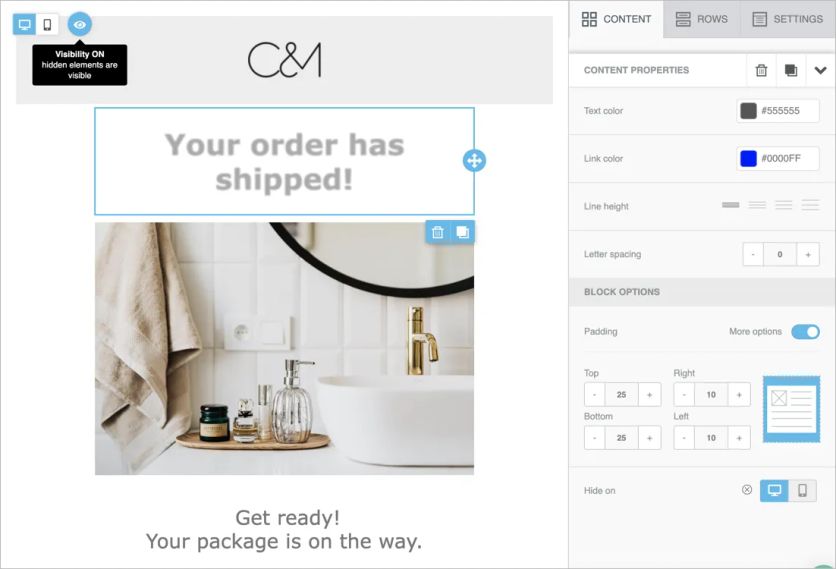
Iterable’s visual email composer
The Catalog system is one of Iterable’s best features. Marketers can import product data and make use of information for dynamic content. E-commerce businesses find this valuable to show tailored product recommendations based on what customers browse and buy.
The platform lets businesses slice and dice their audience using more than 70 different filters. These cover behavior, demographics, purchase history, and custom events. This means marketers can target their exact audience with great precision.
Marketers love the visual workflow editor in the journey builder. They can design complex automation sequences that branch based on conditions. Rather than rigid templates, Iterable gives you a canvas where you can build sophisticated decision trees based on what customers do or don’t do.
Teams that love numbers will appreciate Iterable’s analytics. The platform shows real-time performance in easy-to-read dashboards. The A/B testing goes beyond just subject lines – you can test when to send, what content works best, and which channels your customers prefer.
Iterable works well with major e-commerce platforms, CRM systems, and data warehouses. The platform combines smoothly with other business systems through pre-built connectors and a solid API.
Iterable Support
The level of support you get depends on your plan. Every customer can access:
- Email support that responds within 24 hours (business days)
- A complete knowledge base with detailed documentation
- A community forum where users help each other
- Regular webinars and training sessions
Growth and Enterprise customers get better support options. These include their own account managers, faster ticket handling, and strategy sessions. Enterprise clients also get 24/7 emergency support with guaranteed response times when critical problems come up.
Most standard setups take 2-4 weeks. Enterprise implementations might need more time but come with dedicated technical help to ensure everything goes right.
The company also offers extra professional services. These cover advanced setup needs, custom integration work, and marketing strategy advice – though these cost extra.
Iterable Pricing
Iterable doesn’t publish its prices, and every plan is quote-based. Buyer data on Vendr puts the median Iterable contract at about $92,000 a year, with deals ranging from roughly $27,000 to $402,000. Vendr estimates the entry Growth tier at $3,000–$5,000 a month for 10,000–50,000 monthly active users. Catalog, Iterable’s product data feature, is a paid add-on.
You won’t find a free version or self-service option here, which makes Iterable a better fit for mid-market and enterprise companies.
Iterable Pros and Cons
Pros | Cons |
|---|---|
Great at running campaigns across multiple channels | Costs more than basic marketing tools |
Visual journey builder that handles complex logic | Takes time to learn all the features |
Strong segmentation engine that targets based on behavior | No free or self-service options for small businesses |
Unlimited emails on all plans | Setup needs technical knowledge |
Solid data management with catalog features | Complex segments sometimes run slowly |
Strong API and integration options | |
Advanced A/B testing across all channels |
Iterable works best for mid-sized to enterprise e-commerce companies with complex marketing needs and lots of customers. The platform excels at creating consistent customer experiences across different channels. While the price might be too high for small businesses, companies with the right resources find it worth the investment given what it can do and how well it grows with them.
Insider One – Best for website personalization

Known for its AI-driven approach, Insider One has a detailed marketing automation platform that creates individual-specific experiences throughout the customer lifecycle. This platform combines predictive segmentation with cross-channel orchestration to help e-commerce businesses build meaningful connections with customers.
Insider One Features
Insider One’s platform architecture builds on its AI-powered experience cloud that helps marketers create individual-specific experiences through multiple touchpoints. The platform stands out in several key areas:
The Architect Journey Builder gives marketers a user-friendly visual canvas to design complex multi-channel workflows. Unlike simple automation tools, Architect uses predictive segments that automatically adapt based on live user behavior. This creates dynamic experiences that evolve with customer priorities.
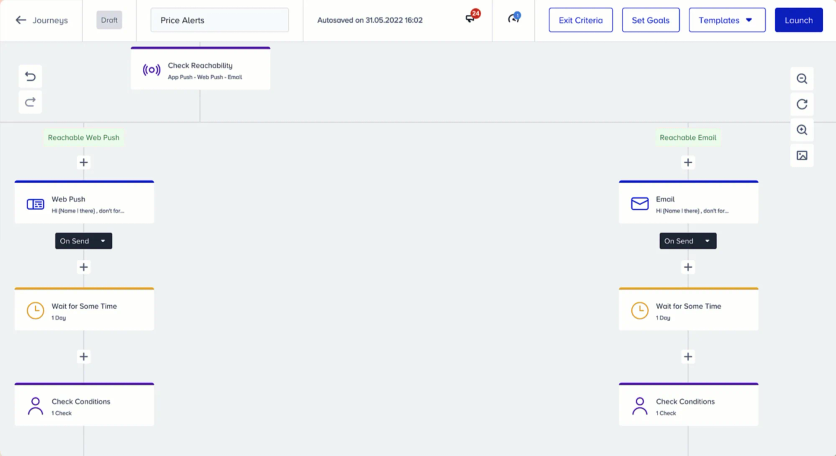
Insider One’s flow builder
Insider One’s predictive audiences feature sets it apart in segmentation capabilities. The platform analyzes historical and live data to identify:
- Likelihood to purchase within specific timeframes
- Probability of churn or disengagement
- Product affinity and category priorities
- Best engagement times and channel priorities
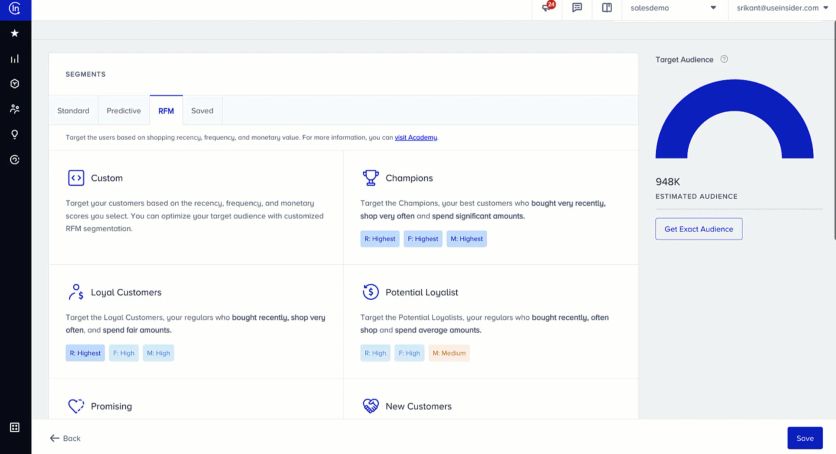
Insider One’s segmentation
The platform has dedicated e-commerce tools including smart product recommendations, abandoned cart recovery, and social proof notifications. Its web suite has over 40 pre-built templates for website personalization, from exit-intent overlays to smart recommendations.
Mobile marketing goes beyond simple push notifications to include in-app messaging, app inbox communications, and app review management. The platform also works with WhatsApp Business, which lets merchants use conversational commerce for sales and support.
Insider One’s personalization engine customizes content based on user attributes, behavioral signals, and predictive scores. The AI-powered optimization tools automatically adjust send times, content variations, and channel selection.
The platform blends with major e-commerce platforms, CRMs, CDPs, and analytics tools through pre-built connectors. It also has an open API for custom integrations and a dedicated team helps with implementation.
Insider One Support
Every customer gets:
- Ticket-based support, routed by issue severity
- Detailed knowledge base with step-by-step guides
- Regular product webinars and certification programs
Larger accounts work with dedicated customer success managers who provide strategic guidance. Technical support specialists help with complex implementation questions.
Setup usually takes several weeks, depending on complexity. Clients work with dedicated implementation specialists to set up the platform, create original experiences, and connect data sources.
Insider One Pricing
Insider One doesn’t publish its prices. Third-party pricing directories list two quote-based plans, Growth and Enterprise, with no free tier or self-service signup. Buyer data on Vendr puts the median Insider contract at about $225,000 a year, which places it firmly in the enterprise segment.
Businesses that need specialized solutions can get additional modules for advanced analytics, custom AI model development, and industry-specific solutions. These modules cost extra based on specific needs.
Insider One Pros and Cons
| Pros | Cons |
|---|---|
| Advanced AI-powered predictive segmentation capabilities | Costs more than simple marketing automation solutions |
| Detailed cross-channel campaign orchestration | Takes time to master platform capabilities |
| Resilient personalization engine with 1:1 content customization | No free tier or self-service option for smaller businesses |
| Powerful web and mobile experience optimization tools | Setup needs technical expertise |
| Adaptable journey builder with advanced branching logic | Complex predictive segments sometimes face delays |
| Strong integration capabilities with e-commerce platforms | New users might find analytics dashboards overwhelming |
| Dedicated customer success management for strategic guidance |
Insider One works best for mid-sized to enterprise e-commerce businesses that need sophisticated personalization and cross-channel orchestration. The platform’s predictive capabilities and AI-powered optimization help businesses with substantial customer data and complex marketing needs. Companies with sufficient resources often see strong ROI through improved conversion rates and customer retention, despite the higher investment.
MoEngage – Best for mobile push at scale

MoEngage is an insights-led customer engagement platform that helps e-commerce businesses analyze customer behavior and create individual-specific experiences. Many retail brands want to boost customer retention through analytical insights, making this platform their top choice.
MoEngage Features
The platform’s core architecture centers on its AI-powered analytics engine that powers its automation capabilities. Customer data flows continuously into the system to create detailed behavioral profiles that shape segmentation decisions.
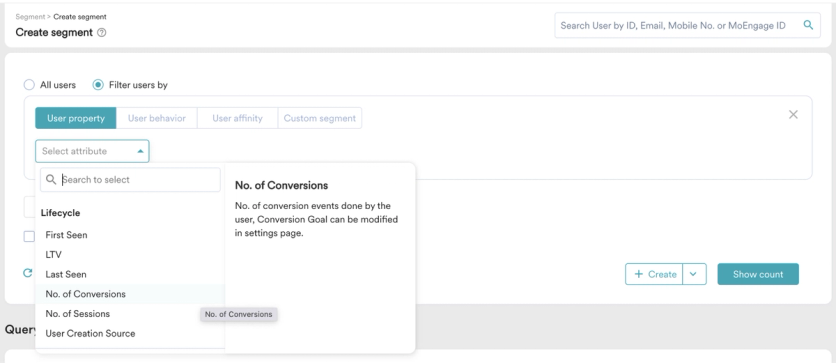
Creating a segment in MoEngage
RFM (Recency, Frequency, Monetary) analysis makes the platform’s segmentation capabilities exceptional. E-commerce businesses can group customers based on purchase patterns. Teams can identify high-value customers, at-risk segments, and potential brand champions without complex data skills.
A visual journey designer in MoEngage’s automation suite lets marketers build multi-step campaigns across channels. Decision splits in the flow editor depend on user attributes, behaviors, and predictive indicators. Complex conversion paths adjust automatically based on individual responses.
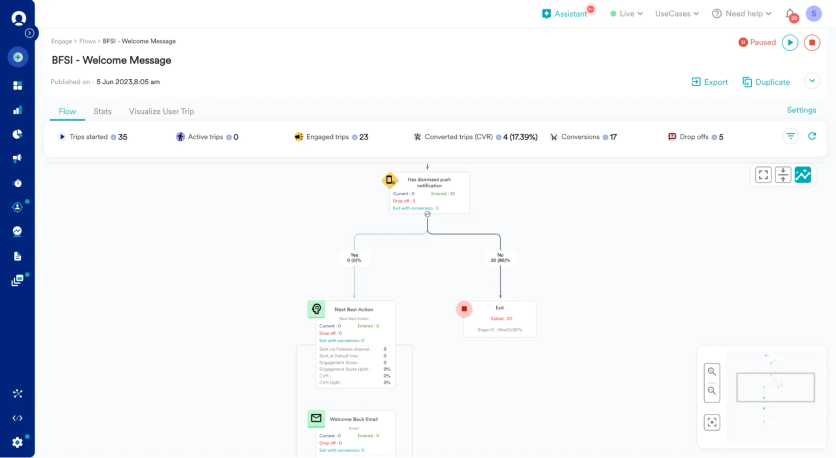
MoEngage’s flow builder
E-commerce businesses can leverage these features:
- Dynamic product recommendations based on browsing history
- Cart abandonment recovery sequences with customizable timing
- Post-purchase engagement flows to encourage repeat business
- Lifecycle-based campaigns targeting specific customer segments
The platform’s cross-channel features include email, mobile push notifications, SMS, web push, in-app messaging, and WhatsApp. AI determines the best channel for each customer to maximize engagement probability.
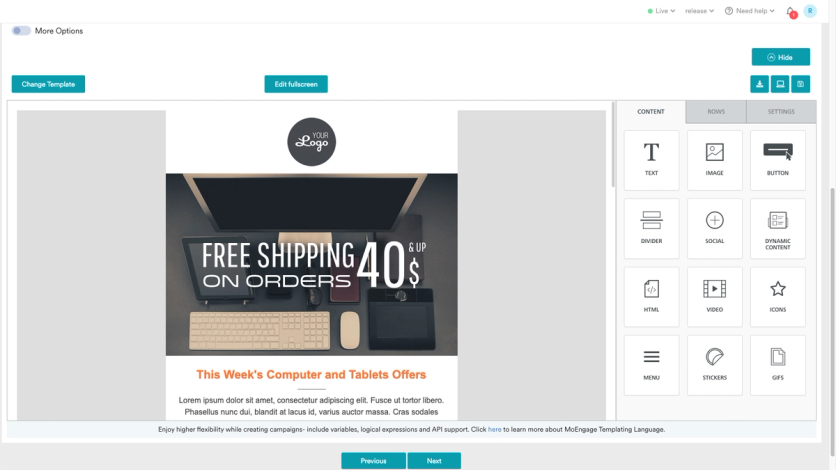
MoEngage’s email editor
Unified reporting dashboards display campaign performance across channels. Path analyzer shows customer experiences and helps marketers spot conversion bottlenecks. The cohort analysis tool measures how different customer segments react to various engagement strategies over time.
The platform connects seamlessly with major e-commerce platforms like Shopify, Magento, and WooCommerce. Open API architecture enables connections with CRM systems, data warehouses, and third-party analytics tools.
MoEngage Support
Support levels vary based on subscription tier. Every customer gets simple email support with 24-hour response times for standard questions.
Growth and Enterprise subscribers work with dedicated customer success managers. These experts provide implementation guidance, strategic consulting, and quarterly business reviews. Managers help clients set standards and improve their engagement strategies based on industry benchmarks.
A detailed knowledge base offers product documentation, implementation guides, and best practice articles. MoEngage Academy provides self-paced courses about platform features and engagement strategy basics.
Developer documentation and API references are available through the developer portal. Enterprise clients get priority access to the product engineering team when they need help with complex implementations or custom integrations.
MoEngage Pricing
MoEngage prices its plans by monthly tracked users (MTU) and feature access. The pricing page lists two quote-based plans, Growth and Enterprise. On AWS Marketplace, the Growth package is listed at $750 a month for up to 25,000 MTUs, with usage such as email volume and WhatsApp billed on top. Full contracts run much higher: Vendr puts the average MoEngage contract at about $187,000 a year.
Some AI features, such as automatic channel selection, may require a paid add-on depending on the plan.
MoEngage Pros and Cons
| Pros | Cons |
|---|---|
| Powerful analytics with intuitive visualization tools | Higher price point compared to entry-level marketing tools |
| Solid segmentation using RFM analysis for retail applications | Learning curve to master analytics capabilities |
| Cross-channel orchestration with automated channel selection | No public price list |
| Accessible journey builder with conditional logic | Large data volumes can cause occasional latency |
| Reliable integration options with e-commerce platforms | Mobile app lacks web interface features |
| Thorough cohort analysis for measuring campaign effectiveness | Limited customization for reporting dashboards |
| AI-driven insights that surface useful recommendations | Higher-tier plans reserve advanced features |
Mid-sized to enterprise e-commerce businesses focused on data-centric customer engagement will find MoEngage most valuable. Marketing teams that want to increase customer lifetime value through individual-specific experiences will appreciate the platform’s focus on behavioral analytics.
ActiveCampaign – Best for small business CRM
ActiveCampaign, founded in 2003, is a marketing automation and CRM platform that connects sophisticated enterprise solutions with accessible tools for growing businesses. The platform’s rise from an email marketing service to a detailed customer experience automation suite makes it stand out for e-commerce operations of all sizes.
ActiveCampaign Features
ActiveCampaign combines marketing automation, email marketing, CRM, and machine learning capabilities into one platform. The automation builder features a visual flowchart interface. Marketers can design complex workflows that respond to customer actions, website interactions, or data changes.
The segmentation engine lets you target customers precisely based on:
- Behavioral data (site visits, email engagement, purchase history)
- Demographic information (location, age, gender)
- Custom fields and tags
- Predictive data (likelihood to purchase, churn risk)
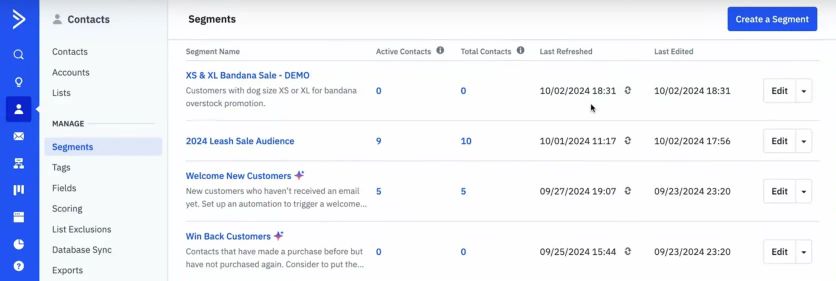
ActiveCampaign’s segments
E-commerce businesses benefit from specialized features like abandoned cart recovery, product recommendations, and order follow-up sequences. The platform’s site tracking watches individual customer behavior and enables personalized messaging based on browsing patterns.
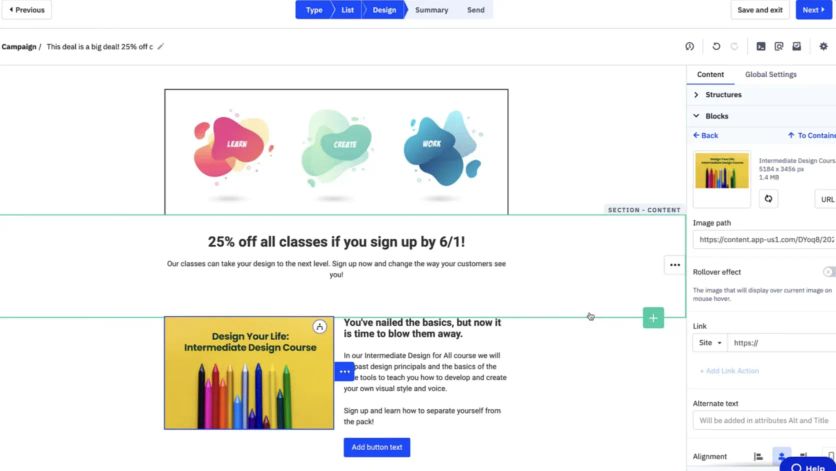
ActiveCampaign’s email composer
The platform started with small businesses in mind and keeps an accessible interface despite its growing feature set. Marketers with simple technical skills can navigate the platform easily, while advanced users find enough depth to meet their needs.
The platform connects to more than 1,000 applications through native connections and API access. These connections work with major e-commerce platforms (Shopify, WooCommerce, Magento), CRM systems, and data analysis tools. ActiveCampaign serves as a central hub for customer data from multiple sources.
ActiveCampaign Support
Your plan level determines your support options. Every customer gets:
- Email support with 24-hour response time targets
- Live chat during business hours
- Detailed knowledge base with tutorials and guides
- Community forum for peer assistance
Plus and higher tier subscribers can access one-on-one training sessions and priority support queues. Professional and Enterprise customers work with dedicated account managers who offer strategic guidance and implementation help.
The platform guides you through setup tasks and customized walkthroughs based on your business type. Beyond standard support, ActiveCampaign offers paid training and certification programs to help you become an expert.
ActiveCampaign Pricing
The platform uses tiered pricing based on contact count and feature access: the Starter plan begins at $15 per month, billed annually. Contact count increases affect all plan prices. Annual billing saves you 15-20% compared to monthly rates. The platform doesn’t offer a free tier but gives you a 14-day trial without payment information.
The Plus plan works best for growing e-commerce businesses. It balances cost with functionality and gives you essential CRM features alongside strong automation capabilities.
ActiveCampaign Pros and Cons
| Pros | Cons |
|---|---|
| Balances usability with sophisticated features | Prices climb as contact lists grow |
| Exceptional automation capabilities with visual workflow builder | Higher-tier plans needed for advanced reporting |
| Strong integration between marketing automation and CRM | Email builder less accessible than competitors |
| Budget-friendly pricing that grows with your business | Complex automations may face performance issues |
| Many third-party integration options | Advanced features take time to master |
| Solid predictive sending and content features | |
| Strong segmentation capabilities |
ActiveCampaign shines for small to mid-sized e-commerce businesses that need sophisticated automation without enterprise-level complexity and cost. The platform combines CRM with marketing automation to create an integrated approach to customer experience management that delivers results for online retailers.
How to Choose the Right Platform
The marketing automation landscape presents distinct tiers of solutions, each serving different business needs and technical capabilities. The choice between platforms depends primarily on business size, technical resources, budget constraints, and channel priorities rather than feature count alone.
Budget-conscious businesses have multiple viable options. ActiveCampaign offers the strongest value proposition for small businesses needing CRM integration, while Omnisend provides specialized e-commerce features at affordable pricing. Klaviyo’s free tier makes it accessible for startups, though costs escalate with database growth. CleverTap emerges as a compelling choice for mobile-first businesses seeking analytics capabilities without enterprise pricing.
Mid-market companies face more complex decisions. Maestra delivers comprehensive e-commerce functionality with dedicated strategic support, making it ideal for retailers ready to consolidate their marketing stack. MoEngage and Insider One offer sophisticated analytics and AI-driven personalization, respectively, though both require significant time investment to master their capabilities.
Enterprise organizations choose between specialized powerhouses. Braze dominates mobile-first strategies with real-time capabilities but demands substantial technical expertise and budget allocation. Salesforce Marketing Cloud provides unmatched CRM integration for organizations already within the Salesforce ecosystem, despite its complexity and dated interface. Iterable balances enterprise features with usability for sophisticated B2C teams.
Implementation complexity varies dramatically across platforms. Klaviyo and Omnisend enable quick deployment with minimal technical resources, while Braze and Salesforce Marketing Cloud typically require specialized consultants or dedicated technical teams. Maestra bridges this gap by providing enterprise-level capabilities with hands-on implementation support.
Mobile engagement strategies separate platforms significantly. Braze and CleverTap excel at app-centric customer experiences with real-time event processing and sophisticated in-app messaging. Traditional e-commerce platforms like Klaviyo and Omnisend offer basic mobile features but lack the depth required for mobile-first business models.
Support models impact long-term success more than many organizations anticipate. Maestra’s dedicated Forward Deployed Marketers provide strategic guidance that smaller teams particularly value. Enterprise platforms like Braze expect stronger in-house capabilities or external consulting relationships. Mid-tier solutions often provide adequate technical support but limited strategic guidance.
Pricing transparency affects decision-making processes. Platforms with published pricing (Klaviyo, Omnisend, ActiveCampaign, Salesforce Marketing Cloud) enable faster evaluation, while quote-only platforms (Braze, Iterable, Insider One, MoEngage) involve longer sales cycles but potentially better-negotiated terms for large organizations.
The marketing automation market continues consolidating around omnichannel capabilities, AI-driven personalization, and real-time customer data processing. Organizations should prioritize platforms that excel in their primary customer engagement channels while ensuring integration capabilities for future expansion rather than selecting solutions based solely on feature breadth.
FAQs
- When selecting a marketing automation tool for e-commerce, consider your primary customer channels, budget constraints, technical expertise requirements, integration needs with existing systems, and scalability for future growth. Also, evaluate whether you need an all-in-one solution or a specialized platform focused on specific channels like email or mobile.
- For e-commerce brands that want every channel in one flow, Maestra fits best, with a Forward Deployed Marketer who builds and runs the flows. It includes 14 product recommendation algorithms, 150+ integrations, and processes data in under 300 ms. Blossom Flower Delivery raised website conversion by 14% and earned $10,645 in additional revenue while testing a product-picking quiz. Braze is strongest for mobile-first engagement, and Klaviyo and Omnisend suit Shopify stores led by email and SMS.
- Pricing models vary significantly. Klaviyo and Omnisend offer free plans and scale with your list. Braze, Iterable, Insider One, and MoEngage quote every deal, and Vendr contract data puts the median Braze contract at about $89,000 a year. Salesforce Marketing Cloud publishes list prices from $2,000 per org a month for Pro+. Maestra starts at $2,000 per month for the customer data platform plus unlimited email – you pay only for active profiles, and storing dormant ones is free.
- Marketing automation improves retention by reaching each customer with a relevant message across email, SMS, push, and the website. Enlightened Equipment grew the share of website visitors who subscribe from 0.37% to 6.1% with A/B-tested lead forms, which gave its retention flows a 20x larger stream of new subscribers. JOLYN grew repeat domestic revenue by 22% after unifying its marketing campaigns in Maestra.
- The required technical expertise varies by platform. User-friendly options like Klaviyo and Maestra can be implemented with minimal technical knowledge. In contrast, platforms like Braze and Salesforce Marketing Cloud often require specialized expertise or dedicated consultants for effective implementation and management.
- Single-channel tools can launch in days, and full-stack platforms usually take a few weeks. Maestra includes migration and implementation with no setup fees, and a Forward Deployed Marketer who works with around 15 customers handles the move. Furniture Fair replaced five separate tools in one migration and reached a 7,543% ROI.
- Platforms like Maestra and Salesforce Marketing Cloud offer strong omnichannel capabilities, allowing businesses to coordinate marketing efforts across email, SMS, push notifications, and web personalization. Others, like Klaviyo, focus primarily on email and SMS channels. The level of omnichannel support depends on the specific platform and its feature set.
- Yes. Most of the savings come from replacing redundant tools and wasting less ad spend. Urban Armor Gear cut its marketing stack costs by 64%, saving about $100,000 a year, by replacing three separate tools with Maestra. Furniture Fair cut its marketing stack costs by 27% after replacing five tools.
- E-commerce-specific features vary by platform. Maestra includes a built-in loyalty program and advanced web personalization. Klaviyo offers deep e-commerce integrations and revenue attribution tracking. Braze excels in real-time, event-driven marketing for mobile apps. CleverTap combines analytics with engagement tools, while Salesforce Marketing Cloud provides strong CRM integration for unified customer data.
- Enterprise-grade platforms should hold SOC 2 Type 2 and ISO 27001 certifications at minimum. For brands selling in the EU or California, GDPR and CCPA compliance is mandatory. Maestra also maintains HIPAA certification for health-adjacent brands. At 2 million RPM and 2 million emails per hour throughput, infrastructure security becomes critical.
- Track revenue attribution, cost reduction, and engagement lift across channels. Furniture Fair measured a 7,543% ROI and a 300% increase in online sales from Facebook ads. JOLYN found that product recommendations influenced 7% of its sales. Blossom Flower generated 9% incremental revenue through website personalization. Effective platforms provide built-in attribution dashboards – ask vendors for customer-level revenue tracking, not just campaign-level metrics.