
9 Best Dotdigital Alternatives for E-Commerce Brands

Dotdigital doesn’t publish pricing. Every plan question funnels into a demo request, SMS runs off a rate card that can change monthly, and implementation takes around two months – a lot of friction before the first campaign goes out. The platform (formerly Dotmailer) has been around since 1999 and earned its mid-market base with a drag-and-drop program builder, deep Magento and Microsoft Dynamics integrations, and support chat reviewers genuinely like.
The same reviewers describe contact bills that climb every time the list peaks, 12-month minimum contracts, and reporting they’ve stopped trusting.
This guide compares nine Dotdigital alternatives on pricing, features, and what verified users said about each platform over the last 12 months. Here’s how they stack up:
Quick Verdict on the Best Dotdigital Alternatives
The nine Dotdigital alternatives worth shortlisting are Maestra, Klaviyo, Omnisend, Bloomreach, Braze, Iterable, Listrak, Agentforce Marketing, and ActiveCampaign. Maestra answers the three complaints that push brands off Dotdigital – peak-contact billing, annual lock-in, and support that arrives as a ticket – while the others fit narrower jobs.
Best for one platform with a named marketer: Maestra – personalization and retention together, month-to-month
Best for self-serve DTC on Shopify: Klaviyo – deep store data and predictive analytics, no sales call
Best for small stores on a budget: Omnisend – pre-built e-commerce automations live in a day
Best for enterprise retail with engineers: Bloomreach – real-time CDP plus e-commerce search from one vendor
Best for app-first brands: Braze – real-time push, in-app, and Content Cards at millions of users
Best for consumer apps and marketplaces: Iterable – Nova AI decisioning across email, push, and in-app
Best for a done-with-you US retail partner: Listrak – account teams and retail-specific playbooks
Best for enterprises on Salesforce: Agentforce Marketing – Journey Builder plus Data 360 in one ecosystem
Best for small teams mixing marketing and sales: ActiveCampaign – multi-step automation with a light CRM
Content:
Pain Points with Dotdigital
Dotdigital holds a 4.4-star rating on G2 – most customers are reasonably happy. The complaints below come from verified G2 reviews, Trustpilot, and Capterra published over the last 12 months, and they repeat often enough to matter.
| Pain Point | Description | Possible Solutions |
|---|---|---|
| Peak-contact billing | You’re charged on the highest number of marketable contacts in a billing period – one-time buyers and lapsed subscribers inflate the bill | Platforms that bill on engaged or active profiles, or include a large allowance |
| 12-month contracts and long onboarding | Minimum annual terms plus roughly two months to implement | Month-to-month platforms with managed migration |
| Reporting you can’t fully trust | Shifting report logic, inaccuracies on automated email activity, 150-campaign view cap | Platforms with unified, revenue-tied analytics |
| Segmentation rule limits | Caps on rules inside segments and automations push advanced audiences into spreadsheets | A real-time CDP without rule ceilings |
| Editor glitches and dated blocks | Campaigns that won’t save, lost work on concurrent edits, e-commerce blocks reviewers avoid | Modern builders with autosave and conversion-focused blocks |
Peak-contact billing. Dotdigital charges on the highest number of marketable contacts your account hits during a billing period: a contact subscribed on even one channel is billable (Dotdigital help centre). For stores with lots of one-time buyers, that means a recurring choice. As one verified G2 reviewer put it: “We regularly find ourselves reaching the contact limit, leaving us with the choice of either increasing our subscription costs… or spending time removing older contacts.”
12-month contracts and long onboarding. Dotdigital requires annual commitments, and G2’s pricing data puts typical implementation at around two months. “12 month contracts (Minimum), onboarding is intensive and longwinded,” wrote a G2 reviewer who otherwise praised the product’s Magento integration. A Trustpilot customer trying to leave reported: “This has been going on for 4 months and I can’t cancel the contract.”
Reporting you can’t fully trust. Several recent reviews question the numbers themselves. “I find reporting on Dotdigital to be problematic as it is always changing… A small change on Dotdigital’s end can completely alter our output,” one G2 reviewer wrote. Another flagged “inaccuracies and difficulty in reporting on automated email activity.” Reports also cap at 150 campaigns per page view, which gets awkward for high-volume senders.
Segmentation rule limits. The same education-sector reviewer hit “limits and restriction of segmentation rules” inside automations, and a recent G2 review noted that “creating highly specific audiences often requires a lot of manual work outside the platform.” An enterprise user added that segment updates “don’t always reflect in real-time” – a real problem for behavior-triggered campaigns.
Editor glitches and dated blocks. Even five-star reviews carry cons here: campaigns that won’t save, images that won’t upload, colleagues overwriting each other’s work, and e-commerce content blocks whose “styling leaves a lot to be desired,” per a G2 review from this year. A Capterra reviewer found the HTML template limits made it “hard to create unique fully branded emails.”
Before switching, it’s worth exhausting what you already pay for. Dotdigital’s support chat is one of the best-reviewed parts of the product, its new Segment Agent builds audiences from a plain-language description, and your account manager may re-tier peak-contact billing if you ask. If the contract terms, rule limits, or reporting are the sticking points, though, no support ticket fixes a pricing model – that’s when the platforms below are worth a look.
Dotdigital Alternatives at a Glance
| Platform | Best For | Key Differentiator | Starting Price |
|---|---|---|---|
| Maestra | Mid-size and enterprise e-commerce brands | Personalization and retention on one platform, with a dedicated Forward Deployed Marketer in every subscription | From $2,000/mo (CDP + unlimited email, 100,000 active profiles) |
| Klaviyo | Self-serve DTC brands on Shopify | Deep store data and predictive analytics, no sales call required | Free plan; from $20/mo (500 profiles) |
| Omnisend | Small stores on a budget | Pre-built e-commerce automations live in a day | Free plan; from $16/mo (500 contacts) |
| Bloomreach | Enterprise retailers with technical teams | Real-time CDP plus e-commerce search in one vendor | Custom pricing (from $22,500/yr per its Shopify listing) |
| Braze | App-first consumer brands | Real-time push, in-app, and Content Cards at millions of users | Custom pricing (contact sales) |
| Iterable | Consumer apps and marketplaces | Nova AI decisioning across email, push, in-app, and WhatsApp | Custom pricing (contact sales) |
| Listrak | US retailers that want a managed partner | Done-with-you account teams and retail-specific playbooks | Custom pricing (contact sales) |
| Agentforce Marketing (Salesforce) | Enterprises on the Salesforce stack | Journey Builder plus Data 360 inside one ecosystem | From $1,500/org/mo (Marketing Cloud Next Growth) |
| ActiveCampaign | Small teams mixing marketing and sales | Multi-step automation with a light CRM at SMB prices | From $15/mo (1,000 contacts) |
1. Maestra – Best for E-Commerce Brands That Want One Platform and a Hands-On Team
Starting price: From $2,000/mo (100,000 active profiles) · G2 rating: 4.8
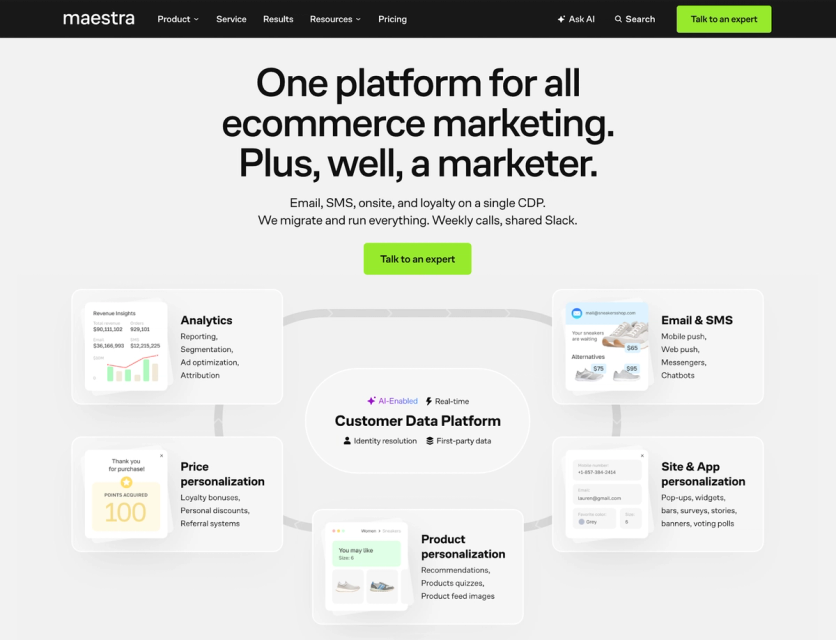
Maestra puts personalization, messaging, and the customer record in one system, aimed at mid-size, enterprise, and rapidly scaling e-commerce brands. Where Dotdigital sells marketing automation with support chat on the side, Maestra ships every subscription with a dedicated Forward Deployed Marketer who builds the flows and segments with you – closer to hiring a marketer than licensing software.
The platform covers email, SMS, WhatsApp, web and mobile push, site personalization, recommendations, a loyalty engine, and a customer database that updates live – the stack a Dotdigital user would otherwise assemble from the core product plus Fresh Relevance plus a loyalty add-on.
Key Features
Omnichannel Flows in One Builder
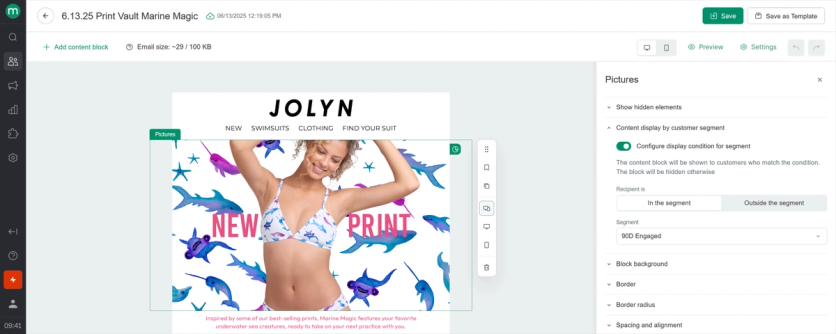
Flows orchestrate email, SMS, WhatsApp, push, and on-site messages from a single drag-and-drop canvas, so a cart abandonment sequence can escalate across channels without duplicate logic. Language routing lives inside the flow too: when Sena moved from separate regional accounts to Maestra, single flows with automatic language routing replaced six versions of every automation across five languages plus the US.
Real-Time CDP
Each profile refreshes the moment something happens on the site, in the app, in store, or in a message – no waiting on background processing before a segment reflects new behavior, which is exactly the lag recent Dotdigital reviews complain about. Segments have no rule ceilings, so audiences that would live in spreadsheets next to Dotdigital get built inside the platform.
Built-In Loyalty and Referrals
Loyalty is part of the same customer profile that drives flows and segmentation, not a separate module with its own data silo. Points, tiers, and referral mechanics feed directly into email and SMS targeting.
Site Personalization and Product Recommendations
On-site banners, pop-ups, and recommendation blocks run off the same CDP as messaging. At Blue Q, shoppers who engaged with recommendations showed a 28.7% higher AOV than those who didn’t.
Next Best Offer
Maestra’s AI proposes segment hypotheses and next-step offers for marketer review – you approve the logic rather than trusting a black box. It’s a different philosophy from Dotdigital’s Segment Agent: suggestions come with the reasoning attached.
A Dedicated Forward Deployed Marketer in Every Subscription
Every account gets a named Forward Deployed Marketer who migrates flows, builds segments, and proposes tests. Migration and onboarding are handled almost entirely by Maestra’s team, which is the practical answer to Dotdigital’s two-month, do-it-with-consultants implementation.
Pricing
From $2,000/mo for the real-time CDP, unlimited email, and the first 100,000 active profiles, month-to-month, cancel anytime – and you pay only for active profiles, so dormant ones are stored free. Product recommendations, full-funnel reporting, and the Forward Deployed Marketer are already in the base; site personalization and loyalty are monthly modules on top, while SMS and WhatsApp add per-message costs. Email carries no per-send fee, and setup and onboarding are not billed. Above a million profiles the number is quoted. See Maestra’s pricing.
Against Dotdigital’s model, the structural differences matter more than the sticker: billing doesn’t spike on peak contact counts, there’s no 12-month minimum, and SMS doesn’t run off a rate card that changes monthly.
Where Maestra Wins
Consolidation is the headline. Svaha USA replaced Yotpo (email, SMS, loyalty) and Rebuy (recommendations) with Maestra, finishing 26% up on total sales and 14% up on average order value. One platform means one customer profile, one report, one bill – no reconciling attribution across three tools.
The second win is what the hands-on model does to output. Blue Q came from Sendlane with two automated flows and grew email-driven sales 39% after Maestra’s team rebuilt its lifecycle program – welcome, abandoned cart, abandoned checkout, and win-back – around reliable pre-built segmentation.
Reporting is the third. Selkirk Sport, which landed on Maestra after Bloomreach, put it bluntly: “Bloomreach reporting was a mess. Numbers didn’t align across dashboards, and we couldn’t trust any of it. With Maestra, we finally have clean reporting.” For teams burned by Dotdigital’s shifting report logic, that’s the relevant reference check.
Where Maestra Falls Short
There’s no free plan and no self-serve tier. A brand with 20,000 contacts and a single email channel will find Klaviyo or Omnisend cheaper to start on, and the entry price only makes sense once you’d otherwise be paying for two or three point tools.
Maestra’s review footprint is also smaller – dozens of G2 reviews against Dotdigital’s thousand-plus – and its integration catalog is shorter than Klaviyo’s 350+. Stacks that lean on a scattering of niche apps should read the integration list first.
Compared to Dotdigital
Both platforms aim at mid-market commerce, but they solve the service question in opposite ways. Dotdigital gives you a well-reviewed support chat and charges for onboarding and professional services around a 12-month contract. Maestra folds the service into the subscription: a Forward Deployed Marketer does the migration, builds the flows, and stays on the account, month-to-month.
Functionally, Maestra’s CDP is real-time where reviewers report Dotdigital’s segment processing lags, and its segmentation carries no rule limits. Dotdigital counters with a broader B2B story – Microsoft Dynamics, NetSuite, nonprofit verticals – that Maestra doesn’t chase. Maestra is e-commerce-first, full stop.
When to Switch from Dotdigital to Maestra
Your contact bill grows faster than your revenue. Peak-contact billing punishes stores with heavy one-time-buyer traffic. If you’re deleting contacts to stay under a tier, the problem is the pricing model, not your list hygiene.
You’re running a multi-store or multi-language operation. Sena collapsed email operations in five languages into single flows that route language automatically and grew campaign-driven revenue 8.6x year over year, taking campaigns from 1.8% to 6.8% of total revenue.
You’ve stopped trusting your reports. Selkirk Sport rebuilt on Maestra and came out with email-attributed revenue up 55% and SMS up 149% against the prior year – with numbers the team could finally reconcile.
You want a partner, not a ticket queue. After two years of treading water on its previous platform, Blue Q’s team credits the turnaround to Maestra working like a partner rather than a vendor – email-driven sales rose 39%.
2. Klaviyo – Best for Self-Serve Email and SMS on Shopify
Starting price: Free plan available (up to 250 profiles); from $20/mo (500 profiles) · G2 rating: 4.6
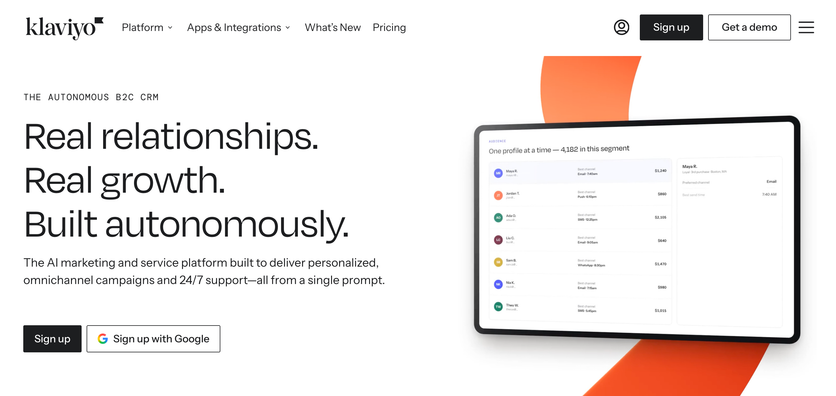
Klaviyo is the default answer when a DTC brand wants to skip the sales call entirely. It now positions itself as a “B2C CRM” – email, SMS, analytics, and a customer data layer sold self-serve with published prices, the exact opposite of Dotdigital’s demo-gated model.
Key Features
Klaviyo Marketing
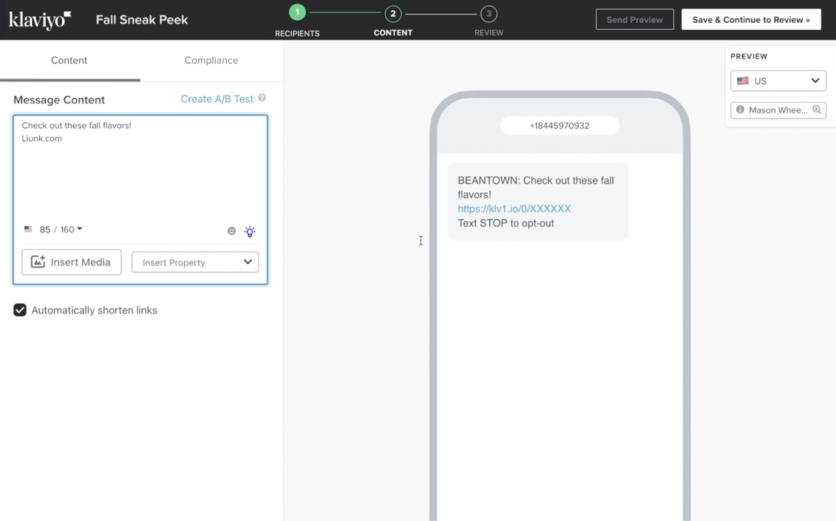
Omnichannel campaigns and flows across email, SMS, MMS, WhatsApp, RCS, mobile push, and social – with flow templates tuned for e-commerce triggers like abandoned checkout and price drop.
Klaviyo Data Platform
KDP unifies store, web, and app events into one profile, with an Advanced tier for warehouse-scale needs. The Shopify integration is the deepest in the category, and there are 350+ pre-built integrations behind it, including Magento (Adobe Commerce) and BigCommerce.
Klaviyo AI
The K:AI layer includes Composer, an AI agent that drafts campaigns, and Customer Agent for AI-assisted service. Predictive analytics – Predicted CLV, churn risk, Smart Send Time – ship on paid plans without a data science team.
Segmentation
Segmentation is consistently Klaviyo’s highest-rated capability on G2. Audiences update from real-time store behavior, and there are no hard caps on conditions – one of the specific walls Dotdigital reviewers hit.
Klaviyo Analytics
RFM analysis models future behavior and turns it into segments; funnel analysis shows where a journey leaks and lets you filter by audience; product analysis reads purchase patterns to decide what to promote. Dashboards update in real time rather than on an overnight refresh.
Pricing
Free plan available (up to 250 profiles, 500 emails/mo). Paid email plans from $20/mo (500 profiles), reaching roughly $150/mo at 10,000 profiles, $720/mo at 50,000, and $1,380/mo at 100,000. Since July 13, 2026, SMS is billed per message in dollars instead of credits, from $0.01 plus carrier fees per US toll-free send (Klaviyo help center).
One structural caveat: since early 2025 Klaviyo bills on total active profiles – every non-suppressed profile counts, whether or not you message it (Klaviyo help center). Functionally, that’s the same trap as Dotdigital’s peak-contact billing, and it’s the loudest complaint in recent Trustpilot reviews, where one long-time customer described “going from $39/month to over $200/month overnight.”
Where Klaviyo Wins
Nothing on this list gets a Shopify store from signup to a revenue-generating flow faster. As one G2 reviewer put it, “the integration with our Shopify store makes it easy to build automated flows based on real customer behavior.” The predictive layer – CLV, churn probability, send-time optimization – is genuinely useful and has no Dotdigital equivalent.
The self-serve model is the other draw. Published pricing, instant signup, and a huge template and integration ecosystem mean you can evaluate the whole platform before spending a dollar.
Where Klaviyo Falls Short
The 2025 billing change dominates recent reviews: paying for inactive and even bot-created profiles, with a 90-day restriction on re-suppressing them. Support is tiered – free accounts get email support for 60 days, and reviewers describe chat handled by “an AI bot which is poorly trained” with hours between human replies.
SMS costs are hard to predict: messages over 160 characters bill as two segments, three with an emoji. And there’s no built-in loyalty, on-site personalization, or WhatsApp-first tooling – at which point you’re back to assembling a stack.
Compared to Dotdigital
Klaviyo wins on data depth, predictive analytics, and buying experience; Dotdigital wins on service and channel breadth for mixed B2B/B2C teams. The irony is that both now bill on profiles you may not be messaging – Klaviyo on active profiles, Dotdigital on peak marketable contacts – so neither escapes the grow-your-list-grow-your-bill problem.
Compared to Maestra
Klaviyo is self-serve software; Maestra is software plus a team. At 50,000+ profiles the price gap narrows sharply – Klaviyo’s email-only tier plus per-message SMS plus a loyalty app plus a personalization app approaches Maestra territory, without the Forward Deployed Marketer. Sena made exactly that trade, moving from regional Klaviyo accounts to Maestra and growing campaign-driven revenue 8.6x year over year.
3. Omnisend – Best for Small Stores That Need Automations Live in a Day

Starting price: Free plan available (up to 250 contacts); from $16/mo (500 contacts) · G2 rating: 4.6
Omnisend is the budget pick – a focused email, SMS, and web push tool for small and mid-size stores. Its pitch is speed: pre-built e-commerce workflows that go live the day you install the app, at prices Dotdigital’s sales team couldn’t quote if it wanted to.
Key Features
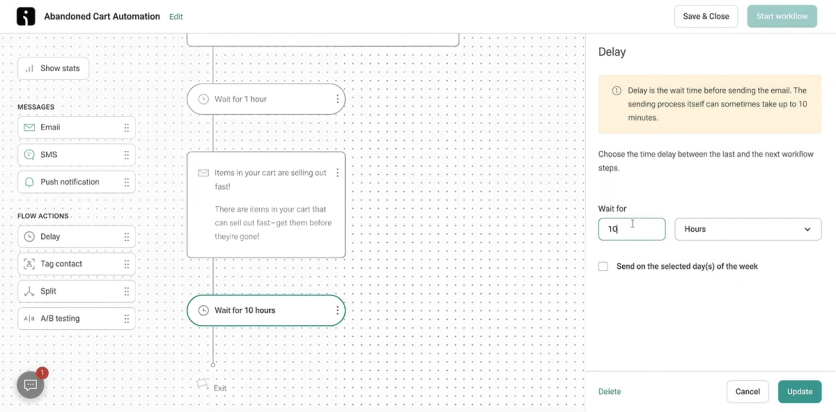
Pre-Built Automation Workflows
Abandoned cart, browse abandonment, post-purchase, and win-back sequences ship ready to switch on, with all channels in one automation.
Email Campaigns with Commerce Blocks
A drag-and-drop builder with dynamic tags and conditional blocks that change content per recipient. The commerce blocks are what set it apart from a generic ESP: a product picker for placing items anywhere in the layout, discount codes, scratch cards, and gift boxes built for promotions.
Segmentation
Dynamic segments built on what people actually did – purchases, opens, clicks, location – with membership updating on its own as behavior changes. An AI assistant will generate a segment from a plain-language description of the audience you want.
Forms and Popups
Embedded forms, flyouts, and landing pages for list growth are included on every plan – free tier included.
Reports with Revenue Attribution
Reporting splits sales by email, SMS, and push, so the revenue question has an answer per channel rather than in aggregate. Opens, clicks, conversions, and sales compare across campaigns and automations side by side.
Pricing
Free plan available (up to 250 contacts, 500 emails/mo). Standard from $16/mo (500 contacts); Pro from $59/mo (2,500 contacts) with unlimited emails. At 50,000 contacts you’re around $410/mo on Standard. Past 150,000 contacts, pricing goes custom – a signal of where the platform’s comfort zone ends.
Note the May 2026 changes: Standard plans no longer get SMS at all, and Pro plans switched from bundled SMS credits to volume-based pricing from $0.007 per message (Omnisend help center).
Where Omnisend Wins
Time to value. Reviewers routinely describe getting the hang of the platform in minutes, and 24/7 support answers on every plan – one Trustpilot reviewer reported contacting support at 2 AM and getting an immediate answer. That’s a genuine advantage over both Dotdigital’s demo-first onboarding and Klaviyo’s tiered support.
Pricing transparency is the other: a working free tier with automation and segmentation included, and published numbers all the way up.
Where Omnisend Falls Short
Depth runs out as you scale. “The reports and analytics could be a bit more detailed. I sometimes wish I could compare more data from different campaigns in one place,” wrote one Capterra reviewer last fall. A more recent review flagged that SMS back-in-stock alerts “can only send a generic message with no link” while the email version links to the product.
Channel coverage is the hard ceiling: no WhatsApp, no mobile app push, and no native Magento integration on the current features page – all three of which Dotdigital has.
Compared to Dotdigital
Omnisend isn’t really trying to be Dotdigital – it’s what a small Shopify or WooCommerce store uses instead of enterprise onboarding. Pick it over Dotdigital when you need automations live this week and your list is under ~50,000. Stay with Dotdigital-class platforms if you need WhatsApp, loyalty, B2B workflows, or Magento.
Compared to Maestra
They bracket opposite ends of the same market. Omnisend is the cheapest way to run competent email and SMS; Maestra is the consolidation play once you’ve outgrown three point tools and want site personalization, loyalty, and a Forward Deployed Marketer on one profile. A brand rarely chooses between them – it graduates from one toward the other.
4. Bloomreach – Best for Enterprise Retailers Pairing a CDP with Site Search
Starting price: Custom pricing (from $22,500/yr per its Shopify App Store listing) · G2 rating: 4.6
Bloomreach calls itself “The AI Platform for Personalization,” and it’s the most commerce-native of the enterprise options here. It’s what you buy when you want a real-time CDP, marketing automation, and e-commerce search from one vendor – and you have the technical team to run it.
Key Features
Loomi AI
The AI engine across the platform, included in all packages: Loomi Analytics answers data questions from plain-language prompts, and the Loomi Marketing Agent generates complete email workflows from a single prompt.
Omnichannel Orchestration
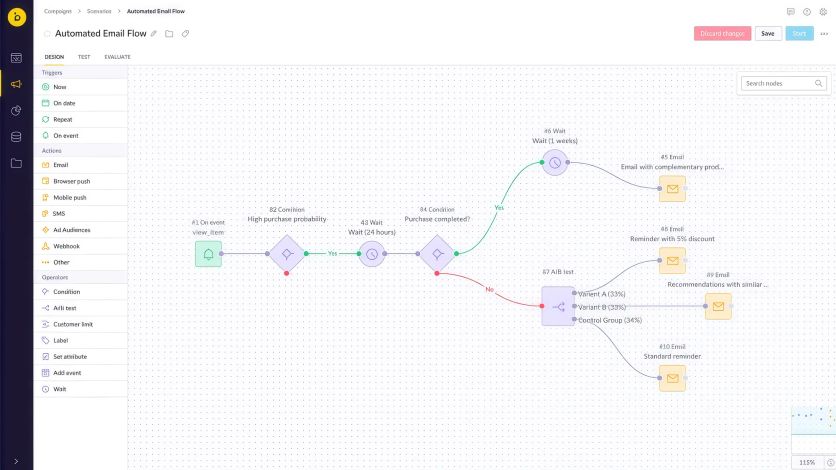
Thirteen-plus channels – email, SMS, RCS, WhatsApp, web personalization, mobile app, ads and retargeting – orchestrated on one customer profile.
Real-Time CDP
The Exponea heritage: behavioral events stream into segments in real time, at a depth Dotdigital’s background processing doesn’t match.
Ecommerce Search and Recommendations
Autonomous Search and AI product recommendations come from the same vendor as messaging – the pairing no one else on this list offers.
A/B Testing and Experiments
Experimentation on real-time customer and product data, positioned as “no IT needed” – though reviews suggest keeping IT nearby anyway.
Pricing
Custom, two-part pricing: a module fee plus usage. The only public number is the Shopify App Store listing’s $22,500/yr for the Email Marketing plan. Third-party benchmarks run far higher – the average sits around $180,000/yr (Vendr, estimate based on recorded transactions).
Where Bloomreach Wins
Segmentation and CDP depth draw consistent praise – G2 reviewers highlight “powerful segmentation, product recommendations, and automation capabilities” – and support quality scores well in recent reviews. For a retailer that wants search, merchandising, and messaging personalization on one data layer, there’s no closer fit.
Where Bloomreach Falls Short
Complexity is the recurring theme. “Default and out of the shelf functionality is limited or unnecessarily complex,” wrote one Capterra reviewer, and G2 reviewers note that “some tasks require coding or a stronger understanding of logic and syntax” – one reported needing to “hire a technical consultant from Bloomreach to develop scenarios, which is an extra cost.”
Event-volume pricing draws sharper complaints: reviewers on G2’s pricing page describe underestimated event quotes at signup, with some customers “pushed… to upgrade six tiers above their initial quote.”
Selkirk Sport’s experience is a concrete caution: “With Bloomreach, we spent six months fixing onboarding errors that should have been caught from the start.”
Compared to Dotdigital
Bloomreach is the step up in data power – real-time CDP, no segmentation rule ceilings, plus search and merchandising. The step up in cost and complexity is just as real: roughly 10x the typical Dotdigital spend, annual contracts only, and a platform marketers can’t fully drive without technical help. Dotdigital’s drag-and-drop simplicity is exactly what Bloomreach reviewers say they miss.
Compared to Maestra
Both are commerce-first platforms with real-time CDPs. Bloomreach assumes your team (or paid consultants) builds scenarios; Maestra’s Forward Deployed Marketer builds them with you, with no annual contract required. Selkirk Sport lived both models – after moving from Bloomreach to Maestra, it grew email-attributed revenue 55% and SMS-attributed revenue 149% year over year.
5. Braze – Best for App-First Brands with Engineering Support
Starting price: Custom pricing (contact sales) · G2 rating: 4.5
Braze grew up as Appboy, and the mobile DNA still defines it. This is the platform for consumer apps orchestrating push, in-app, email, and WhatsApp for millions of monthly active users – with an engineering team that owns the event pipeline.
Key Features
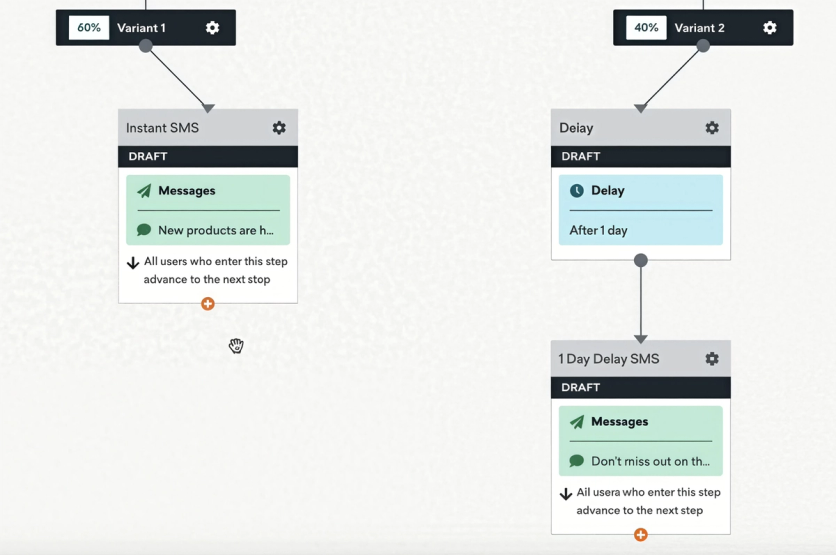
Canvas
Braze’s journey builder handles genuinely complex lifecycle logic – one recent Capterra review noted that “Canvas journeys are able to support our complex subscription flows.”
BrazeAI
The current AI umbrella (the 2023 “Sage AI” branding is retired): BrazeAI Decisioning Studio for 1:1 personalization at scale, plus always-on BrazeAI Agents for optimization.
Braze Data Platform
A composable set of data capabilities rather than a single CDP product. Cloud Data Ingestion syncs directly from Snowflake, Redshift, Databricks, or BigQuery on a schedule you set, and Currents streams events back out to warehouses, BI tools, and CDPs every five minutes or every 15,000 events, whichever lands first.
Content Cards
A messaging channel of its own, powered by the Braze SDK alongside push and in-app messages. Content Cards are graphic elements – carousels and banners – rendered inside your app or site, so the message waits for the user instead of interrupting them the way a push does.
Broad Messaging Channels
Email, SMS/RCS, push, in-app, web messaging, WhatsApp, LINE, and KakaoTalk – the widest chat-app coverage on this list.
Pricing
Custom, based on monthly active users and Credits spent across channels. Four editions – Braze Go, Select, Pro, Enterprise – and, new this cycle, a free trial. The median buyer sits at about $88,507/yr (Vendr, estimate from recorded purchases), scaling past $300K at 2M+ MAUs.
Where Braze Wins
Real-time cross-channel orchestration for brands with both a website and an app. “Is a great solution for brands that have both a website and an app and want smart flows that send push notifications, in-apps, and emails to the applicable people,” summarized one Capterra reviewer last year. At high MAU volumes with dedicated CRM teams, it’s the category reference.
Where Braze Falls Short
Email feels like the second channel. “The email editor can sometimes feel less intuitive,” one reviewer wrote, wishing for “a separate, dedicated section for email creation and management.” Liquid templating gives huge flexibility but, per G2 reviewers, “has a steep learning curve for most non-technical marketers.”
Day-to-day UX friction shows up in recent reviews too – no autosave on campaigns and canvases, with auto-logout losing work. And advanced anything (events, integrations, segmentation) needs ongoing engineering support.
Compared to Dotdigital
If Dotdigital is a marketer-operable tool for email-led commerce, Braze is an engineering-backed system for app-led engagement. The new Braze Go tier and free trial push downmarket toward Dotdigital’s mid-market base, but the operating model doesn’t change: without developers on the account, Braze underdelivers.
Compared to Maestra
Braze is industry-agnostic and app-first; Maestra is e-commerce-only and marketer-first. A fintech or delivery app with millions of MAUs belongs on Braze. A DTC brand where email and SMS drive revenue gets Braze’s power without Braze’s engineering bill by going with a platform whose team does the building – and whose email tooling is the first channel, not the afterthought.
6. Iterable – Best for Consumer Apps That Need Real-Time Decisioning
Starting price: Custom pricing (contact sales) · G2 rating: 4.4
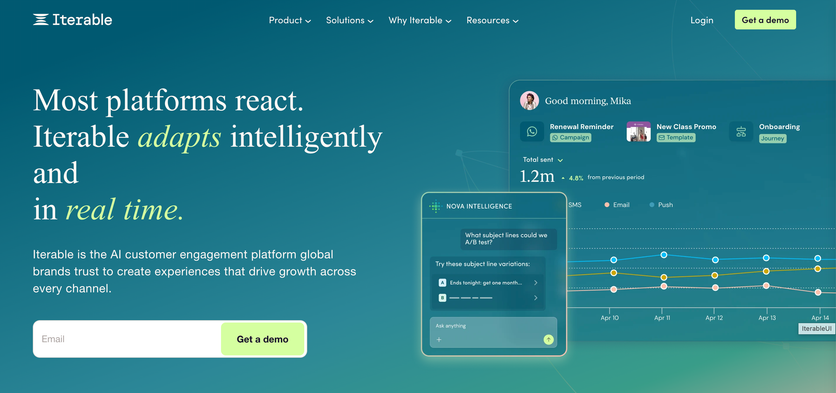
Iterable sits in the same enterprise cross-channel tier as Braze, with a heavier bet on AI decisioning. Its current pitch – “Most platforms react. Iterable adapts intelligently and in real time” – is aimed at consumer apps, marketplaces, and subscription businesses, not store-led retail.
Key Features
Nova
Iterable’s AI layer, rebuilt around agents this spring: Nova Agent acts on customer behavior in real time – generating copy, building journeys, running experiments – alongside Nova Insights, Nova Decisioning, and Nova Predictive Audiences for churn and high-value detection.
Journeys and Campaigns
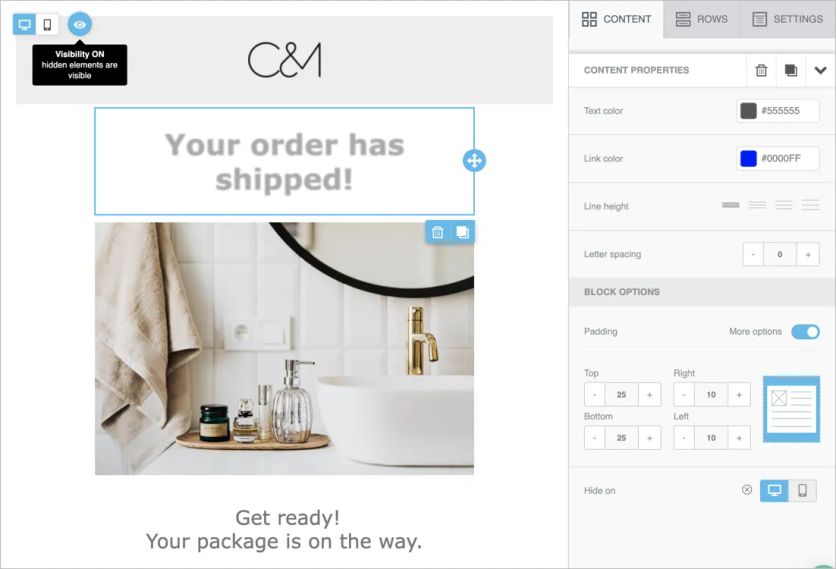
Journeys are built in Studio, a drag-and-drop canvas where each step carries entry rules, messages, delays, and profile updates. Campaigns come in two shapes – blast sends to a list, triggered sends per user – and Catalog supplies the product and content data queried at send time.
Channel Decisioning and Send Time Decisioning
Iterable picks the channel each person is most likely to open – email, SMS, or push – when they hit a Channel Optimization tile, and chooses the hour the same way. Iterable reports median lifts of 82% on opens and 73% on clicks against randomized send times.
Command Center
A goal-driven homepage with campaign health alerts and progress against the goals you set, added in spring 2026. It answers the question a marketing lead actually asks on Monday morning, which most platforms leave you to assemble from separate reports.
Embedded Messaging and Native WhatsApp
Inline messages in app and web surfaces, plus WhatsApp as a native channel – a combination Listrak, notably, doesn’t offer.
Pricing
Custom quotes on MAUs, message volume, and custom events across Growth, Premier, and Enterprise tiers, annual contracts standard. The median buyer sits at $85,775/yr (Vendr, estimate); third-party reviews place the practical entry point around $20,000/yr for up to 50,000 MAUs (estimate, per Email Software Insights).
Where Iterable Wins
Journey depth without constant engineering hand-holding – TrustRadius reviewers credit it for letting teams “design and operate campaigns without needing extensive engineering support” once implemented – plus well-reviewed human support and a flexible API for real-time behavioral triggers.
Where Iterable Falls Short
Cost and cost predictability. “The lack of pricing transparency makes budgeting a nightmare,” per reviews collected on its pricing, including a verified user hit with a “hidden fee – they charge extra for something as simple as creating new senders.”
The learning curve draws blunt language too: G2 reviewers describe a segmentation interface that “feels like it was designed by engineers for engineers.”
Compared to Dotdigital
Iterable is the “we outgrew Dotdigital and need real-time decisioning” upgrade, not a like-for-like swap – G2’s own comparison data shows Dotdigital scoring higher on ease of setup and quality of support. Move when you’re a high-MAU consumer business with budget and data resources; stay if a marketer-operable mid-market tool is the point.
Compared to Maestra
Different customers. Iterable optimizes engagement for app-led businesses at six-figure contracts; Maestra sells revenue-focused personalization to e-commerce brands at a published price. If your KPI is store revenue rather than app engagement, Iterable’s MAU-based model and vertical breadth are features you’d be paying for without using.
7. Listrak – Best for US Retailers That Want a Done-With-You Partner

Starting price: Custom pricing (contact sales) · G2 rating: 4.5
Listrak brands itself “the cross-channel personalization platform” and works almost exclusively with US retailers. It’s less a self-serve tool than a managed program: dedicated account teams run strategy and retail playbooks – abandonment, replenishment, loyalty – on your behalf.
Key Features
Listrak Data Platform
Identity resolution across devices and sessions feeding one unified customer record, with cross-channel data flowing back into it in real time. For a retailer with stores as well as a site, the in-store side of that record is the part rivals here do not have.
Listrak Intelligence
AI product and content recommendations, AI channel affinity, and predictive segmentation, plus an AI SMS assistant. The channel-affinity piece decides where each person is reached, so the prediction lands in orchestration rather than in a dashboard.
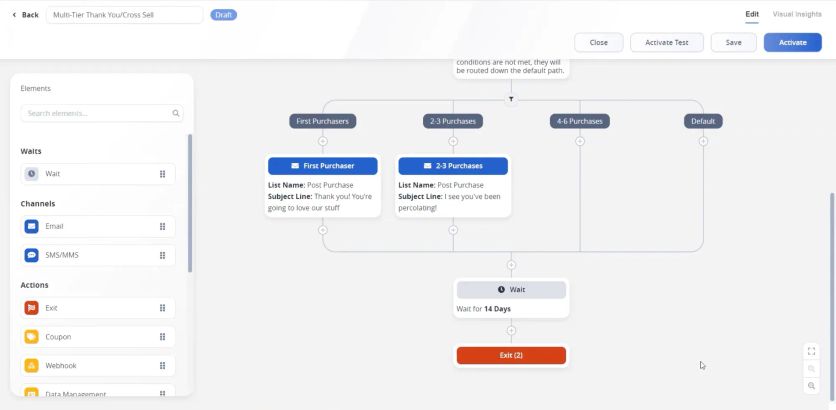
Journey Orchestration
A Cross-Channel Journey Hub with retail-specific programs: welcome and activation, cart and browse abandonment, loyalty, post-purchase, and lifecycle.
Experience Builder
Landing pages, onsite popups and personalization, and preference centers – real-time and behavior-based rather than rule-only. It handles the on-site half of a program whose other half is email and SMS, without a second vendor.
Retail Messaging Channels
Email, SMS/MMS, RCS messaging, push, and paid media audiences. No WhatsApp and no in-app messaging – this is a web-commerce stack, not an app stack.
Pricing
Custom quotes only, no free trial, with reviewers reporting separate fees per module and integration plus setup fees. The average sits around $83,000/yr (Vendr, estimate from very few recorded deals). Reviewers consistently mention pressure to commit annually.
Where Listrak Wins
The account teams. “I like the great account management support and that Listrak is a good partner to have,” reads a representative G2 review, and Shopify App Store reviewers credit their dedicated CSMs for ongoing optimization. For a retailer that wants a vendor running the retention program, that’s the product.
Where Listrak Falls Short
The interface shows its age. Reviewers on G2 and Capterra call the platform “bulky and not user friendly” and ask for “a drag and drop editor like more modern tools.” Reporting is fragmented – “reporting dashboards are in different places for different campaign flows.”
Contracts are the sharpest complaint: TrustRadius reviewers report being “lock[ed] in with ridiculous and overly complicated contracts” and auto-renewed into terms they didn’t want, while Capterra reviewers note that “every new function requires a different fee for integration, which becomes cost prohibitive.”
Compared to Dotdigital
Listrak trades Dotdigital’s modern-ish self-serve UI for deeper managed retail service – and doubles down on the exact contract pain driving people off Dotdigital, with two-year terms instead of one. Pick Listrak for white-glove US retail expertise; skip it if contract flexibility or a UI your team enjoys is on the must-have list.
Compared to Maestra
Both sell hands-on service, which makes the differences instructive. Maestra’s Forward Deployed Marketer comes inside a month-to-month subscription on a modern platform; Listrak’s account team comes wrapped in multi-year contracts and per-module fees on an interface reviewers call dated. If the partner model appeals but the lock-in doesn’t, that’s the comparison to run.
8. Agentforce Marketing – Best for Enterprises Already Running on Salesforce

Starting price: From $1,500/org/mo (Marketing Cloud Next Growth) · G2 rating: 4.0
Agentforce Marketing (formerly Salesforce Marketing Cloud) is rebuilt around Marketing Cloud Next and AI agents. The pitch isn’t the marketing tool – it’s the ecosystem: marketing on the same platform as Sales Cloud, Service Cloud, and the Data 360 CDP.
Key Features
Journey Builder
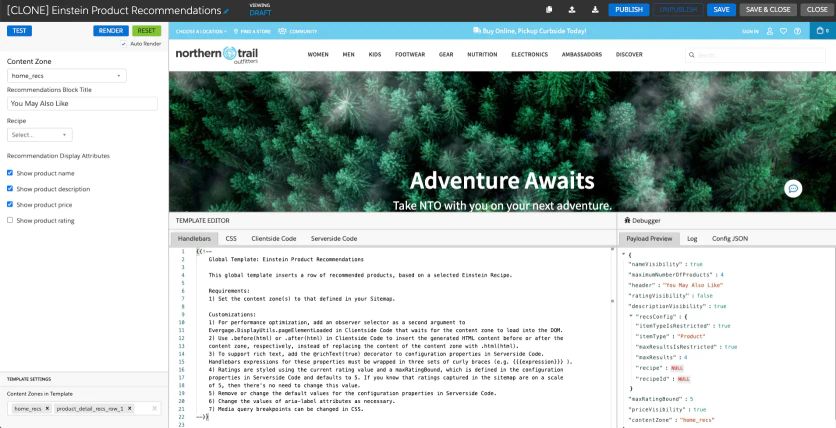
Drag-and-drop multichannel journey design at enterprise orchestration scale, still the piece most Salesforce marketing teams live in day to day. In the current editions the campaign agents build the draft journey and hand it over for review rather than starting from an empty canvas.
Agentforce Campaign Creation
Give it a goal and brand guidelines and it writes the brief, builds the target segments, drafts the emails and landing pages, and assembles the journey in Flow – then keeps analyzing performance and proposing changes. Segments can be described in plain language.
Data 360
The CDP formerly called Data Cloud, unifying marketing, sales, service, and commerce signals into the segments the campaigns target. Because it is the same record the rest of the Salesforce stack writes to, an enterprise already on Salesforce gets the data work mostly done.
Einstein
The scoring and analytics layer: engagement scoring, send-time optimization, and dashboards. It predates the Agentforce branding and still does the quiet work underneath – deciding who is likely to open and when – while the agents handle the visible campaign building.
The Studios
Email Studio, Mobile Studio, Automation Studio, and Content Builder cover email, SMS, push, and content workflows; two-way SMS and WhatsApp arrive on the Advanced edition.
Pricing
From $1,500/org/mo for Marketing Cloud Next Growth, $3,250 for Advanced, with Engagement+ at $2,000 and add-ons like Personalization from $8,000/org/mo, billed annually. Premier Support adds 30% of net license fees, and third-party implementation guides put real deployments at tens of thousands per year beyond licenses (estimates, per Cyntexa’s pricing guide).
Where Agentforce Marketing Wins
Enterprise orchestration and ecosystem depth. “The journey builder experience and interface are particularly impressive; it’s fast and reliable… They can handle complex structures easily through a visual interface,” wrote one G2 reviewer this summer. For companies with mature data strategies already on Salesforce, the native integration does what no connector can.
Where Agentforce Marketing Falls Short
Complexity is the top-tagged con on G2 by a wide margin. “Salesforce Marketing Cloud can feel overly complicated for teams that do not have strong technical expertise. The learning curve is steep,” reads one review from this spring. Another notes the studios have “little commonality in the UI among them” and that Automation Studio requires SQL.
Then the money: module stacking gets expensive fast, per the same review pages, and most deployments need admins or consultants as standing overhead.
Compared to Dotdigital
Dotdigital positions itself as the human-friendly mid-market layer – and even sells a Salesforce integration for teams that want CRM data without Marketing Cloud complexity. Move up to Agentforce Marketing when you’re an enterprise standardizing on Salesforce end to end. Below that scale, you’d be paying enterprise overhead for mid-market needs.
Compared to Maestra
A 4.0 G2 rating against 4.8 tells the operational story: power that demands specialists versus a platform run for you. Maestra can’t unify your sales, service, and marketing org on one vendor – but if the actual goal is e-commerce revenue from email, SMS, and on-site personalization, it gets there without SQL, admins, or a 30% support surcharge.
9. ActiveCampaign – Best for Small Teams Mixing Marketing Automation and Sales CRM
Starting price: From $15/mo (1,000 contacts) · G2 rating: 4.5
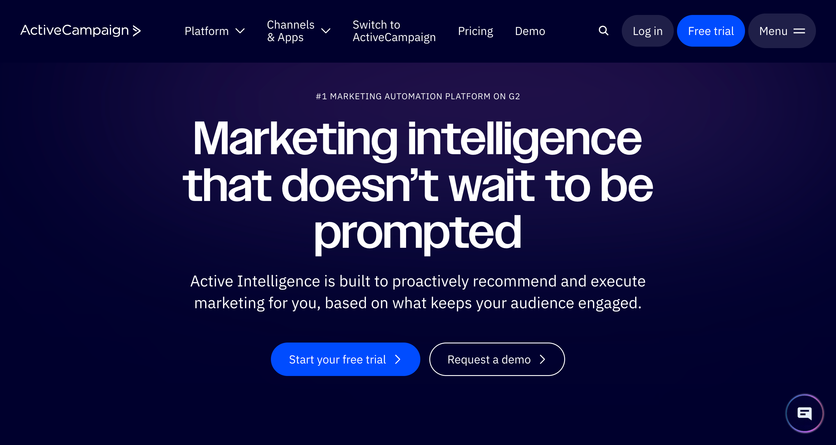
ActiveCampaign calls itself “the autonomous marketing platform” and pairs deep multi-step automation with a light CRM. It’s the strongest pick on this list for small, B2B-leaning or service businesses – a different animal from the commerce platforms above.
Key Features
Marketing Automation
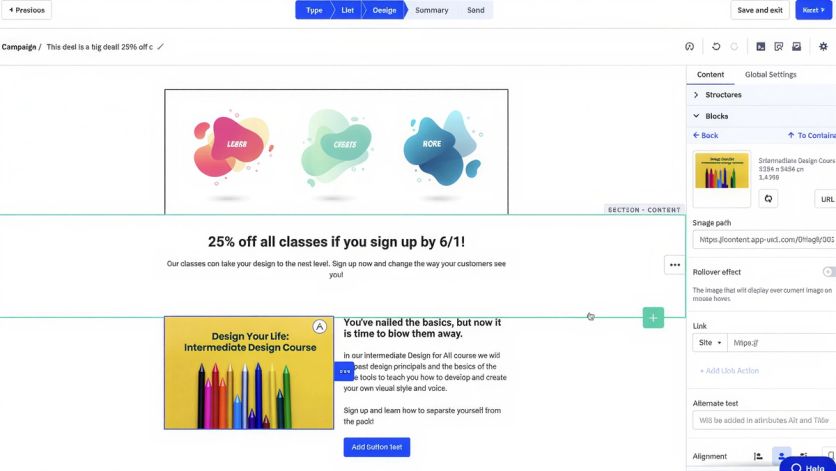
Multi-step automations with 950+ ready-made recipes and an Automations map for seeing how they interconnect. The recipe library is the reason a small team can stand up a full lifecycle program without designing each flow from scratch.
Active Intelligence
The AI layer: goal-aware automations, an AI campaign builder, AI follow-ups, and a brand kit that keeps generated copy on voice. It reads interaction data to recommend the next send rather than only generating text on request.
Predictive Sending and Conditional Content
Send-time optimization per recipient, which ActiveCampaign credits with an average 17% click-through lift, and content that varies by contact across up to five versions of one email. Both are Pro-and-up features rather than base-plan ones.
Sales CRM
Pipelines and sales engagement, sold as the Enhanced CRM add-on – deal records, lead scoring, win probability. It is what makes ActiveCampaign a real option for a brand selling both to consumers and to wholesale accounts.
Integration Breadth
1,000+ integrations including Shopify and WooCommerce, and – a 2026 addition – Claude and ChatGPT. Breadth is the argument here: whatever else your stack contains, there is usually a connector rather than a webhook project.
Pricing
From $15/mo (1,000 contacts) on Starter; Plus $49, Pro $79, Enterprise from $145. At 10,000 contacts, Pro runs $375/mo. SMS, WhatsApp, transactional email, Enhanced CRM, and custom reporting are all paid add-ons. One footnote worth knowing: accounts created on or after November 3, 2025 are billed for all contacts, including unsubscribed and bounced ones (ActiveCampaign help center).
Where ActiveCampaign Wins
Automation depth per dollar. “What I like is the simplicity, the price point… the connection with Zapier,” wrote one Trustpilot reviewer comparing it against a quote ten times higher. For a lean team automating both marketing and a sales pipeline, nothing at this price matches the recipe library.
Where ActiveCampaign Falls Short
Its G2 and Trustpilot scores tell two different stories – 4.5 versus 2.8 – and the recent Trustpilot reviews are rough. Support has gone AI-first: “I haven’t been able to get in touch with someone for weeks, everything is AI,” reads one review from this summer. Others describe drastic unannounced price increases and forced migrations to pricier plans. One detailed reviewer even documented DKIM signatures missing from a slice of automated sends, with weeks passing before a substantive reply.
E-commerce depth is add-on-gated too: premium store integrations start at Pro, custom reporting sits on Enterprise.
Compared to Dotdigital
ActiveCampaign undercuts Dotdigital dramatically at small scale and self-serves everything Dotdigital demo-gates. But Dotdigital’s core sales pitch – human account management and 24/7 live support – is precisely what ActiveCampaign’s recent reviewers say they’ve lost. For mid-market commerce with real channel needs (WhatsApp, loyalty, personalization), it’s a step down, not a step sideways.
Compared to Maestra
They don’t compete for the same customer. ActiveCampaign is the right call at 5,000 contacts with a sales pipeline to manage. By the time a store’s list and revenue justify Maestra, ActiveCampaign’s add-on stack – SMS, WhatsApp, CRM, reporting – has usually turned the low sticker price into a mid-market bill without the mid-market platform.
How to Choose the Right Dotdigital Alternative
Maestra is the pick if Dotdigital’s core frustrations – peak-contact billing, 12-month lock-in, segment limits, reports you double-check in a spreadsheet – are what’s driving the search: it replaces three to five point tools (email, SMS, loyalty, personalization, CDP) with one platform and a team that runs it with you, month-to-month.
The rest of the field splits by what you’re optimizing for. Self-serve speed on Shopify points to Klaviyo; the smallest budgets point to Omnisend; deep technical teams point to Bloomreach or Iterable; app-first engagement points to Braze; managed US retail points to Listrak; a Salesforce-standardized enterprise points to Agentforce Marketing; and a small B2B-ish team points to ActiveCampaign.
If the Maestra column fits, book a demo – you’ll get a migration plan and a working flow map before you commit to anything.
Frequently Asked Questions About Dotdigital Alternatives
- Maestra is the fullest replacement for e-commerce teams that have outgrown Dotdigital. Email, SMS, WhatsApp, push, site personalization, and loyalty all run off a real-time CDP on one subscription. A dedicated Forward Deployed Marketer handles the migration and builds the flows. Svaha USA folded its stack into Maestra and finished 26% up on total sales. Klaviyo is the best self-serve option for Shopify stores, and Bloomreach fits enterprises with technical teams.
- Yes, Klaviyo and Omnisend both have free plans. Klaviyo’s free plan covers up to 250 profiles and 500 emails a month, and Omnisend’s free tier includes automation and segmentation for up to 250 contacts. Dotdigital itself offers no free plan and no published pricing. Free tiers suit stores testing a platform – past a few thousand contacts, compare paid plans on total cost including SMS. Maestra has no free tier either – it starts at $2,000/mo and is built for brands past the testing stage, with migration and a named marketer included rather than billed as onboarding. Selkirk Sport moved its whole stack across and finished the year with email-attributed revenue up 55%. See Maestra’s pricing.
- Dotdigital doesn’t publish prices, and its quotes are custom and demo-gated. Contracts run 12 months minimum, and billing is based on the highest number of marketable contacts in a billing period. SMS is priced per message segment off an account-specific rate card that can change monthly. Entry plans list at $500 and $1,000 per month, both usage-based (Capterra), but budget for onboarding and implementation on top. Maestra answers the same question with a number you can read before a demo: it starts at $2,000/mo for the real-time CDP with unlimited email and 100,000 active profiles, billed month to month, with migration included – see Maestra’s pricing. Svaha moved for one platform that costs less than Rebuy and Yotpo combined, plus a marketer who helped it migrate, and came out of peak season with total sales up 26% and average order value up 14% year over year.
- Maestra, Klaviyo, Omnisend, Bloomreach, and Listrak all offer native Shopify integrations. ActiveCampaign connects too, though its deeper e-commerce integrations start on the Pro plan. Maestra and Klaviyo sync the deepest store data – orders, browsing behavior, and catalog – into segmentation and flows. Blue Q runs its full lifecycle program on Maestra’s Shopify integration and grew email-driven sales 39%.
- Maestra, Bloomreach, Braze, Iterable, and Klaviyo support WhatsApp natively; ActiveCampaign sells it as an add-on. Omnisend and Listrak don’t offer WhatsApp at all. If WhatsApp is central to your channel mix, also compare deliverability tooling – MPD lifted WhatsApp deliverability from 53% to over 80% on Maestra while sending fewer messages.