
Dynamic Product Recommendations That Actually Work: A 3-Minute Guide
Question
Answer

After working with dozens of brands to refine their recommendation strategies, we’ve identified three essential components for success:
- Accurate Customer Data
- Rich, Real-Time Product Info
- Implementation and Optimization Plan (or Someone to Own It)
Bonus tip at the end—get the most out of your recommendations!
Accurate Customer Data
Effective recommendations go beyond just purchase history. A truly effective system captures a unified view of how customer behavior, inclufing:
- Purchase history across all channels
- Product interactions (views, wishlists, cart adds)
- Category browsing patterns
Omnichannel data is essential. If you have both a website and mobile app, ensure your recommendation engine tracks both. The same goes for offline purchases—these insights are often the missing piece in understanding true customer preferences.
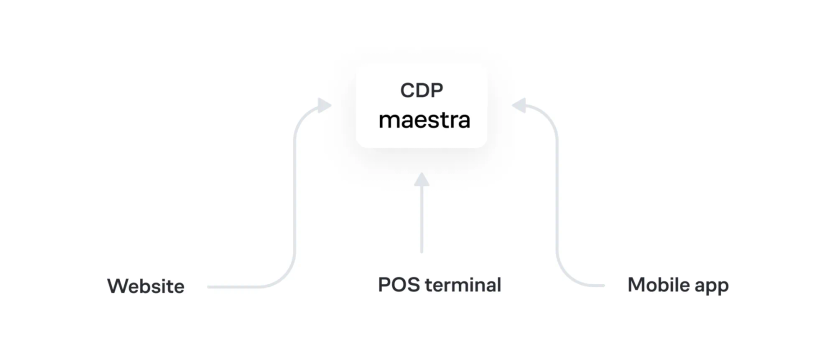
One of Maestra’s clients integrates data from their website, mobile app, and offline stores in Maestra CDP. By combining offline purchases from cash registers with online interactions and mobile app activity they build a comprehensive profile for more precise and effective recommendations
Rich, Real-Time Product Info
When feeding product data into your recommendation engine, focus on two key goals: real-time updates to ensure accuracy and rich content to drive engagement.
Real-time updates: Your engine must have up-to-the-minute data on product availability, pricing, and performance. Without it, you risk showing out-of-stock items, incorrect prices or irrelevant products—frustrating customers and undermining trust. Missing real-time synchronization can also create misconceptions about your offerings, ultimately harming your brand.
Rich content: The more product attributes you include, the more engaging your recommendations become. Consider including a variety of product attributes to highlight performance or differentiate products:
- Social proof and popularity indicators—ratings, reviews, "Bestseller" status, customer behavior signals (e.g., "Popular in your area", "Most viewed today")
- Availability and urgency signals—labels such as “New arrival”, “Back in stock", "Selling fast", "Only 5 left," or "Limited stock"
- Product performance and differentiation—detailed specifications, unique features, and unique selling points
- Pricing and promotions—active discounts and limited-time deals
These attributes help recreate the in-store shopping experience online, where customers naturally notice what others are buying, which items are running low, and what’s being featured. Adding real-time availability and social proof helps customers make confident buying decisions.
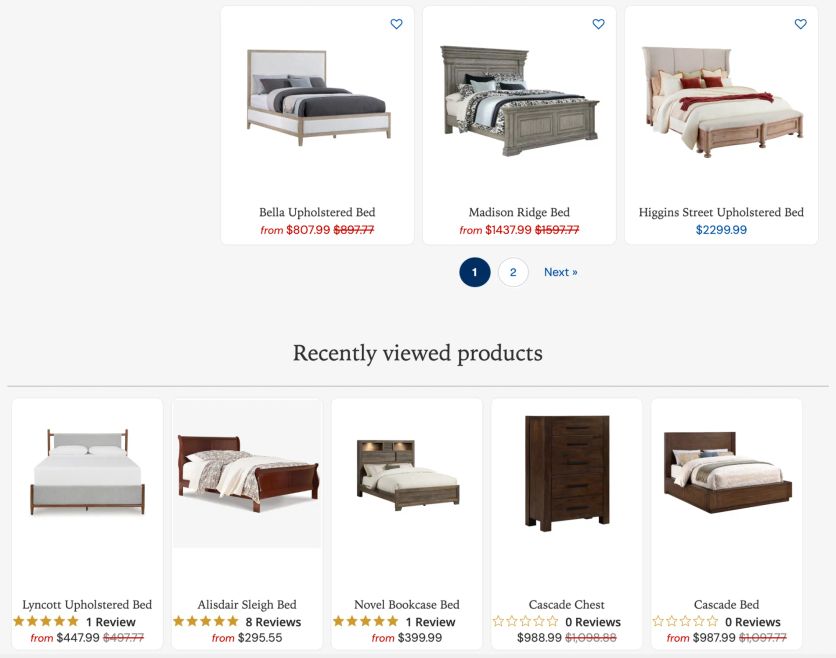
Furniture Fair enhances its recommendations by feeding comprehensive data into Maestra—including ratings, reviews, and promotional details
Implementation and Optimization Plan (or Someone to Own It)
To make product recommendations truly effective, you need:
- Strategic, page-specific algorithms
- Ongoing performance analyses
- Continuous A/B testing and optimization
- Well-designed templates for layout and functionality
Here’s the catch: while dynamic recommendations reduce manual work, optimizing them still requires expertise and resources. Fine-tuning algorithms can become overwhelming if you’re handling everything alone.
That’s why having a dedicated Customer Success Manager is critical. A strong CSM brings a deep knowledge of the recommendation engine and experience in optimizing customer journeys. Even if your team consists of e-commerce experts, a platform specialist ensures you maximize the value and execution of your recommendation strategy.
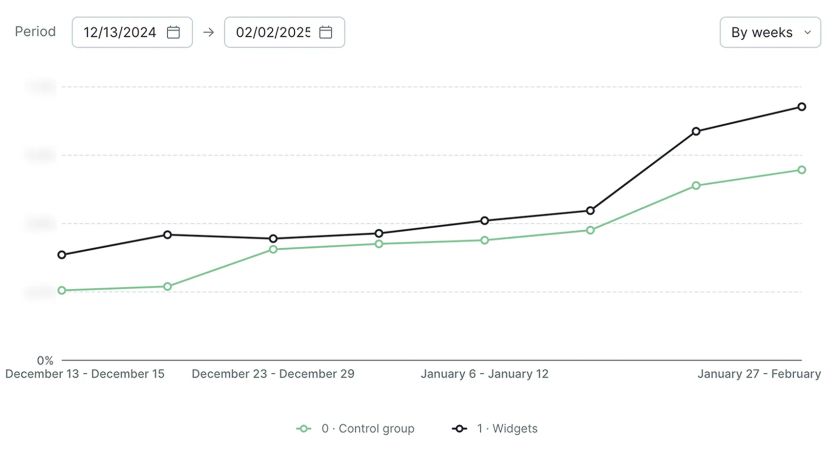
A/B test results from Maestra’s CSM work with Enlightened Equipment show a 15% increase in conversion rate and 8% higher average order value compared to the control group
(Bonus) Additional Coverage
Don’t limit recommendations to just your website. Expand their reach across mobile apps, email campaigns, web notifications, and more. If you have offline stores, connect your recommendation engine to POS terminals—this allows sales associates to provide better service by suggesting products customers are most likely to want.
Focus on key flows. Recommendations are crucial for abandoned browse, wishlist, cart, and checkout emails. Most brands simply remind customers of what they left behind, but those shoppers often already remember. Instead, use product recommendations to reignite interest in those items or introduce something new.
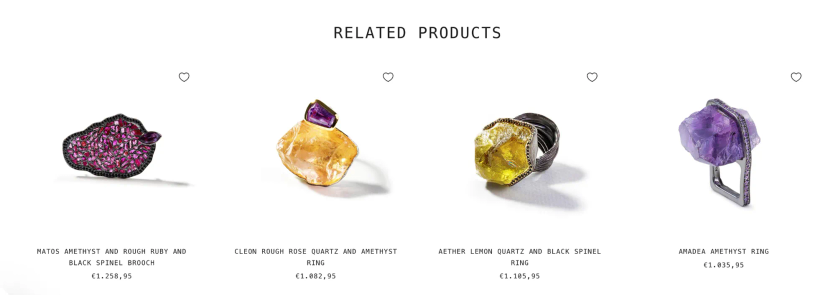
Originally, the jewelry brand German Kabirski implemented Maestra recommendations on their website…
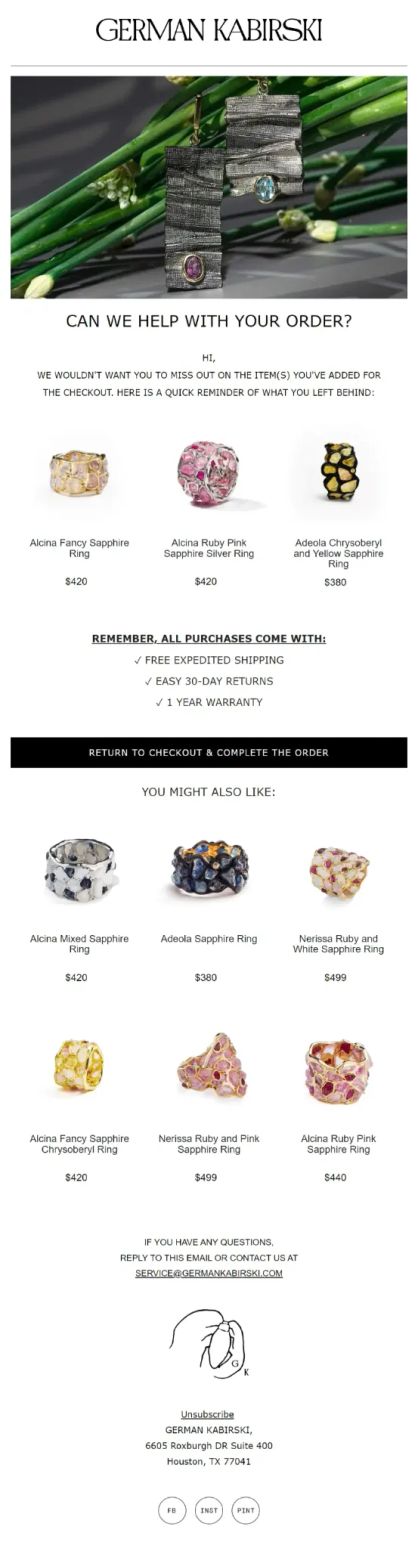
…later, they expanded the feature to abandoned checkout emails, displaying both abandoned items and complementary suggestions to drive conversions
Want to Get Started?
Implementation Checklist:
- Audit your current customer data collection
- Review product information completeness
- Choose the right vendor with strategic expertise and dedicated CSM support
- Set clear, realistic goals
- Select relevant algorithms starting with the most visited pages of your website
- Design your recommendation UI/UX strategy
- Plan your testing strategy
Rather than navigating this alone, why not get expert guidance? Book a demo below, and our consultant will walk you through every step to set up truly personalized product recommendations. If we’re not the right fit, we’ll point you to a solution that is.
FAQ
- The engine analyzes each shopper’s behavior — browsing, purchases, cart activity — and matches it against your product catalog in real time to predict what they’re most likely to buy. It typically combines several algorithms: collaborative filtering (customers who bought X also bought Y), content-based filtering (similar product attributes), and trending/bestseller logic. The key is real-time inventory sync so out-of-stock items never show up. Maestra combines these algorithms with a built-in CDP, so recommendations draw on the full customer profile across channels. Maestra client Selkirk Sport switched from manual curation to Maestra’s AI engine and saved 15 hours per week on product merchandising.
- The main types are frequently bought together bundles, similar or complementary products, bestsellers, recently viewed items, and personalized picks based on browsing behavior. The real gains come from layering these across the full shopping experience — not just product pages. Maestra client Blue Q combined bundles, a minicart slider for impulse add-ons, upsell progress bars, and AI-driven “People Also Like” suggestions. Buyers who interacted with recommendations had a 28.7% higher average order value and 45.3% more items per order compared to those who didn’t. As their Head of Marketing Noah Cook-Dubin put it: “The result is real — and it’s not coming from deeper discounts.”
- Recommendations surface the right products at the right moment — reducing search effort and increasing the chance customers find something worth buying. Complementary suggestions on product pages raise AOV, bestseller widgets on the homepage drive discovery, and personalized picks on 404 or empty search pages recover otherwise lost sessions. At Defense Mechanisms, 8.9% of total sales are influenced by product recommendations — through complementary suggestions, homepage bestsellers, and personalized picks on error pages. Their Brand Director Jessie Gullikson noted: “We can let the AI engine run on autopilot and pick products from our inventory. Or we can adjust it ourselves to match what we know works well together.”
- When evaluating a recommendation engine, focus on data depth (does it use the full customer profile or just on-site behavior?), catalog intelligence (can it match by specific attributes like color, size, and material — not just categories?), and hands-on optimization support from the vendor. Maestra combines a CDP with its recommendation engine for full-profile recommendations and attribute-level matching. Maestra client JOLYN replaced Rebuy with Maestra and now generates 7% of sales from recommendations across 4,000 SKUs. As Sr. Director of Marketing Jennifer Fenton explained: “If you browse a red bikini top, you see the matching bottom — in your size, with the same material and cut.”
- Yes — and limiting them to your website means you’re only reaching customers who are already browsing. Product recommendations in abandoned cart, abandoned browse, and post-purchase emails re-engage shoppers with personalized suggestions when they’re away from your site. Maestra syncs recommendations across website and email from a single engine, so suggestions stay consistent and inventory-aware. Maestra client JOLYN uses personalized recommendations in abandoned cart and abandoned product view emails — matching by color, material, and size across 4,000 SKUs. Combined, recommendations on the website and in emails drive 7% of total sales.