
What is RCS and Should We Try It?

RCS (Rich Communication Services) is basically the next-gen version of SMS, and yeah – it’s worth trying.
What is RCS
RCS (Rich Communication Services) works over data/Wi-Fi instead of the old SMS network, which is why it can handle so much more. It’s a newer messaging protocol that lets you send high-quality images, videos, interactive buttons, and have real two-way conversations – all in your customers' regular texting app. Plus, your verified brand name and logo show up instead of just a random phone number.
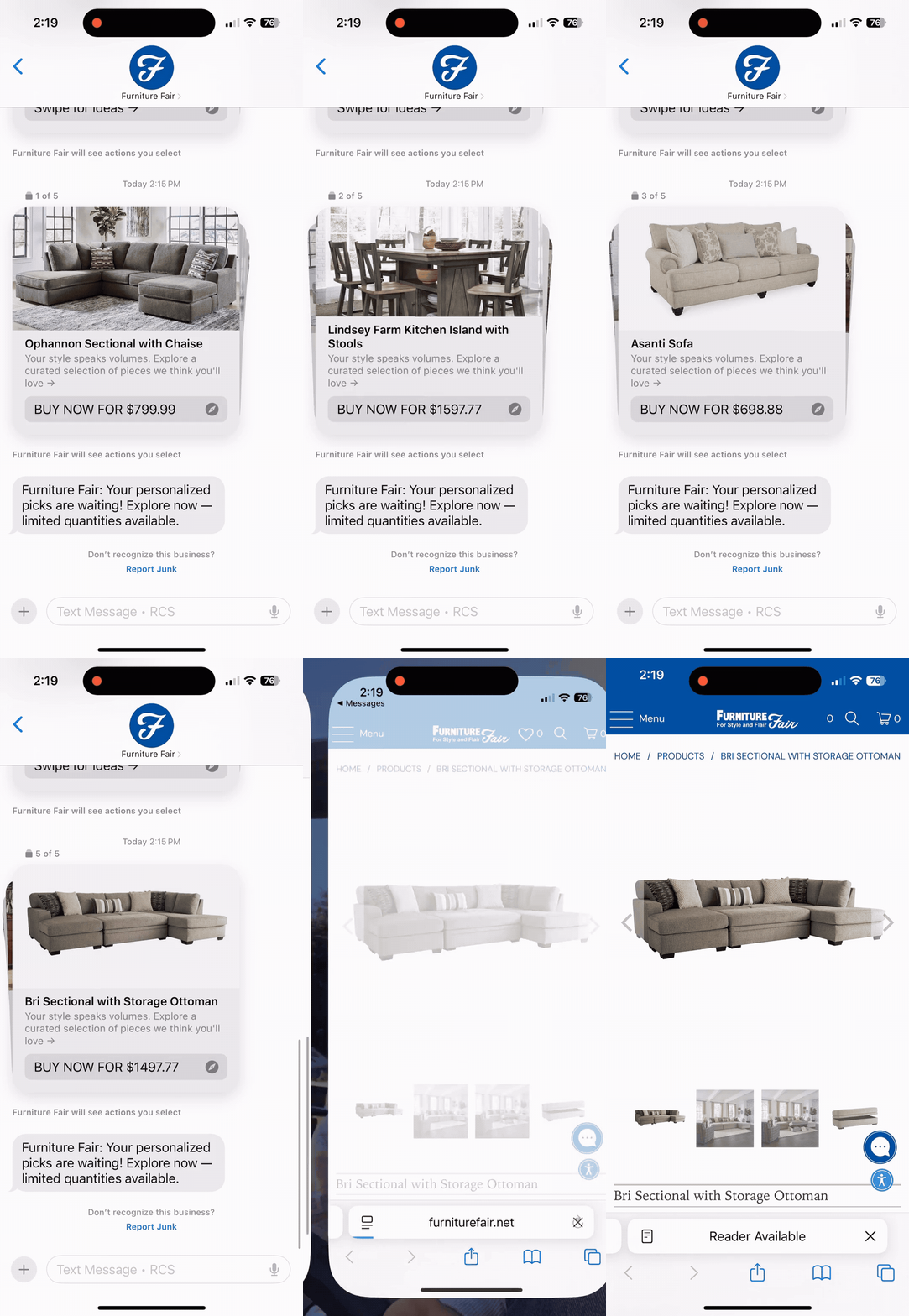
RCS from Maestra client Furniture Fair
The big difference from MMS? MMS can send basic media but it’s still limited and clunky. RCS gives you actual interactivity – buttons that link directly to your site, suggested replies people can tap, even live tracking maps. Think of it as somewhere between SMS and a messaging app like WhatsApp, but native to the phone.
| Feature | SMS | MMS | RCS | |
|---|---|---|---|---|
| Message length | 160 characters | 1,600 characters | ~3,000 characters | |
| Media support | Text only | Basic images, audio, video | High-quality images, videos, GIFs | |
| Interactive elements | – | – | Buttons, carousels, quick replies | |
| Branding | Phone number or shortcode | Phone number or shortcode | Verified brand name + logo | |
| Two-way chat | Text replies only | Text replies only | Real conversational chat (like messaging apps) | |
| Cost (approx.) | ~$0.0045 per message | ~$0.0125 per message | ~$0.0125 per message + setup fee ~$220 |
Why RCS is worth trying
- Performance boost: Companies often see 3-5x higher click rates compared to SMS
- Effective cart recovery: Brands using it for abandoned carts have seen lifts in conversions
- Zero friction: Your SMS subscribers automatically get RCS if their phone supports it. If not, it falls back to regular SMS
- Trust factor: That verified badge gets people to engage – they know it’s actually from your bran
How to set up RCS
It’s pretty straightforward. You need a platform that supports RCS (Maestra handles it alongside SMS). There’s a one-time setup fee – around $220 – to get your brand verified with the carriers. After that, you pay per message, similar to MMS rates. Your platform handles most of the registration work.
My advice: start small. Pick one use case like abandoned cart reminders or a product launch and test it against your regular SMS. Check the numbers and see if the performance justifies scaling it up.