14 Best Yotpo Alternatives for E-Commerce Growth in 2026
Yotpo built its name on reviews and user-generated content. That’s probably why you picked it in the first place.
Yotpo gave you a reason to leave.
In 2025, Yotpo sunset Email/SMS, killed Subscriptions, and sold its messaging customers to Attentive. Brands were left rebuilding flows they’d already built once. You’re not the only one.
Support, pricing, and a buggy interface still top the complaints, with platform instability now close behind.
Most-mentioned Yotpo pain points
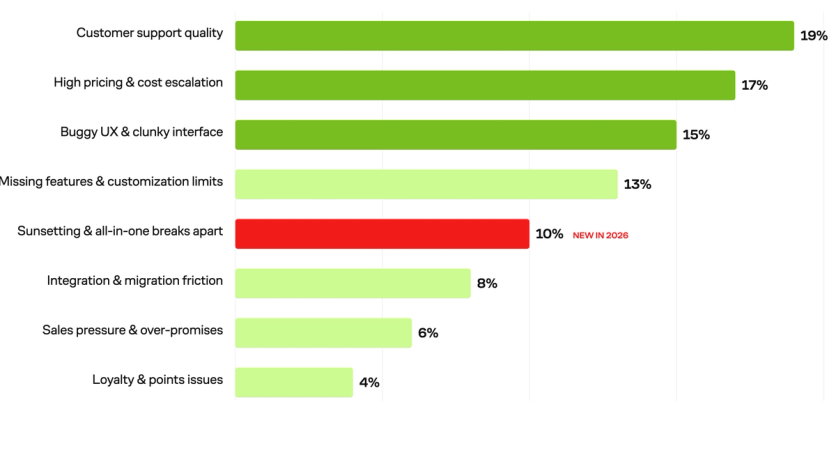
Source: verified customer reviews on G2, Capterra, and the Shopify App Store, published July 2025 – April 2026
Here’s a look at 14 Yotpo alternatives worth checking out, spanning reviews, loyalty, referrals, and all-in-one retention platforms.
Key Takeaway: Some of the Best Yotpo Alternatives
Best for combining your entire retention stack: Maestra. Seamlessly integrate customer data, email, SMS, push notifications, and loyalty on a single platform.
Best for Instagram UGC, reviews, loyalty, and wish list: Growave. Consolidates Yotpo’s core features into one Shopify app.
Best for Shopify-native loyalty: Yuko. Lightweight points, tiers, and referrals built for Shopify.
Best for simple loyalty programs for SMBs: Smile.io. Easy-to-launch points and rewards without Yotpo’s pricing complexity.
Best for personalized loyalty experiences: LoyaltyLion. Great for growing brands that need deeper VIP tiers, useful analytics, and flexible customer segmentation.
Best for collecting UGC and customer reviews: Stamped.io. Review requests, NPS, and social proof tools.
Best for simple review collection: Wiremo. Automated requests and customizable widgets, no extra retention features.
Best for verified reviews and reputation management: Feefo. Invitation-only reviews that guarantee authenticity.
Best for local relationship management and messaging: Birdeye. Review monitoring, local SEO, and a centralized inbox for multi-location brands.
Best for Google Seller Ratings and startup reviews: Reviews.io. Verified feedback plus Google Shopping integration.
Best for enterprise review collection and product feedback: PowerReviews. Review volume and sentiment analysis for large catalogs.
Best UGC reviews tool for e-commerce brands: Okendo. Reviews, loyalty, referrals, and surveys in one Shopify app.
Best for visual reviews and customer incentives: Loox. Photo and video reviews with incentivized requests.
Best for customer content syndication: Bazaarvoice. Distributes reviews and UGC across major retail sites.
Content:
What is a Yotpo Alternative
A Yotpo alternative is any e-commerce platform that replaces one or more of Yotpo’s products, including reviews, loyalty programs, referrals, SMS marketing, email marketing, subscriptions, or user-generated content.
Some alternatives replace a single Yotpo feature, like reviews or loyalty. Others replace more of the retention stack with email, SMS, customer data, segmentation, personalization, and automated campaigns on a single platform.
Pain Points with Yotpo in 2026
At the end of 2025, Yotpo suddenly phased out its own Email/SMS and Subscriptions solutions and transferred its messaging business to Attentive.
To get a sense of what this means for the brands left behind, we aggregated all the Yotpo reviews from July 2025 to April 2026 from G2, Capterra, and the Shopify App Store, and sorted the negative aspects of each review into categories and themes.
The pain points below reflect what real customers are saying right now, including a category that didn’t exist before 2026: brands feeling stranded after Yotpo broke up its all-in-one promise.
1. Customer support quality (19%)
The most common complaint in 2025–2026 reviews. Purchasers complain about slow responses, lack of human interaction in the chat, and contradictory directions during sign-up. Customers say they wait too long for a response, the chat is entirely AI-driven and circles around without resolving problems, and the onboarding process is confusing. One brand that spent four months evaluating Yotpo before committing reported receiving “four different onboarding templates from three different support reps” on day one (Shopify App Store, Jul 19, 2025). Another merchant who was testing the platform as an alternative to Judge.me reported that five exports in a row were empty CSVs, and that every time they requested to speak to a human agent, they received a ticket in the flow (Shopify App Store, Feb 7, 2026). That type of inconsistency hits hardest for a mid-market team that’s trying to launch a loyalty program, reviews, or SMS before a big season.
2. High pricing and cost escalation (17%)
The pattern reviewers describe: an entry tier that looks reasonable, then a sharp jump at renewal once a brand has built workflows on the platform – with basic customizations like brand colors and fonts gated behind higher tiers. One Shopify merchant on the PRO plan at $169/month wrote that “EVERY feature requires an upgrade” before deciding to leave (Shopify App Store, Oct 27, 2025). Another brand was approached on Cyber Monday with a renewal offer of roughly $7,000 – and migrated to Okendo at $299/month for the same scope (Shopify App Store, Dec 10, 2025). On G2, mid-market reviewers echo the same arc: capabilities are real, but cost climbs as soon as teams start adding modules to consolidate their stack.
3. Buggy UX and clunky interface (15%)
Bug reports cluster around three areas: the dashboard, the email builder, and storefront widgets. Mid-market reviewers describe needing “inconvenient workarounds” for recurring UI bugs (G2, Jul 15, 2025), and several enterprise teams running multi-store setups call out failed page loads when switching between connected stores. The pattern that emerges across reviews: the platform handles core tasks like review collection well, but breaks down once teams try to use it for anything more sophisticated – daily campaign management, complex segmentation, multi-region operations.
4. Missing features and customization limits (13%)
Even reviewers rating Yotpo four or five stars list specific feature gaps. The most frequently cited: no automatic email notification when a customer earns a reward voucher, requiring manual outreach to follow through on the loyalty promise (G2, Feb 16, 2026). Brands without dedicated developers flag limited template flexibility, with one advertising manager writing that they “want more layouts and visual options” because their developer can’t edit the underlying code (G2, Jan 27, 2026). Reviewers comparing Yotpo’s analytics directly to dedicated ESPs and SMS platforms describe them as comparatively shallow – a recurring observation from teams that picked Yotpo specifically to consolidate tools.
5. Sunsetting and the all-in-one breaks apart (10%, NEW in 2026)
A category that didn’t exist a year ago. In 2025, Yotpo retired its Subscriptions product, then sunsetted Email and SMS and sold its messaging customer base to Attentive. Brands that consolidated their stack onto Yotpo’s all-in-one promise are now being asked to migrate parts of it back out. One Capterra reviewer captured the cascading effect plainly: “Soon after I integrated most of my marketing stack over to Yotpo, they started sunsetting things. First, it was subscriptions, then email/SMS. I started using Yotpo because it was an all-in-one, and this ended up forcing me to leave to find a better solution for all of the above” (Capterra, Feb 16, 2026). The impact extended even further for an eight-year customer who rolled in Reviews, Loyalty, and SMSBump, as their grandfathered Klaviyo integration was severed during the move, necessitating a rebuild of the messaging portion of the stack (Shopify App Store, Jul 24, 2025).
6. Integration and migration friction (8%)
The friction shows up most acutely when brands try to move data out of the platform. A three-year customer attempting to migrate their reviews to a different app described export as buried and unreliable, calling for the function to be “front and center” in the dashboard (Shopify App Store, Jan 7, 2026). Beyond review export, reviewers flag clunky integrations with adjacent tools – Yotpo x Gorgias for handling customer questions submitted via review threads, and connections to ESPs like Attentive – both called out as needing manual workarounds. The shared thread: integrations work for the happy path on Shopify but require engineering time on BigCommerce, WooCommerce, or headless setups.
7. Sales pressure and over-promises (6%)
Multiple reviewers have mentioned a disconnect between what the sales team said it would provide and what the product actually provided once they signed up. The most remarkable one was a brand that paid $10,000 in advance for Walmart product syndication and reported that no products were delivered after waiting for months (Shopify App Store, Aug 12, 2025). On Capterra, a retail Controller wrote that they were “not able to customize like they said in sales pitch” and ended up paying for capabilities that turned out to be locked behind a higher tier (Capterra, Oct 6, 2025).
8. Loyalty and points issues (4%)
A smaller but persistent cluster specific to Yotpo Loyalty. Two issues recur: points that don’t transfer to customer accounts after qualifying purchases, and a clunky workflow for adjusting or expiring points that requires manual edits in the admin. One brand manager noted that lost points show up in “an incredibly low percentage of customers” but still generate support tickets every time they happen (G2, Sep 1, 2025). For points-based programs running at retail scale, even a sub-1% bug rate translates to dozens of customer escalations per week – and each one chips away at the trust the loyalty program is supposed to build.
Fixing these issues at the edges can buy time, but the bigger picture is harder to ignore: Yotpo sunsetted two major products in six months, laid off roughly a third of its workforce, and sold its messaging customers to a competitor. That’s not a temporary rough patch – it’s a strategic pivot that leaves retention marketers with an incomplete toolkit.
As your marketing becomes more advanced – more channels, more personalization, more automation – you need a platform you can build on with confidence. Below is a comparison of the strongest Yotpo alternatives across every category.
Yotpo Alternatives at a Glance
| Platform | Best For | Key Features | Price Range |
|---|---|---|---|
| Maestra | Full-funnel omnichannel marketing for ambitious e-commerce brands | Real-time CDP, email, SMS, push, loyalty, site personalization, AI recommendations, dedicated Forward Deployed Marketer | From $2,000/mo |
| Growave | Powering growth through customer retention | Loyalty & Rewards, VIP and Points Program, Referrals, Product Reviews & Ratings, Wishlist, Instagram UGC | Free plan; from $49/mo |
| Yuko | Shopify-native retention bundle for SMB and growth-stage brands | Loyalty points and VIP tiers, referrals with fraud protection, product and photo/video reviews, paid and free memberships, visual workflow builder, Klaviyo and Shopify Flow integrations, free migration | Free; from $12/mo |
| Smile.io | Simple, affordable loyalty for SMBs | Points, VIP tiers, referrals, branded widget, Nudges, multi-platform support | Free plan; from $49/mo |
| LoyaltyLion | Data-driven loyalty programs for Shopify Plus brands | Points, tiers, referrals, custom loyalty pages, advanced analytics, Shopify Flow integration | From ~$399/mo |
| Stamped.io | Reviews + loyalty in one affordable platform | Product reviews, NPS, loyalty & referrals, Instagram curation, Google Shopping integration | Free plan available; from $23/mo |
| Wiremo | Affordable review tools for mid-sized brands | Automated review collection and follow-ups, customizable widgets for unique displays, quick setup for fast launches | From $19.99/month to $200/month |
| Feefo | Verified reviews for trust-building brands | Purchaser-verified reviews for credibility, syndication to retail and e-commerce platforms, SMS review collection, surveys | From $119/month to $299/month |
| Birdeye | Local businesses focused on reputation | Competitor benchmarking for local insights, AI chatbots for lead generation, local SEO optimization tools | Custom pricing |
| Reviews.io | Startups building trust and credibility | Multi-platform review collection, Google Seller Ratings integration, UGC tools including video reviews, syndication across channels | Free to $499/month |
| Powerreviews | Conversion-driven review management | Advanced review collection and management tools, product sampling to generate reviews quickly, feedback collection for in-store experiences | Custom pricing |
| Okendo | High-growth Shopify brands showcasing UGC | Reviews, UGC galleries, surveys, referrals, quizzes, Shopify Plus integration | From $19/mo (Essential); custom for Growth+ |
| Loox | Budget-friendly review collection at scale | Unlimited review requests, photo/video reviews, SEO rich snippets, multi-language | Free plan; $15/mo (Awesome) |
| Bazaarvoice | Enterprise UGC syndication across retail networks | Reviews, retail syndication (+1,750 retailers), sampling programs, Q&A, visual UGC | Enterprise pricing (~$12K+/year) |
1. Maestra: Best Yotpo alternative for consolidating your full retention marketing stack
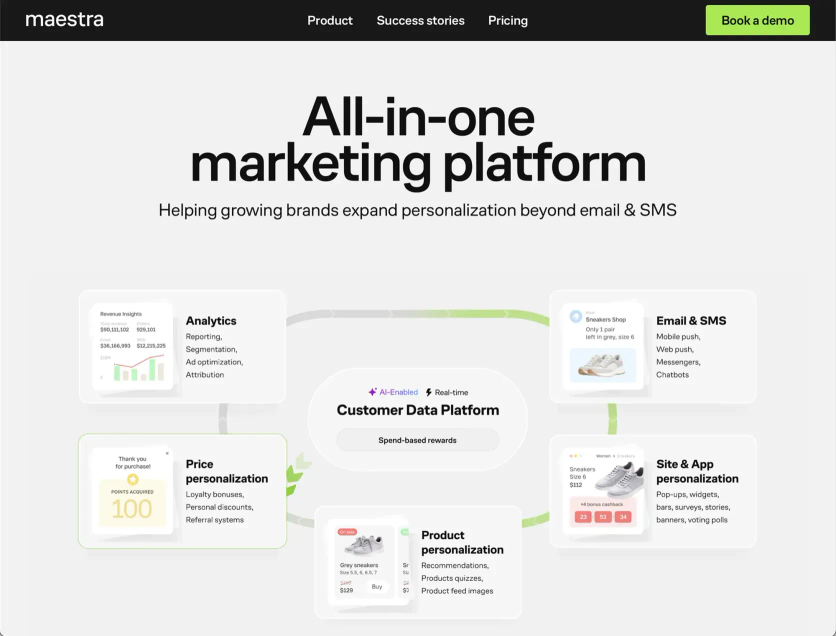
Maestra is a complete marketing suite designed for e-commerce brands fed up with having to integrate five or six separate tools. It combines a real-time customer data platform, email, SMS and push notifications, loyalty programs, site personalization, and AI product recommendations, and it’s all managed from one place, with a dedicated Forward Deployed Marketer (a marketer who works on your team) for each account.
For brands leaving Yotpo, Maestra is particularly relevant because it replaces not just one product, but the entire fragmented stack that Yotpo’s shutdowns created. Instead of migrating to Attentive for SMS, Klaviyo for email, LoyaltyLion for loyalty, and Okendo for reviews – you consolidate everything into one platform with unified customer data.
Key Features
- Real-time CDP with unified customer profiles: Every interaction – purchases, email opens, site visits, loyalty activity – feeds into a single customer profile that updates instantly. No more syncing data between tools.
- Omnichannel flow builder: Build automated flows that connect email, SMS, push, and on-site messaging, using A/B testing and conditional triggers. All in a single canvas.
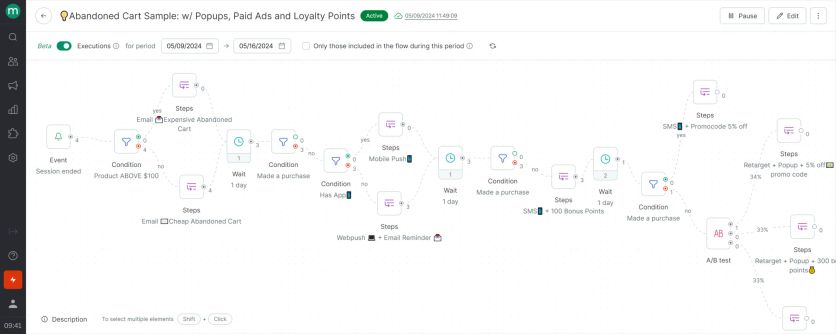
- A loyalty program built right in: Points, tiers, referrals, and custom rewards, no separate loyalty app required. The loyalty engine is connected to your segmentation, so VIP customers automatically receive different messaging, offers, and site experiences.
- Site personalization: Dynamic product recommendations, personalized banners, pop-ups, and content blocks – all powered by real-time behavioral data. No developer required.
- AI product recommendations: Transparent, controllable AI that suggests products based on browsing history, purchase patterns, and segment membership. Supports cross-sell, upsell, and “frequently bought together” logic.
- Dedicated Forward Deployed Marketer for every client: Not just a help desk ticket. Every Maestra client gets a named Forward Deployed Marketer who handles migration, builds flows, runs A/B tests, and meets weekly to review strategy. Response times average 5 minutes via a shared Slack channel.
Strengths and weaknesses
Maestra’s biggest strength is the consolidation effect. Brands that previously managed 3–5 separate tools (and the integrations between them) can replace everything with a single platform and a single data layer. This isn’t just simpler; it’s measurably cheaper.
Urban Armor Gear (UAG), for example, replaced Klaviyo, Yotpo Loyalty, and Frosmo with Maestra and cut their marketing stack costs by 64% – saving roughly $100,000 per year. As Nick Salisbury, UAG’s E-commerce Director, put it: “Each tool we replaced now works better than before.”
The details are where it shines. Product triggers such as “low on stock in your size” or “price drop” alerts help your messages reach shoppers at the right time, whether it’s to ask them to buy their size before it’s too late, or to remind them that a product is back in stock. And the dynamic email composer? A total game-changer, it keeps emails hyper-personalized, sharp, fast-loading, and out of Gmail’s dreaded clipping zone.
When it comes to drawbacks, Maestra doesn’t give you much to gripe about. Pricing is modular and starts at $2,000 per month for the CDP plus unlimited email; a loyalty setup starts at $2,310 per month (the CDP base plus the $1,010 Shopify loyalty module, with a custom-POS loyalty module available at $1,980). That makes it a better fit for mid-market and enterprise brands. But the cost reflects the value. It’s not just software; it’s a full-service solution. With a dedicated Forward Deployed Marketer to handle migrations, setup, and tailored strategy sessions, Maestra feels more like hiring a partner than buying a tool. You can build your own estimate on the Maestra pricing page.
That said, there’s no free plan, which might be a dealbreaker for smaller budgets. User-generated content (UGC) management also needs improvement. Maestra encourages reviews and using social proof, but there is no native method of curating and displaying UGC. The customer journey, however, makes it possible to collect valuable feedback and social proof wherever it’s needed, thanks to built-in incentives.
Compared to Yotpo
Maestra is built for unified retention marketing first; Yotpo was built for reviews first and expanded outward. Yotpo’s expansion ultimately proved unsustainable – they couldn’t maintain competitive products across reviews, loyalty, email, SMS, and subscriptions simultaneously, and ended up shutting down three of those five.
Maestra takes the opposite approach: every feature shares the same data layer, the same segmentation engine, and the same automation builder. A loyalty event can trigger an email flow that adjusts on-site personalization – without any third-party integrations. Yotpo never achieved that level of integration across its products, even when they were all live.
If your frustration with Yotpo was the fragmented experience across its modules, Maestra is the most direct antidote.
See our full breakdown of Yotpo vs Maestra
When to Switch to Maestra from Yotpo
You’re rebuilding your stack after Yotpo’s shutdowns and want to avoid the multi-vendor trap
Urban Armor Gear was running Klaviyo for email, Yotpo for loyalty, and Frosmo for product personalization. Three vendors, three contracts, three data silos. After consolidating into Maestra, they saved 64% on marketing stack costs (~$100K/year) and got better performance from every channel. “The weekly strategy calls are the best part,” said Nick Salisbury. “Before, I’d get vague advice like 'send more campaigns.' Now, Maestra’s team gives me specific recommendations.”
Your email and flow revenue has plateaued, and you need more sophisticated automation
Coolibar, a UPF +50 apparel brand, outgrew Klaviyo’s segmentation and flow-building capabilities. After switching to Maestra, they saw a 33.6% increase in email and SMS campaign revenue and a 62% increase in flow revenue – within two months. “This was the smoothest migration I’ve ever seen,” said Nikita Zabrodin, their CRM Lead. “Our CSM handled everything.”
You need multi-regional or multi-brand support from a single platform
Sena is a manufacturer of motorcycle gear that was operating two different Klaviyo accounts for the US and EU. Once they were merged into Maestra, they were able to consolidate customer information across both regions, create email flows in 5 languages, and saw an 8.6x increase in campaign revenue over their Klaviyo configuration. Implementation took two weeks.
You’ve outgrown point solutions and want one platform to handle everything
Furniture Fair replaced five separate tools – Optimizely, Outgrow, UNBXD Recommendations, Wisepops, and Zapier – with just Maestra. The payoff: 7,543% ROI, a 27% cut in marketing stack costs, and 11% of total revenue now attributed to email and SMS. “Maestra isn’t just a vendor; they’re part of my team,” said Kyle Cannon, their Digital Marketing Manager.
2. Growave: Best for Reviews, Loyalty, Wishlists, and Instagram UGC
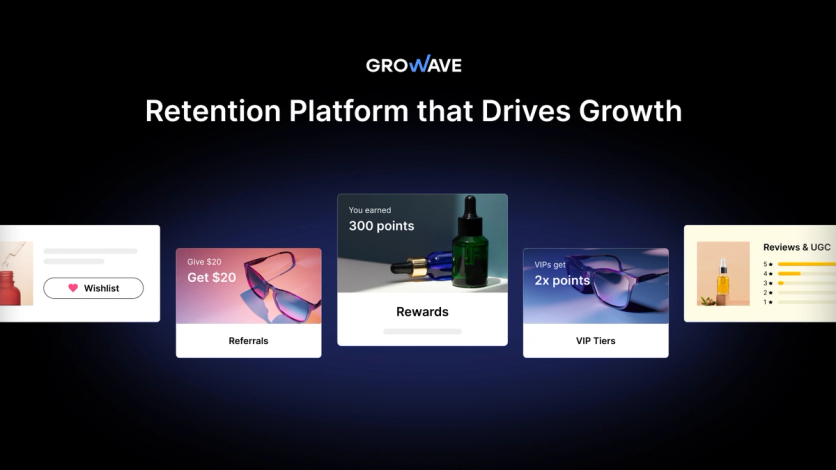
Growave is the all-in-one retention platform designed to help Shopify stores boost conversions, deepen customer relationships, and drive sustainable growth. By unifying reviews, wishlists, loyalty programs, and referrals into a single seamless experience, Growave empowers brands to engage their audience effortlessly while saving time on managing multiple tools.
With flexible customization and smooth Shopify integration, Growave scales with your business, from emerging stores to advanced Shopify Plus brands, giving teams the freedom to craft loyalty experiences that truly reflect their brand. It is perfect for merchants who want a cohesive, integrated solution without sacrificing flexibility.
Key Features & Benefits:
Loyalty & Rewards, incentivize repeat purchases with points, rewards, and personalized perks.
VIP Program, reward top customers with tiered experiences that increase loyalty and average order value.
Points Program, offer fully customizable rewards with robust analytics and multi-currency support.
Referral Program, turn your customers into brand advocates with incentivized sharing.
Product Reviews & Ratings, build trust by collecting and showcasing authentic user-generated content.
Wishlist, keep shoppers engaged by letting them save favorites and sending timely reminders.
Instagram Shop Gallery, transform your Instagram feed into a shoppable, revenue-driving experience using the latest API.
Growave makes customer retention simple, impactful, and scalable, so your brand can grow while keeping your customers coming back.
Strengths and Weaknesses
Growave’s strength lies in its versatility. By combining loyalty, referrals, reviews, and wishlists in one platform, it provides a complete retention solution for e-commerce brands. Its intuitive interface allows stores to launch quickly while offering advanced customization options.
For brands seeking only enterprise-level analytics or ultra-specific features, higher-tier plans may be needed. However, Growave delivers a more holistic and cost-effective solution than Yotpo’s app-focused approach.
Compared to Yotpo
Yotpo emphasizes social proof and reviews, whereas Growave focuses on customer engagement and retention through integrated loyalty, rewards, and referral programs. If your goal is driving repeat purchases and fostering long-term customer relationships, Growave offers a more complete toolkit.
Compared to Maestra
Growave bundles loyalty, reviews, and wishlists into one app – but messaging still lives elsewhere. To send a points-expiry email or a wishlist price-drop alert, you’re routing data through Klaviyo or Omnisend, which means another integration to maintain and another place where customer data can fall out of sync. Maestra’s real-time CDP keeps loyalty activity, browsing behavior, and messaging on the same data layer – so a VIP tier upgrade can instantly change the on-site experience, trigger a personalized SMS, and adjust product recommendations without a single webhook in between. If you want retention mechanics and you’re happy pairing them with a separate messaging tool, Growave covers the basics well. If you want those mechanics to power your entire customer journey from one platform, Maestra closes the gap.
3. Yuko: Best for Affordable Shopify Retention with Loyalty, Referrals, and Memberships in One App
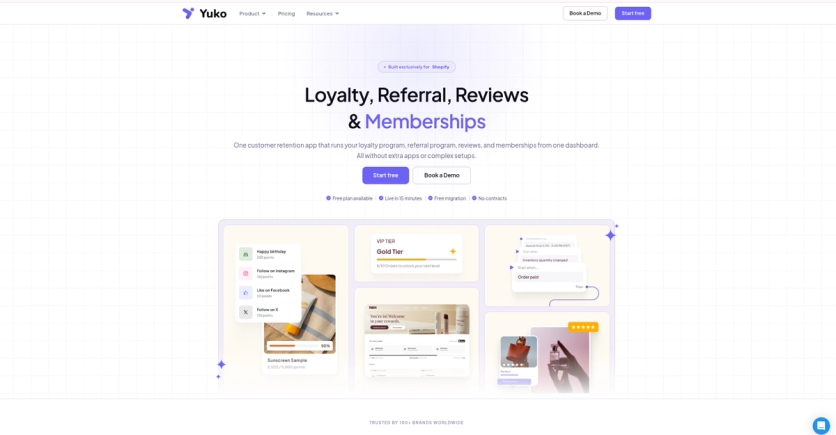
Yuko is an all-in-one retention platform built exclusively for Shopify, designed for brands that are tired of paying for and stitching together four or five single-purpose retention apps. It combines a loyalty and points engine, VIP tiers, a referral program, product and store reviews with photo and video UGC, and paid or free memberships. Everything is managed from a single dashboard, with a unified customer profile across every program.
For brands leaving Yotpo, Yuko is particularly relevant because it solves the same fragmentation problem Yotpo created when it shut down or de-prioritized parts of its suite, but without the enterprise contract, sales call, and per-module pricing model. Instead of migrating to LoyaltyLion for loyalty, Okendo for reviews, and ReferralCandy for referrals, and then paying integration tax to make them talk, you consolidate everything into one Shopify-native platform that bills on one invoice and runs on one data model.
Key Features
Loyalty points and VIP tiers: Customers earn points for purchases, signups, reviews, referrals, social follows, birthdays, and any custom action you wire through the API. Points redeem for discounts, free shipping, store credit, or custom rewards. VIP tiers automatically unlock exclusive perks, accelerated earning rates, and tier-specific messaging.
Referral program with fraud protection: Every customer gets a unique referral link with dual-sided rewards. Built-in fraud detection prevents self-referrals and gaming. Refer-a-friend triggers chain into the loyalty engine, so successful conversions can compound into points, tier upgrades, or member perks.
Reviews and UGC: Automated review request emails and SMS triggered after delivery rather than fulfillment, photo and video reviews, store reviews, Q&A, Google rich snippets for SEO, and 20+ widget placements across product pages, homepages, and carts. One-click free migration from Judge.me, Yotpo, Okendo, Stamped, Loox, Fera, Trustoo, Junip, and Rivyo.
Memberships: Paid and free membership tiers with exclusive early access, member-only pricing, and recurring revenue streams. Natively connected to the loyalty engine, so member status influences earning rates and reward unlocks.
Visual workflow builder: Drag-and-drop automation canvas with pre-built templates for post-purchase review requests, points reminders, referral nudges, VIP tier unlocks, and membership renewals. Triggers fire on Shopify order events, review submissions, referral milestones, customer birthdays, and custom dates. A/B testing and per-flow analytics included.
Native Shopify integration: Discount codes, store credit, checkout extensions for Shopify Plus, and customer accounts wired directly into Shopify’s infrastructure rather than bolted on through workarounds. Klaviyo, Omnisend, Shopify Flow, Instagram, Facebook, TikTok, and WhatsApp integrations included.
Live chat support on every plan: Including the free tier. Higher tiers add free expert onboarding, with a dedicated account manager on the Growth plan.
Strengths and Weaknesses
Yuko’s biggest strength is consolidation at an SMB-friendly price point. Brands previously paying $30 for Judge.me, $50 for Smile.io, $40 for ReferralCandy, plus a memberships app are looking at $120 or more per month across four tools that don’t share customer data. Yuko replaces that stack starting at $12 per month, with one dashboard, one customer profile, and one bill.
The data unification is where it shows up. A customer who leaves a 5-star review can automatically trigger a referral invite within 24 hours. A VIP-tier customer can earn double points on their next order with a personalized tier-progress email. A lapsed member can drop into a re-engagement workflow tied to their loyalty balance. None of this requires Zapier, custom webhooks, or vendor-to-vendor sync. It just works because every program runs on the same data model.
The Shopify-native build is a real advantage too. Loyalty discounts use Shopify’s native discount engine, store credit uses Shopify’s native store credit, and checkout redemption uses Shopify Plus checkout extensions, not a janky redirect or third-party iframe. Most stores are live in under 15 minutes, and free migration from any competing review app is included on every plan, including the free tier.
When it comes to drawbacks, the main one is platform exclusivity. Loyalty, referrals, VIP tiers, and memberships are Shopify-only. WooCommerce stores get the Reviews product but not the full retention suite, which is a hard limit for multi-platform merchants. Pricing is also order-volume-based on Basic and Advanced tiers at $5 per additional 100 orders, so high-traffic stores can outgrow these tiers before hitting unlimited Growth at $199 per month, with a noticeable jump and no middle tier between $30 and $199. Finally, Yuko is a newer entrant with 100+ brands listed. That’s fine for most growth-stage merchants, but enterprise teams evaluating long-term vendor stability may want to weigh the smaller install base against the consolidation benefits.
Compared to Yotpo
Yotpo was built for reviews first and expanded outward into loyalty, SMS, email, and subscriptions. It ultimately couldn’t maintain competitive products across all of them, which is why parts of the suite have been deprecated or sunset. The pricing also reflects its enterprise pivot. Yotpo Reviews starts free but jumps to $89 per month for the next paid tier, and Yotpo Loyalty pricing is gated behind a sales call.
Yuko takes the opposite approach. Built retention-first from day one, with every feature sharing the same data layer, the same customer profile, and the same automation builder. A review submission can trigger a loyalty reward, which can trigger a referral invite, which can trigger a tier upgrade, all without third-party integrations. Pricing is transparent and self-serve: $12, $30, or $199 published on the website, no sales call required.
If your frustration with Yotpo was the fragmented experience across its modules, the unpredictable pricing, or the enterprise sales motion to access basic features, Yuko is the most direct antidote at the SMB and mid-market tier.
When to Switch to Yuko from Yotpo
You’re rebuilding your stack after Yotpo’s shutdowns and want to avoid the multi-vendor trap. If you were using Yotpo for reviews, loyalty, and SMS, and are now staring down separate contracts with Okendo, LoyaltyLion, and Attentive, Yuko collapses three of those four back into one platform at a fraction of the combined cost.
Your retention spend has crept past $200 per month across point solutions. A typical stack of Judge.me ($15), Smile.io Starter ($49), ReferralCandy ($59), and a memberships app ($30) lands around $150 to $200 per month for four disconnected tools. Yuko’s Advanced plan covers all four programs at $30 per month for stores under 300 orders, and the unified data layer means programs actually compound instead of running in parallel.
You’re a growth-stage Shopify brand that doesn’t need enterprise tooling yet. Yotpo’s full-suite pricing and Maestra’s $2,000-per-month floor are both built for brands doing $1M or more in monthly revenue. If you’re earlier in the curve, somewhere between $50K and $500K in monthly revenue, Yuko gives you the same consolidated data model without the enterprise contract.
You want loyalty, referrals, and reviews to actually talk to each other. This is the Yotpo promise that didn’t fully land. In Yuko, a 5-star review automatically triggers a referral invite at peak satisfaction, a referred customer’s first purchase awards points to both sides, and VIP-tier customers see different review request templates and reward thresholds. Out of the box, no integration work required.
You need to migrate without losing review history or loyalty balances. Free one-click migration from Yotpo, Judge.me, Okendo, Stamped, Loox, Fera, Trustoo, Junip, and Rivyo is included on every plan, including the free tier, with reviews, customer data, and loyalty history transferring intact.
Compared to Maestra
Yuko keeps loyalty, referrals, and reviews inside one Shopify app, which solves the fragmentation problem at SMB scale. What it doesn’t solve is what happens after a customer earns those points. Sending the reminder, the tier-upgrade email, or the review request still runs through a separate messaging tool, and each handoff is another integration to keep in sync. Maestra’s real-time CDP holds loyalty activity, browsing behavior, and messaging on one profile, so a tier change can update the site, fire an SMS, and reshape product recommendations at once. If you want an affordable Shopify retention bundle, Yuko delivers. If you want those mechanics running your whole customer journey, Maestra covers the rest.
4. Smile.io: Best Loyalty and Reward Programs for SMBs
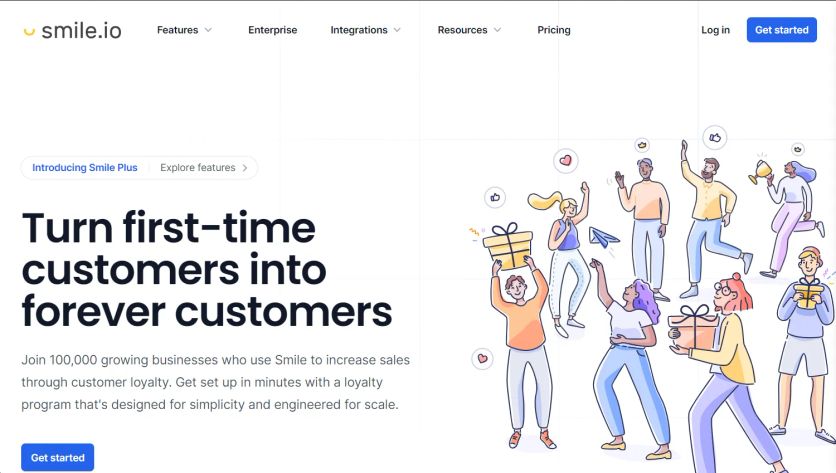
Smile.io is the most accessible loyalty platform on the market. With a free plan, dead-simple setup, and an interface that requires zero developer involvement, it’s built for small and growing e-commerce brands that want a functioning loyalty program without the complexity or cost of enterprise solutions.
Key Features
• Points program: Earn points for purchases, account creation, social follows, birthdays, and custom actions.
• VIP tiers: Milestone-based tiers with escalating perks.
• Referral program: Unique links, dual-sided rewards, and tracking.
• Branded widget and panel: On-site launcher that matches your brand’s design.
• Nudges: Contextual on-site prompts that remind customers about points at key moments (cart, checkout, product pages).
• Multi-platform support: Shopify, BigCommerce, and Wix – broader than most loyalty competitors.
Strengths and Weaknesses
Smile.io’s biggest strength is accessibility. The free tier is genuinely usable, setup takes minutes, and the platform has powered loyalty programs for major brands like Polaroid and Topps. For brands that used Yotpo Loyalty primarily for basic points and rewards, Smile.io replaces that functionality at a fraction of the cost.
On the weaknesses side, Smile.io’s analytics and segmentation are less sophisticated than LoyaltyLion’s. Advanced features (VIP tiers, API access) require the Growth or Plus plans. And like all pure loyalty tools, it doesn’t address email, SMS, reviews, or personalization.
Compared to Yotpo
Smile.io is all about keeping customers coming back. Its loyalty and referral tools are perfect for early-stage businesses looking to boost retention without overcomplicating things. Yotpo, on the other hand, leans into social proof, helping brands showcase reviews and user-generated content to build trust and credibility. If you’re chasing reputation, Yotpo’s your pick. But if engagement and retention are your game, Smile.io keeps the focus squarely on your customers.
Compared to Maestra
Smile.io sticks to traditional loyalty mechanics, but Maestra takes loyalty to the next level. Imagine cart abandonment flows that don’t just remind shoppers but offer instant rewards tailored to their browsing habits. With Maestra’s real-time CDP, loyalty isn’t just a program – it’s a strategy, seamlessly connecting customer actions to timely incentives.
Smile.io is great if you want straightforward loyalty tools. But for brands ready to go all in on data-driven marketing and real-time personalization, Maestra isn’t just better – it’s next-level.
Check out our review of Smile.io vs Yotpo vs Maestra
5. LoyaltyLion: Best for Personalized Loyalty Experiences for E-Commerce Brands
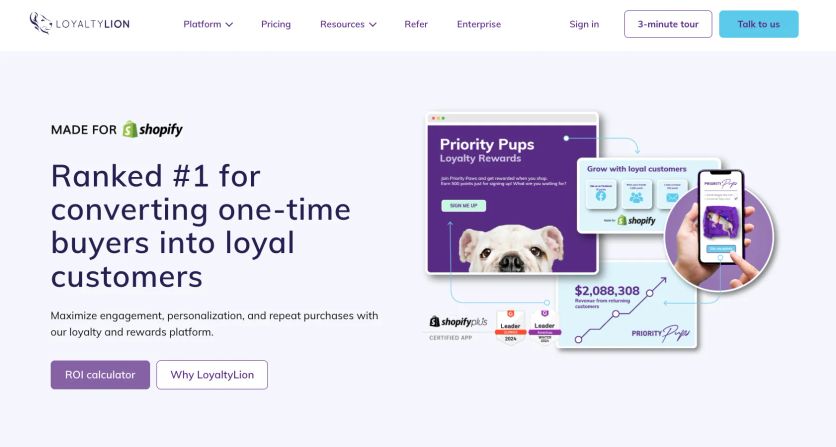
LoyaltyLion is a loyalty program platform made for Shopify brands, offering tools that turn one-time buyers into repeat customers.
Key Features:
- Tiered loyalty programs and built-in referrals
- Gamification features that keep customers hooked
- Omnichannel support to tie loyalty rewards across channels
- Customizable branding that feels like part of your store, not an afterthought
Strengths and weaknesses
LoyaltyLion packs a punch with its loyalty programs. It’s loaded with features – gamification, tiered rewards, referrals – and wraps it all in a user-friendly interface. Shopify integration is seamless, and its analytics give you real insight into what’s working and what’s falling flat.
But it’s not all smooth sailing. Pricing climbs fast, putting some of its most valuable features out of reach for smaller businesses. The bells and whistles, while impressive, can feel overwhelming for teams that just want to keep things simple. And then there’s the support – if you’re stuck in the weeds, you might find yourself waiting longer than you’d like for answers.
Compared to Yotpo
LoyaltyLion focuses on loyalty and rewards, plain and simple. Yotpo, by contrast, is more like a Swiss Army knife – offering reviews, user-generated content, and some loyalty features, but none as polished as LoyaltyLion’s core offerings. If you’re chasing retention and customer engagement, LoyaltyLion does the job. But if you need a jack-of-all-trades platform, Yotpo’s got broader appeal.
Compared to Maestra
LoyaltyLion’s tiers are great for structure, but Maestra is built for agility. Its real-time CDP means loyalty strategies can adapt instantly – offering exclusive discounts mid-session or surprising a repeat customer with a personalized reward. If you’re looking for a platform that doesn’t just build loyalty but strengthens it in real time, Maestra leads the way.
6. Stamped.io: Best for Collecting UGC and Customer Reviews
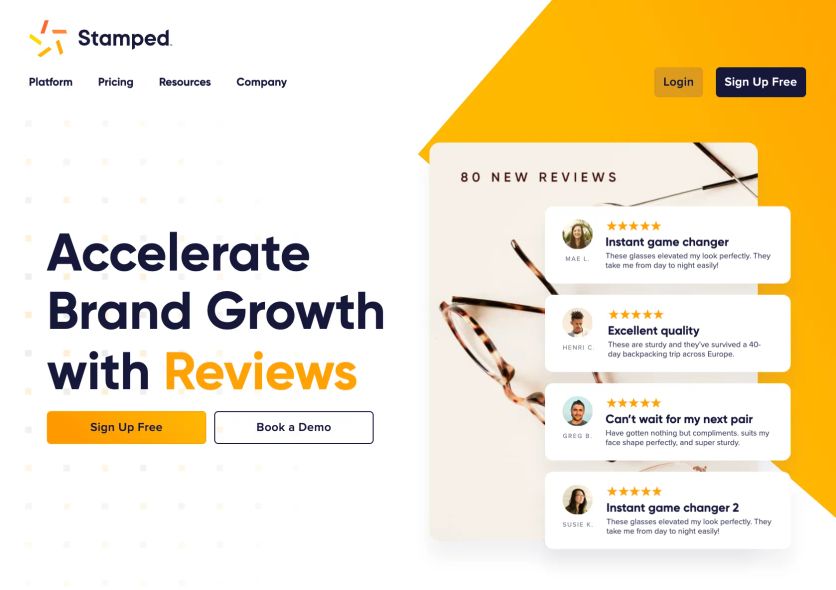
Stamped.io is a marketing automation platform focused on amplifying user-generated content (UGC) and managing customer reviews.
Key Features:
- Customizable review request workflows to engage specific customer segments
- Seamless social media integration to showcase UGC where it matters
- In-depth analytics to measure the impact of reviews
- Easy integration with major e-commerce platforms
Strengths and weaknesses
Stamped.io excels at making customer reviews work for your brand. Its focus on UGC turns real customer feedback into trust-building content, while customizable workflows ensure reviews feel relevant, not spammy. It plays nice with e-commerce systems, making it easy to add to your marketing stack without a headache.
That said, the platform isn’t without its quirks. Pricing can feel steep for small businesses, keeping advanced features just out of reach for those with tighter budgets. New users may find the sheer number of options overwhelming, especially during the onboarding phase. And while its desktop interface works smoothly, the mobile experience leaves something to be desired – potentially limiting customer interactions on the go.
Compared to Yotpo
Choosing between Stamped.io and Yotpo often comes down to priorities. Stamped.io is a solid pick for small businesses focused on getting reviews up and running fast. Yotpo, on the other hand, leans into extra features like SMS marketing and customer advocacy tools, making it a better fit for larger brands with bigger budgets and broader needs.
Compared to Maestra
Stamped.io excels at showcasing UGC, but Maestra transforms it into action. With its real-time CDP, Maestra integrates customer reviews into dynamic flows that drive behavior. A glowing review could trigger a thank-you email with a personalized reward or fuel targeted paid ads – ensuring every piece of feedback creates meaningful engagement.
7. Wiremo: Best for Simple Review Collection Without Extra Retention Features
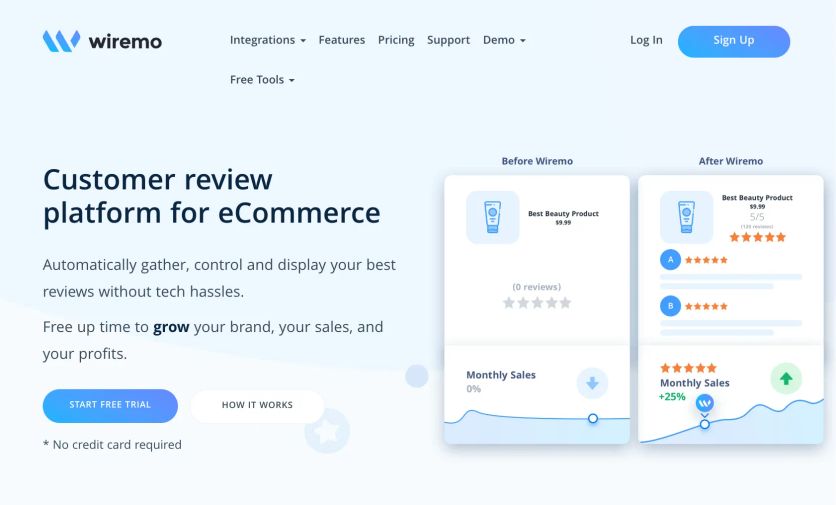
Wiremo is all about getting reviews up and running without the hassle – or the price tag. For mid-sized businesses looking for something straightforward and effective, Wiremo keeps it simple.
Key Features:
- Automatic review collection so you’re not chasing customers for feedback
- Photo integration that makes reviews more engaging and legit
- Customizable widgets to control how reviews look on your site
- Easy setup and fast e-commerce platform integration
Strengths and weaknesses
Wiremo’s sweet spot is its simplicity. The setup is so quick you’ll wonder if you missed a step, and the customizable widgets give you plenty of control over where and how your reviews show up. The price? Way more palatable than Yotpo’s high-dollar tiers, making it perfect for businesses tired of paying premium for features they don’t need.
But there are trade-offs. The basic plan comes with Wiremo branding, which can feel like wearing someone else’s logo to your big show. And while the lower pricing is a relief, the limited features at the entry-level tiers might have you upgrading sooner than you’d like.
Compared to Yotpo
Wiremo keeps it simple, affordable, and easy to use – perfect for businesses that just need solid review collection and display tools. Yotpo, on the other hand, piles on extras like loyalty programs and UGC management but with a price tag to match. If you’re prioritizing straightforward reviews over bells and whistles, Wiremo is the low-stress alternative to Yotpo.
Compared to Maestra
Wiremo stops at reviews; Maestra doesn’t stop at anything. With Maestra’s real-time CDP, a single review can spark a personalized flow – a thank-you email with a loyalty reward, a nudge with product recommendations, etc. Wiremo showcases feedback, but Maestra ensures it drives results across every channel.
8. Feefo: Best for Verified Reviews and Brand Reputation Management
Feefo is built for businesses that want reviews they can trust – no fake accounts, no guesswork, just verified feedback straight from real purchasers.
Key Features:
- Exclusively verified reviews to boost authenticity and credibility
- Syndication across trusted platforms to expand your review footprint
- Customizable surveys to get tailored insights from your audience
- Review booster tester network for launching new products
- SMS review collection to capture feedback with a broader reach
Strengths and weaknesses
Feefo’s commitment to verified reviews makes it a standout for brands laser-focused on trust and credibility. It gives businesses access to advanced analytics, offering deep insights into customer sentiment and trends. Plus, the user-friendly interface ensures even first-timers can dive in without breaking a sweat.
But Feefo has its limits. The pricing can be a barrier for smaller businesses, locking out some of its best features behind higher tiers. Integrating Feefo with other systems can also feel like trying to fit a square peg into a round hole – it works, but not without frustration. And compared to platforms like Yotpo, Feefo’s marketing toolkit feels barebones, focusing mostly on reviews without expanding into broader customer engagement features.
Compared to Yotpo
Feefo’s strength lies in authenticity. Its verified reviews are gold for businesses looking to boost credibility and build trust. Yotpo, on the other hand, takes a more expansive approach – pairing reviews with tools for loyalty programs, UGC, and advanced marketing campaigns. If trust is your number one goal, Feefo wins. But for businesses needing a complete e-commerce marketing solution, Yotpo covers more ground.
Compared to Maestra
Feefo’s verified reviews build trust, but Maestra turns trust into loyalty. With Maestra’s real-time CDP, verified feedback doesn’t just sit on a product page – it powers personalized flows, exclusive offers, and loyalty rewards. Where Feefo focuses on credibility, Maestra builds lasting relationships.
9. Birdeye: Best for Local Relationship Management and Customer Messaging
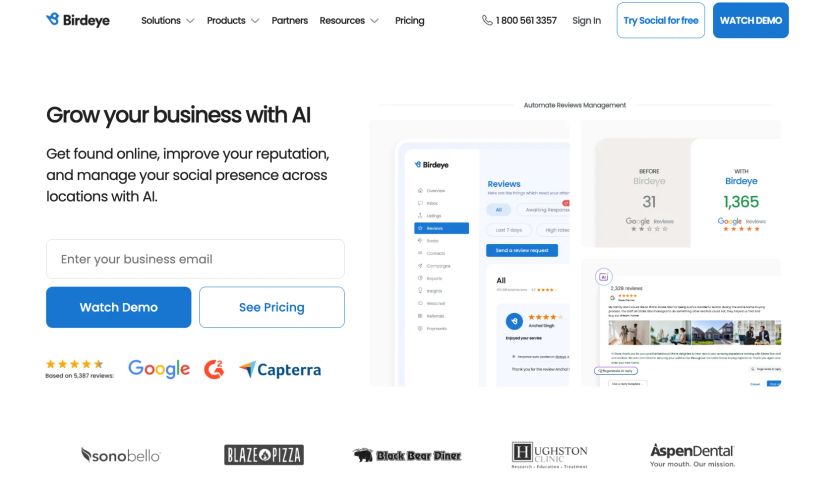
Birdeye is the budget-friendly choice for small businesses looking to up their reputation game without draining their resources.
Key Features:
- Competitive benchmarking to see how you stack up
- Consolidation of customer interactions into unified support tickets
- A centralized inbox for all customer communications
- Local SEO tools to boost visibility where it matters most
- AI-powered chatbots for lead generation and customer service
Strengths and weaknesses
Birdeye punches above its weight with an affordable price point and a robust set of features. Tools like competitive benchmarking, social ticketing, and AI chatbots make it more than just a review platform – it’s a full-scale reputation management tool. The simple interface and easy setup are a win for businesses without a tech-savvy team, letting them hit the ground running.
But affordability has its limits. Birdeye doesn’t bring the firepower Yotpo does for advanced e-commerce marketing features like loyalty programs or flashy UGC integrations. Its connections with platforms like Shopify or Magento are surface-level at best, making it less appealing for e-commerce businesses that rely heavily on those tools.
Compared to Yotpo
Birdeye goes wide where Yotpo goes deep. While Yotpo dominates in e-commerce marketing with loyalty programs and UGC tools, Birdeye focuses on brand reputation, customer communication, and local SEO. For small businesses prioritizing affordability and customer interactions over advanced marketing, Birdeye is a solid alternative to Yotpo.
Compared to Maestra
Birdeye is all about managing reputation; Maestra is about redefining it. With Maestra’s real-time CDP, reviews and feedback become the foundation of a hyper-personalized marketing strategy. It doesn’t just consolidate communications – it integrates them into omnichannel flows that evolve with your customers’ behavior. Birdeye’s local SEO and AI chatbots are great for getting leads, but Maestra takes it further by turning those leads into loyal customers with real-time personalization, dynamic rewards, and smart, cross-channel experiences. If you want to manage your brand, Birdeye works. If you want to grow it, Maestra delivers.
10. Reviews.io: Best for Google Seller Ratings and Startup Reviews
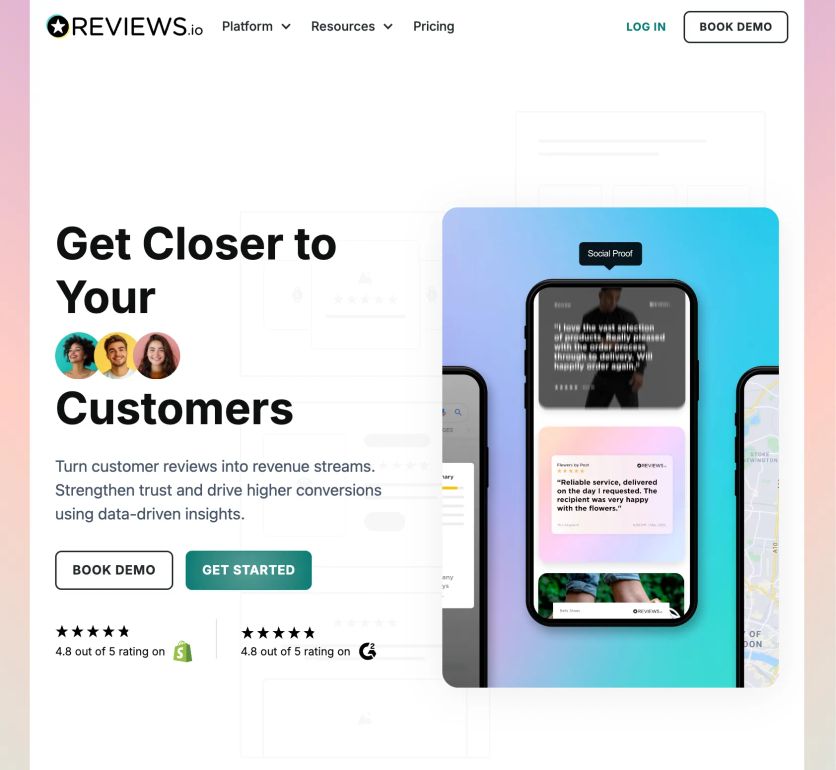
Reviews.io is a feedback and review management platform designed to help startups build credibility without blowing their budget.
Key Features:
- Multi-platform review collection for broader reach
- UGC tools, including video reviews, to showcase authentic customer content
- Google Seller Ratings integration for boosting visibility and trust
- Reputation management tools to keep your brand looking sharp
- Review syndication to amplify impact across channels
Strengths and weaknesses
Reviews.io shines in its simplicity and focus. It’s easy to use, with flexible pricing options that make it accessible for startups. The UGC tools are a standout, allowing businesses to leverage customer photos and videos to build trust and drive conversions. Plus, Google Seller Ratings integration lets you put those reviews to work where potential customers are searching.
But Reviews.io isn’t a full-fledged marketing suite. It lacks advanced features like loyalty programs and robust email automation, leaving startups to piece together tools for a more comprehensive strategy. Its e-commerce integrations also don’t go as deep as Yotpo’s, which could be a sticking point for fast-scaling businesses.
Compared to Yotpo
Reviews.io is a leaner, startup-friendly alternative to Yotpo. It focuses on the essentials: reviews, UGC, and reputation management. Yotpo, by comparison, offers a more extensive toolkit with advanced features like loyalty programs and email marketing. If you’re a startup prioritizing credibility and conversions without the complexity, Reviews.io is a solid pick.
Compared to Maestra
Reviews.io helps startups collect reviews; Maestra turns them into a growth engine. With Maestra’s real-time CDP, reviews trigger loyalty rewards, personalized flows, and retargeting ads. While Reviews.io lays the groundwork for trust, Maestra transforms that trust into measurable results.
11. PowerReviews: Best for Enterprise Review Collection and Product Feedback
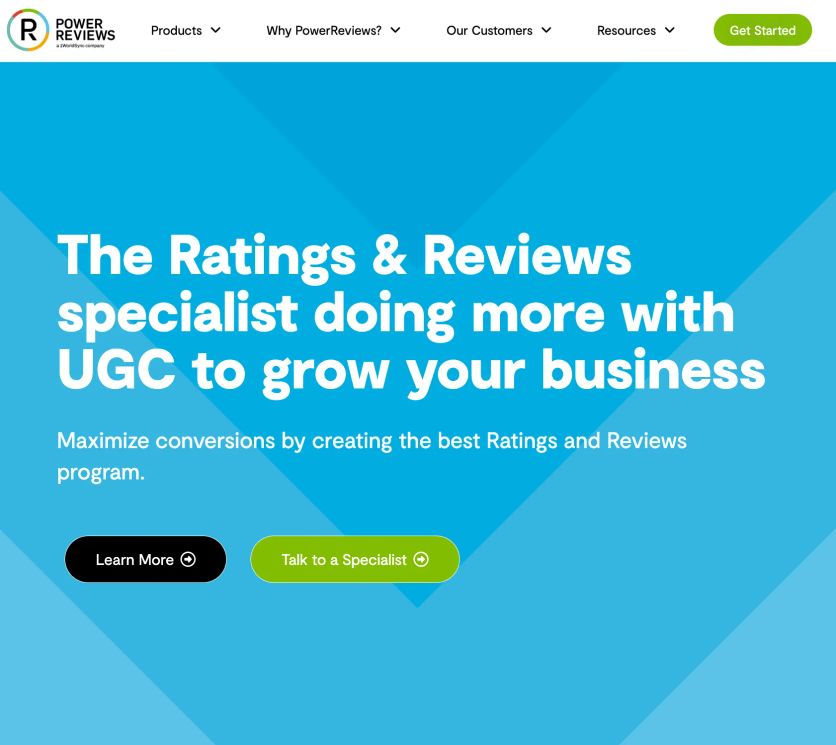
PowerReviews is built for brands that see reviews as more than feedback – they’re conversion machines waiting to be fine-tuned.
Key Features:
- Advanced tools for collecting and managing customer reviews
- Product sampling features to generate reviews quickly and efficiently
- Feedback collection for in-store experiences to capture omnichannel insights
- Detailed analytics and reporting to track the impact of reviews
Strengths and weaknesses
PowerReviews excels at one thing – turning customer reviews into higher conversions. Its intuitive interface makes managing and analyzing reviews a breeze, and features like product sampling are a great way to jumpstart feedback on new items. Personalized account management and rapid support add a nice touch, keeping the platform easy to navigate.
But PowerReviews has blind spots. It’s laser-focused on reviews, so you won’t find broader marketing tools like loyalty programs or UGC. And its custom pricing structure can be a headache for businesses wanting upfront clarity on costs.
Compared to Yotpo
PowerReviews is a specialist – it’s all about optimizing reviews for conversion. Yotpo, by contrast, is a generalist, wrapping reviews into a larger marketing ecosystem that includes loyalty programs and UGC. If you’re just looking to turbocharge reviews, PowerReviews gets the job done. But for an all-in-one marketing solution, Yotpo casts a wider net.
Compared to Maestra
PowerReviews optimizes reviews, but Maestra makes them the backbone of your strategy. A five-star review in Maestra’s system doesn’t just sit pretty – it triggers upsell flows, loyalty rewards, and retargeting ads in real time. For brands that want reviews to drive loyalty and revenue, Maestra is the better choice.
12. Okendo: Best UGC reviews tool for e-commerce brands
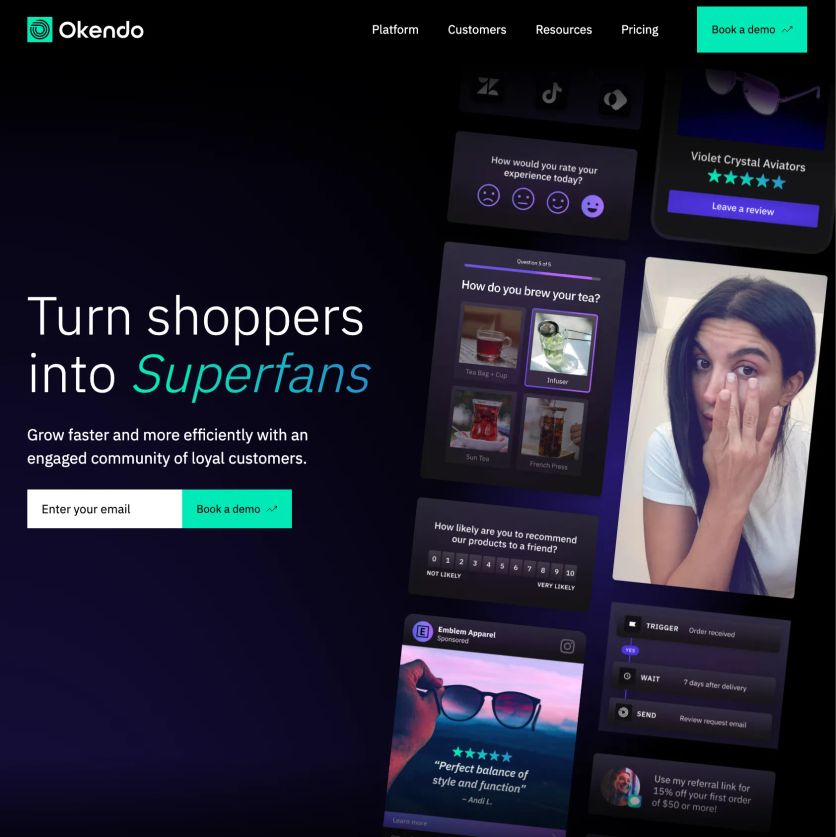
Okendo is designed for high-growth retailers who want to put user-generated content (UGC) at the heart of their customer experience.
Key Features:
- Customizable review formats and aggregated reviews across product bundles
- Post-review and post-checkout referral capabilities to drive engagement
- Incentivized referral programs for rewarding loyal customers
- Surveys and quizzes for actionable customer insights and product recommendations
- Multi-language support to cater to a global audience
Strengths and weaknesses
Okendo’s sweet spot is its simplicity and user-friendliness. Shopify users, in particular, rave about its seamless integration and customization options. Its support team gets top marks, too – users frequently praise them for being quick to respond and genuinely helpful. For brands new to UGC, Okendo feels approachable and easy to master.
That said, the platform isn’t flawless. Syndicating reviews from partner brands or other sites can be a hassle, and some users have hit snags with specific integrations. While Okendo covers the basics well, businesses looking for advanced marketing tools or deeper functionality might find it a little too lightweight for their needs.
Compared to Yotpo
Okendo’s strength lies in its simplicity and flexibility, making it an excellent choice for small to mid-sized businesses that want to focus on UGC without the complexity of a larger platform. Yotpo, by contrast, offers a broader suite of marketing tools, from loyalty programs to SMS marketing, but it can come with a steeper price tag and learning curve. If UGC is your main goal, Okendo delivers a focused solution.
Compared to Maestra
Okendo excels at UGC, but Maestra ensures that content drives results. Reviews and UGC in Maestra’s platform power hyper-personalized flows – think loyalty offers tied to a glowing review or product recommendations based on past purchases. If UGC is just the beginning for you, Maestra delivers the next chapter.
13. Loox: Best for Visual Reviews and Customer Incentives
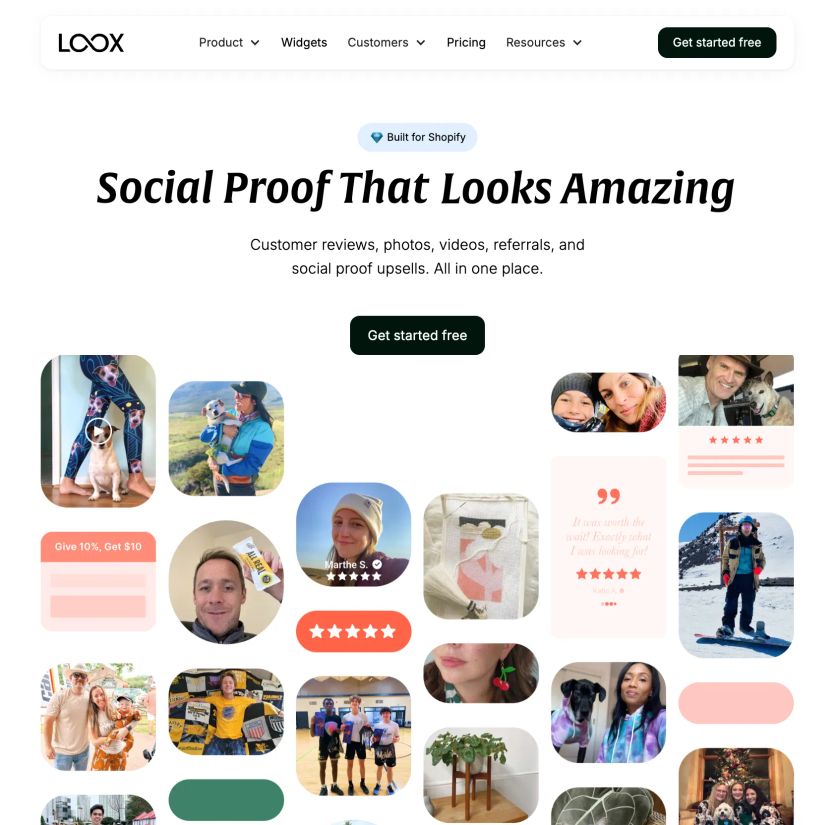
Loox knows how to get customers talking – and snapping photos. It’s a review platform that leans heavily on visual content and smart incentives to turn feedback into trust-building gold.
Key Features:
- Incentivized review requests that reward customers with discounts or loyalty points
- Fully customizable incentives to fit your strategy and appeal to your audience
- Analytics dashboard to track what’s working and what’s wasting time
- Integrations with e-commerce staples like Shopify, WooCommerce, and BigCommerce
Strengths and weaknesses
Loox keeps things simple, and that’s a win. It’s great at collecting reviews – especially visual ones – while letting you customize everything from email templates to widgets. Automating review requests based on order statuses takes the legwork out of follow-ups, and the SEO perks mean your reviews do double duty by driving traffic. Businesses also rave about the 24/7 support that actually delivers answers.
But here’s the rub: once a review is submitted, it’s set in stone. Customers wanting to tweak or update their feedback? Out of luck. The visual display can also feel cluttered, and for brands growing fast, Loox’s feature set might start to feel more like a starter kit than a serious tool.
Compared to Yotpo
Loox is built for businesses that want to make reviews happen – fast. Its incentivized requests solve a major pain point for Yotpo users: getting customers to actually leave feedback. But when it comes to going beyond reviews, Yotpo’s extras like loyalty programs and SMS marketing push it further. If all you care about is reviews and incentives, Loox does the job.
Compared to Maestra
Loox gathers beautiful reviews, but Maestra ensures they pull their weight. With Maestra’s CDP, a review doesn’t just live on a product page – it sparks personalized flows and rewards. If you want your reviews to engage customers across every touchpoint, Maestra is the smarter choice.
14. Bazaarvoice: Best for customer content syndication
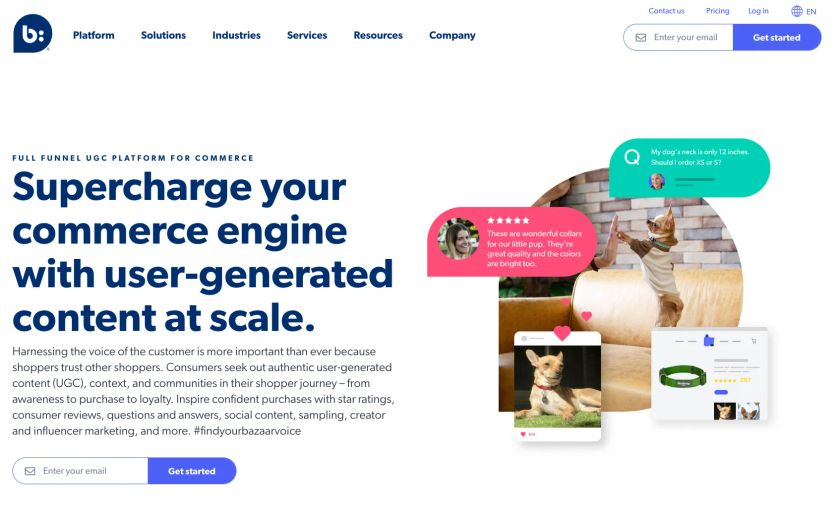
Bazaarvoice is all about getting your customer content out into the world. From syndicating reviews to sparking Q&A discussions, it’s built to amplify customer voices across retail channels.
Key Features:
- Syndication network that shares customer content across retail sites and e-commerce platforms
- Moderation and validation tools to keep reviews authentic and useful
- Analytics to track customer sentiment, performance, and trends
- Community Q&A functionality to let consumers ask questions and engage directly with brands or fellow shoppers
Strengths and weaknesses
Bazaarvoice’s syndication network is its crown jewel. It lets businesses push reviews and UGC to retail sites, social media, and e-commerce platforms on a global scale, giving products visibility wherever customers are shopping. The Q&A feature adds another layer of authenticity, letting shoppers engage directly with brands and other customers for product-specific advice.
But it’s not all smooth sailing. Setting up and managing Bazaarvoice can feel like trying to herd cats – especially for businesses juggling multiple retail channels. Customization options for widgets and display settings are limited, leaving smaller businesses with less flexibility to make the platform their own. For SMBs needing agility, Bazaarvoice might feel more like a rigid system than a tailored solution.
Compared to Yotpo
Where Yotpo focuses on leveraging UGC for marketing campaigns and customer engagement, Bazaarvoice is built for syndication and scale. Its extensive retail network and Q&A tools make it an ideal alternative for brands prioritizing visibility and feedback amplification. If you’re looking to broadcast reviews far and wide, Bazaarvoice delivers. But if you want a platform with deeper marketing capabilities, Yotpo is the better choice.
Compared to Maestra
Bazaarvoice amplifies reviews; Maestra activates them. While Bazaarvoice syndicates content across retail channels, Maestra integrates it into real-time flows – turning feedback into loyalty rewards, dynamic promotions, and customer journeys that drive growth. For brands that want more than visibility, Maestra delivers impact.
Why Maestra Stands Above Other Yotpo Alternatives
When it comes to choosing the right tool, the decision ultimately depends on your business’s specific needs. But if you’re looking for a platform that does it all – and does it better – Maestra is the clear choice.
While some tools excel in specific areas, like Smile.io for loyalty programs or Feefo for reputation management, Maestra combines the best of these features into a seamless, unified solution. Why settle for piecemeal functionality when you can have a platform that adapts in real time, integrates every marketing touchpoint, and evolves with your business?
What Each Tool Brings to the Table
Here’s how the competition stacks up:
- Review Collection and Display: Tools like Smile.io, Wiremo, and Reviews.io focus on collecting and showcasing customer feedback
- User-Generated Content (UGC): Stamped.io and Okendo are strong contenders for visual and video-based UGC
- Reputation Management and Credibility: Feefo and Birdeye prioritize trust with verified reviews and reputation-building tools
- Advanced Marketing Features: Platforms like LoyaltyLion and Smile.io bring sophistication to loyalty and engagement strategies
- Pricing and Accessibility: Wiremo and Reviews.io offer budget-friendly options for businesses just starting out
- Ease of Use: Smile.io and Okendo are praised for their intuitive interfaces and quick setups
Why Start with Maestra?
With Maestra, you’re not just getting a tool – you’re gaining a full-service partner. Its real-time Customer Data Platform (CDP) powers hyper-personalized marketing flows and loyalty programs that are impossible to replicate with a single-purpose platform. Whether you’re scaling up or aiming to refine your current strategies, Maestra is built to grow with your brand.
Choosing the right platform can transform your customer experience and drive long-term growth. Don’t settle for “good enough” when you can have the best.
Start with Maestra – book a demo today and see how it can revolutionize your business.
FAQ
- For reviews, Judge.me offers a genuinely useful free plan with unlimited review requests. For email and SMS, Omnisend’s free plan includes 500 emails/month and 60 SMS credits. For loyalty, Smile.io offers a free tier with basic points and referral functionality. None match Yotpo’s (former) breadth, but they cover the essentials at zero cost. That said, if you’re looking for a platform that truly replaces what Yotpo promised (loyalty, email, SMS, personalization in one place), Maestra is the only option that delivers all of those natively.
- Attentive is the pure SMS specialist – best-in-class deliverability and AI optimization. Omnisend offers solid email + SMS at an affordable price. But if you want SMS that’s connected to your loyalty program, site personalization, and email flows in one data layer – without stitching tools together – Maestra is the stronger choice. JOLYN saw 52% growth in SMS revenue after consolidating onto Maestra, precisely because their SMS campaigns could leverage loyalty data and browsing behavior in real time.
- Maestra comes the closest. It combines email, SMS, loyalty, site personalization, AI recommendations, and a real-time CDP in a single platform. It doesn’t focus on review collection the way Okendo or Stamped.io does, but it replaces the loyalty, messaging, and personalization capabilities that Yotpo no longer offers.
- LoyaltyLion and Smile.io are dedicated loyalty platforms with deep Shopify integration. However, running loyalty as a separate tool means your loyalty data lives in a silo – disconnected from your email segments, SMS flows, and site personalization. Maestra includes a native loyalty engine (points, tiers, referrals) that’s directly wired into your messaging and personalization. VIP customers automatically see different emails, different on-site experiences, and different offers – no integration required.
- Most platforms provide import tools for customer data, email lists, and historical engagement. Review migration is trickier – review content, photos, and ratings may need manual export or API extraction depending on the platform. Maestra includes full migration support through its dedicated Forward Deployed Marketer at no additional cost: they handle data mapping, flow rebuilding, and testing so your team doesn’t lose momentum.
- Maestra stands out with a dedicated Forward Deployed Marketer for every client (max 15 clients per Forward Deployed Marketer), 5-minute average response times via shared Slack channels, and 4 monthly strategy meetings. This is a sharp contrast to Yotpo, where users consistently report bot-heavy support, slow response times, and high account manager turnover. Among other platforms, Smile.io and Judge.me are frequently praised for responsive, helpful support teams.
- Bazaarvoice supports a wide range of e-commerce platforms and retail partners. Maestra integrates with custom and headless setups alongside Shopify. Smile.io supports BigCommerce and Wix in addition to Shopify. Most other alternatives on this list are Shopify-first, with varying levels of support for other platforms.