ROI 807%: Cascade Campaigns, Automated Campaigns, Pop-ups, and the FOAM Loyalty Program


Integrated with:
Switched to Maestra from:
FOAM marketing specialists were using three different services only to send emails. At the same time, the way the emails were designed left much to be desired, analytics were scattered across different systems, and the campaign preparation required the constant participation of developers. The plan was to launch a loyalty program and personalize the website, which would lead to an inevitable increase in the number of services used.
To avoid this issue, FOAM decided to implement a marketing automation platform. As a result of the integration, the company has been able to achieve the following:
- Marketing and developer teams now spend less time on tasks;
- Customers are segmented based on frequency and recency of purchases (after an RFM analysis was carried out);
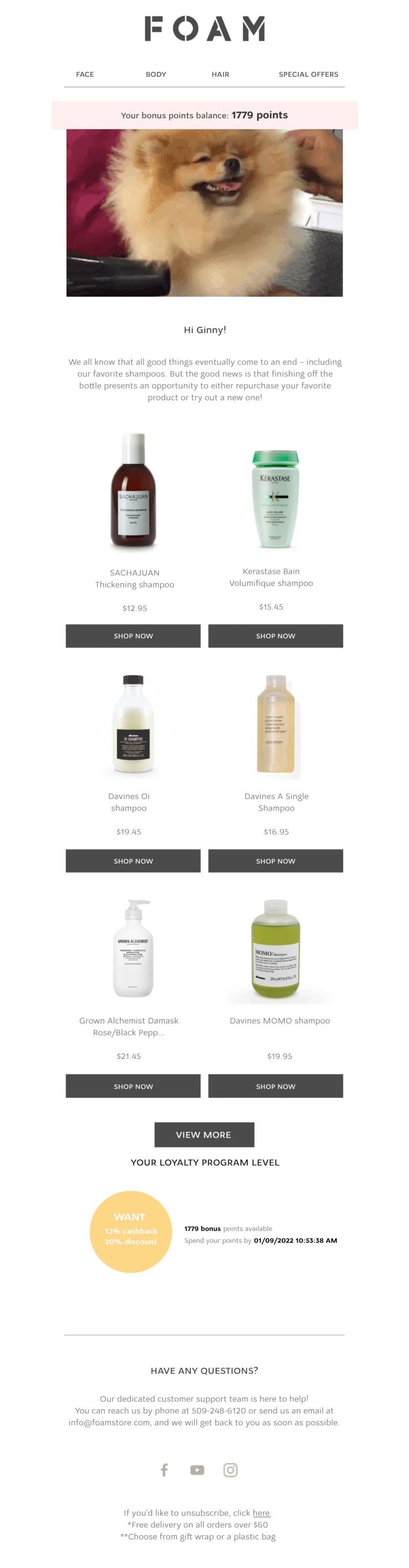
- An automation map was created including non-standard automated campaigns — e.g., a reminder that a shampoo the customer had purchased would soon run out, or that the customer would need to buy sunscreen to give their vitamin A a boost;
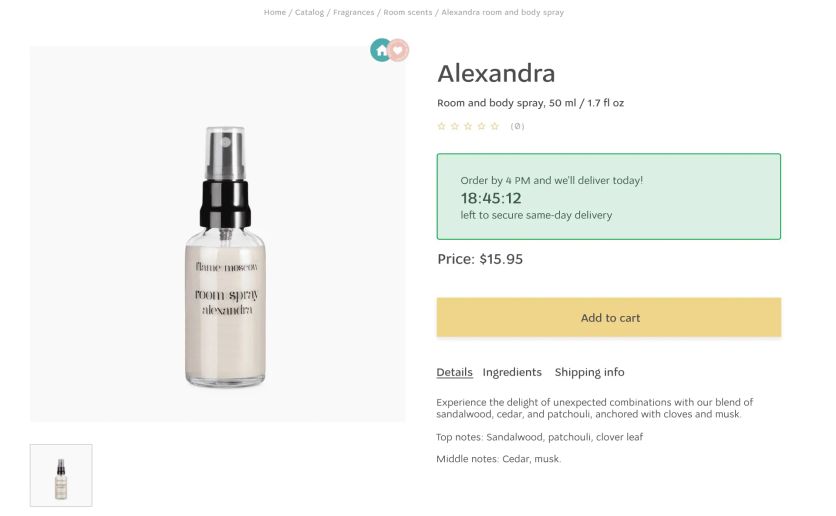
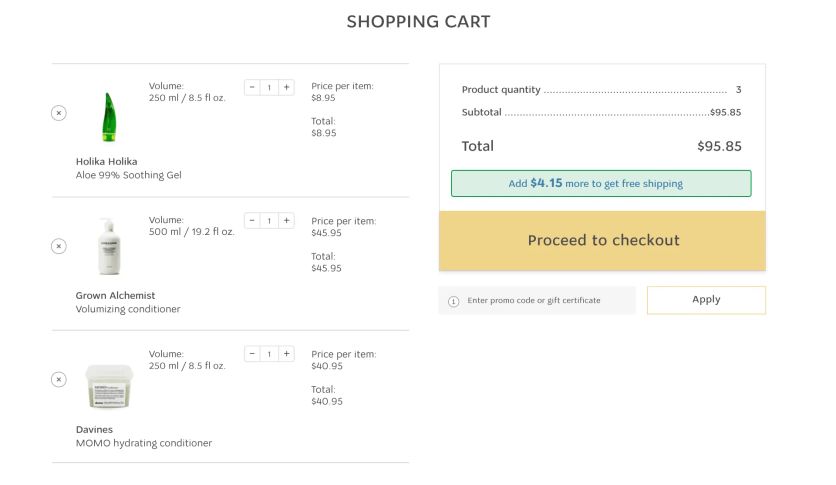
- The website was personalized, an ETA timer was added for deliveries and a free delivery counter was added to the cart;
- An omnichannel loyalty program was launched.

Unified analytics is also important for us. Sometimes, within the same campaign, we send both emails and text messages. Previously all the messages were sent from different services, and it was impossible to evaluate the results of the campaign in one report. However, now we can do it.
In addition, we planned to launch a loyalty program, we liked the fact that Mindbox would fully cover this project as well.
Results
- 807%
ROI of marketing automation
- 18.9%
Average share of email channel revenue in total revenue
- 9.6%
Average revenue share of trigger emails in total revenue
ROI 807%
To calculate the ROI, we took data from January to September 2021. We have not disclosed the figures at FOAM’s request. Calculation formula:

807% — ROI from the Mindbox platform. This means that each dollar invested in the platform brings FOAM $8.
18.9% — the average share of email channel revenue relative to the total revenue
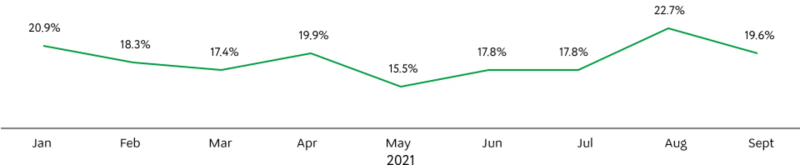
Data from the “Mindbox Summary report on campaigns,” Last-click attribution
9.6% — the average share of revenue from trigger campaigns in total revenue

Data from the “Mindbox Summary report on campaigns,” Last-click attribution
Our customer success manager, Antonina Volchenko, always helps us with our projects. It takes her and our marketing specialist just a few days, and sometimes hours, to sort out tasks. Mindbox’s support also responds promptly. It’s a pity that they don’t work on weekends.
The only disadvantage I can think of is a lack of ready-made solutions for all the ideas we have. For example, we would like to add a choice of a favorite product for customers, however, the platform cannot do this. Then we simplified the idea to the customer’s favorite brand choice. There was no ready-made function for it either, but our manager, Antonina, consulted with colleagues and suggested a manual solution. It is important for us to find the solution for our task, not just to put up with the fact that there is no ready-made solution.
What has changed with the introduction of the marketing automation platform?
The introduction of the platform made it easier to plan campaigns because now we communicate with customers from a single window and a marketing specialist can send emails without a programmer and a layout designer using ready-made templates and a visual email message builder. When we first used the platform, we were scared of its complex interface, but I know that it is being updated now. So, we look forward to seeing the results!
Since all the data is stored in a single system, we now have unified analytics. However, at the moment we don’t have all the reports that we need, and some of the existing ones may glitch. That being said, the Mindbox manager always helps to solve such problems.
How to segment the audience of bulk email campaigns
Bulk campaigns include news, useful articles, and promotional materials. At the same time, the customers receive no more than four emails per week. If they made an order or received a series of trigger emails, they are excluded from bulk campaigns, which prevents them from unsubscribing. Customers are segmented based on RFM analysis. They are evaluated based on the recency and frequency of their purchases, their average order value, as well as their interaction with emails. Periodically, different content is sent to active users and those who do not open emails. For example, we send news to active users, while churned users receive promo codes and personal recommendations. Those who have not responded to communications for a very long time are placed on stop lists and excluded from campaigns.
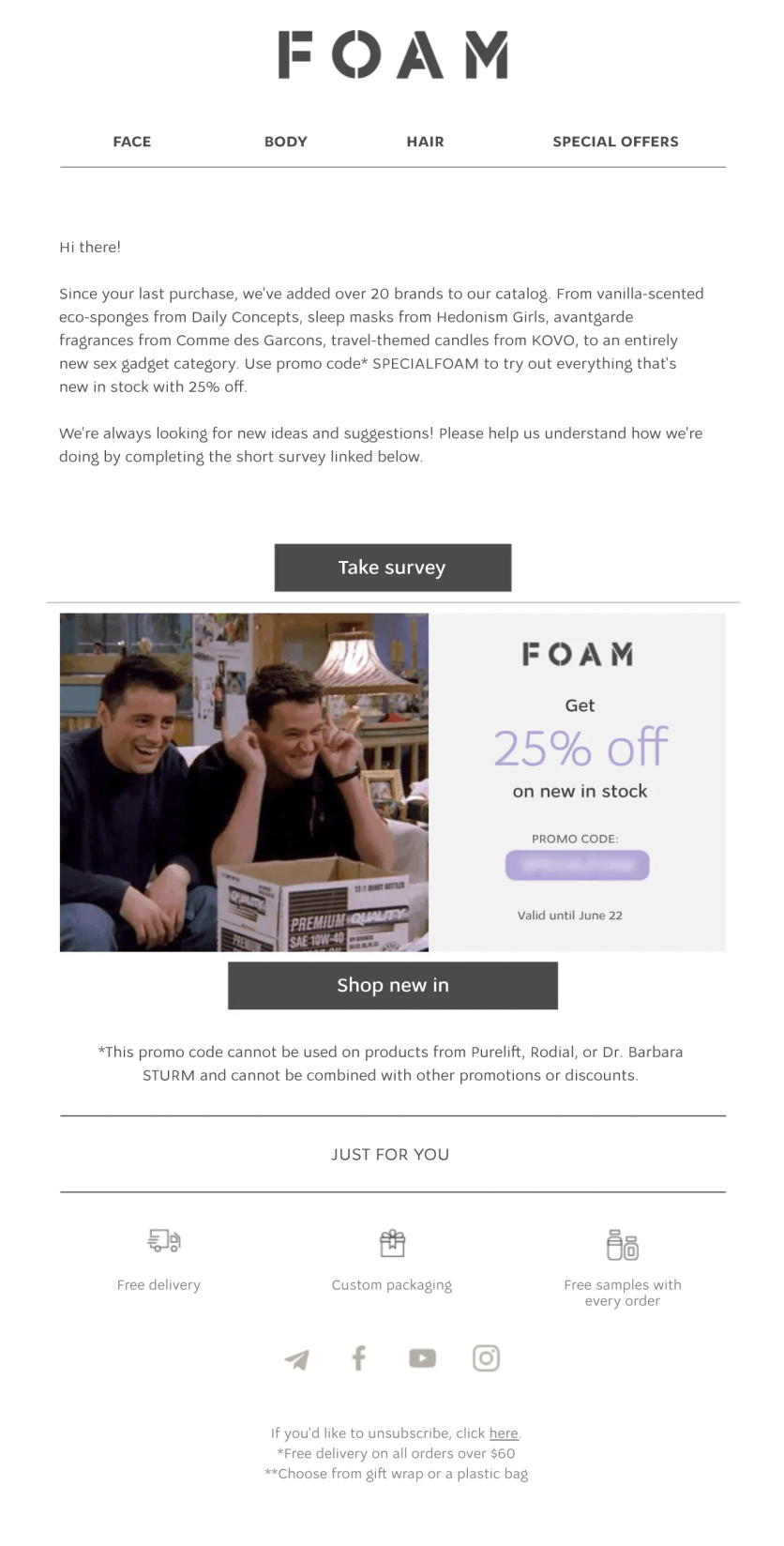
An email with a discount and a survey
This was sent to customers who had made an order in the last six months, but did not place another one in the past three months:
Customers are also segmented by region. The residents of large cities are sent content related to the beauty store, such as news and special promotions.
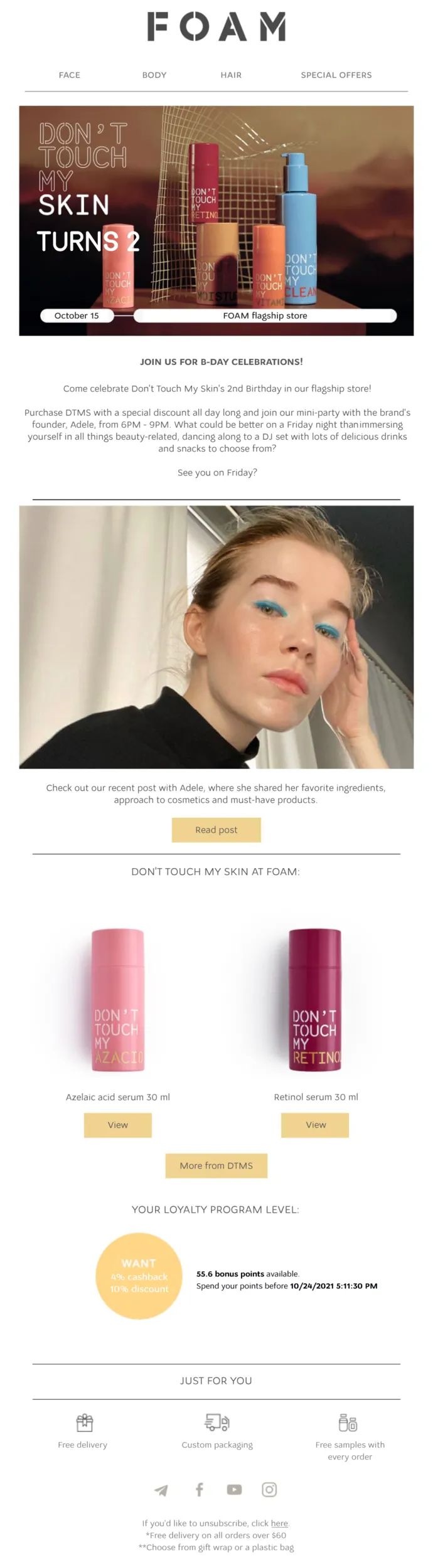
Invitation to an in-store party
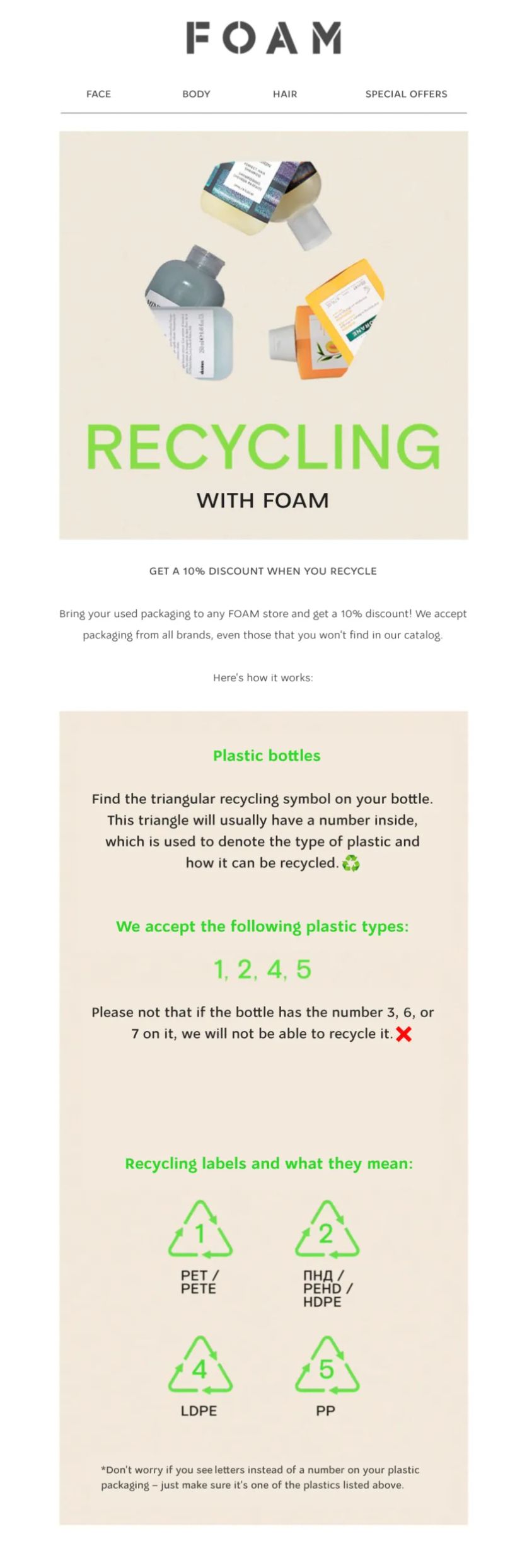
An email about a discount for used packages
How to use product recommendations in bulk email campaigns?
Almost all campaigns use product recommendations.
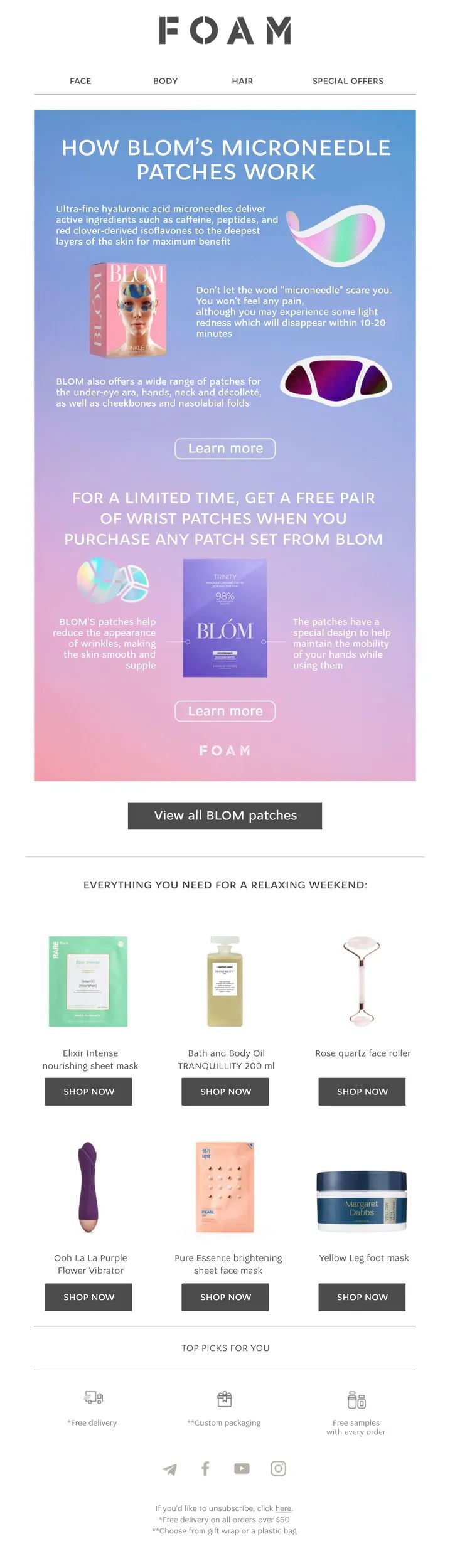
A/B test of product recommendations
Email with recommendations:
Email without recommendations:
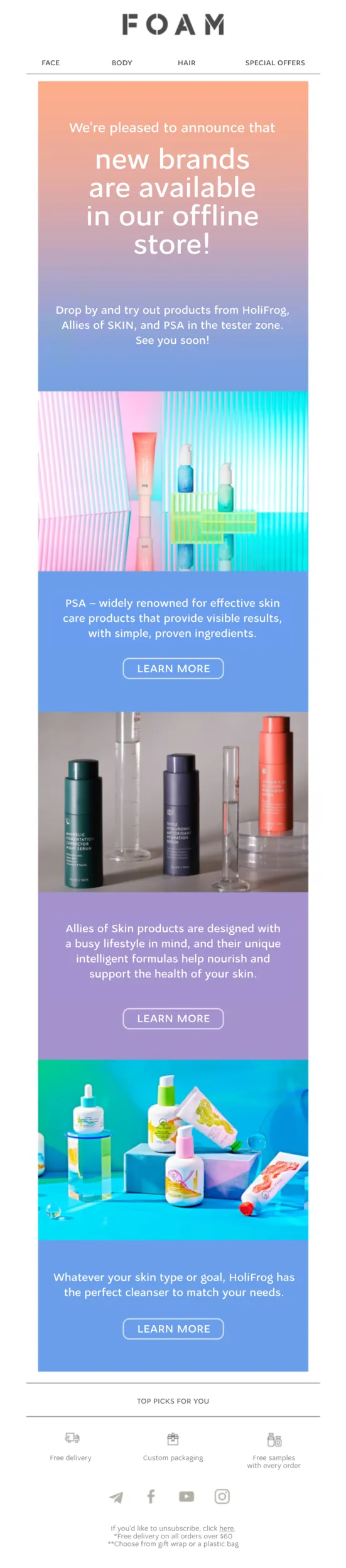
Recommendation widgets can’t be added to emails aimed at focusing on a particular brand or new products.
An email regarding new brands in the store
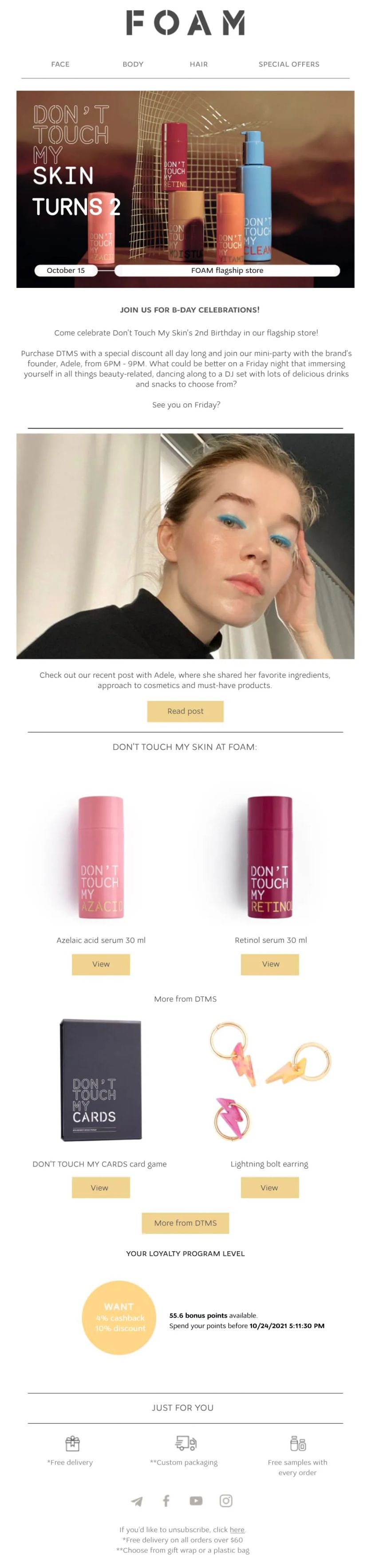
An email regarding discounts on “Don’t touch my skin” brand
It’s a little inconvenient that we can’t drag a finished email from one campaign to another. For example, we tried a bulk campaign and then copied it to another campaign as a trigger with only one click. Now we have to do this by saving the campaign as a template. To be honest, it’s not very convenient.
How to talk about promotions in cascade campaigns?
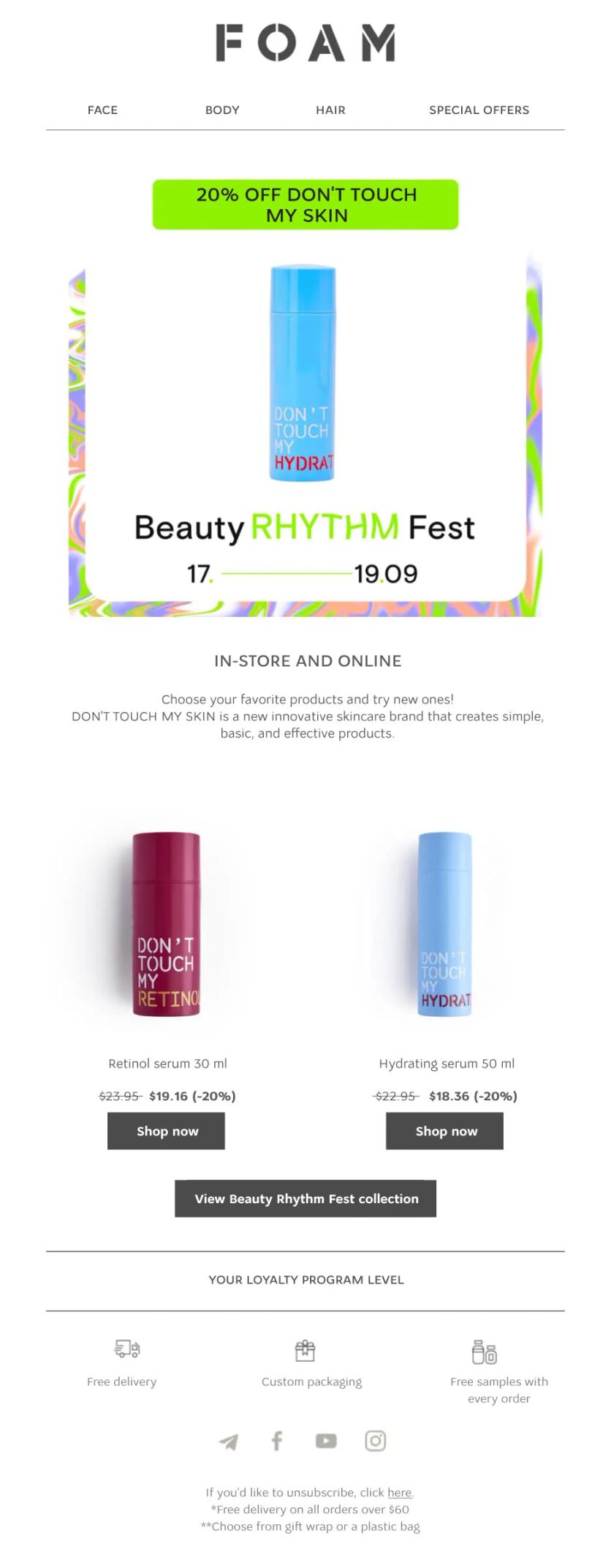
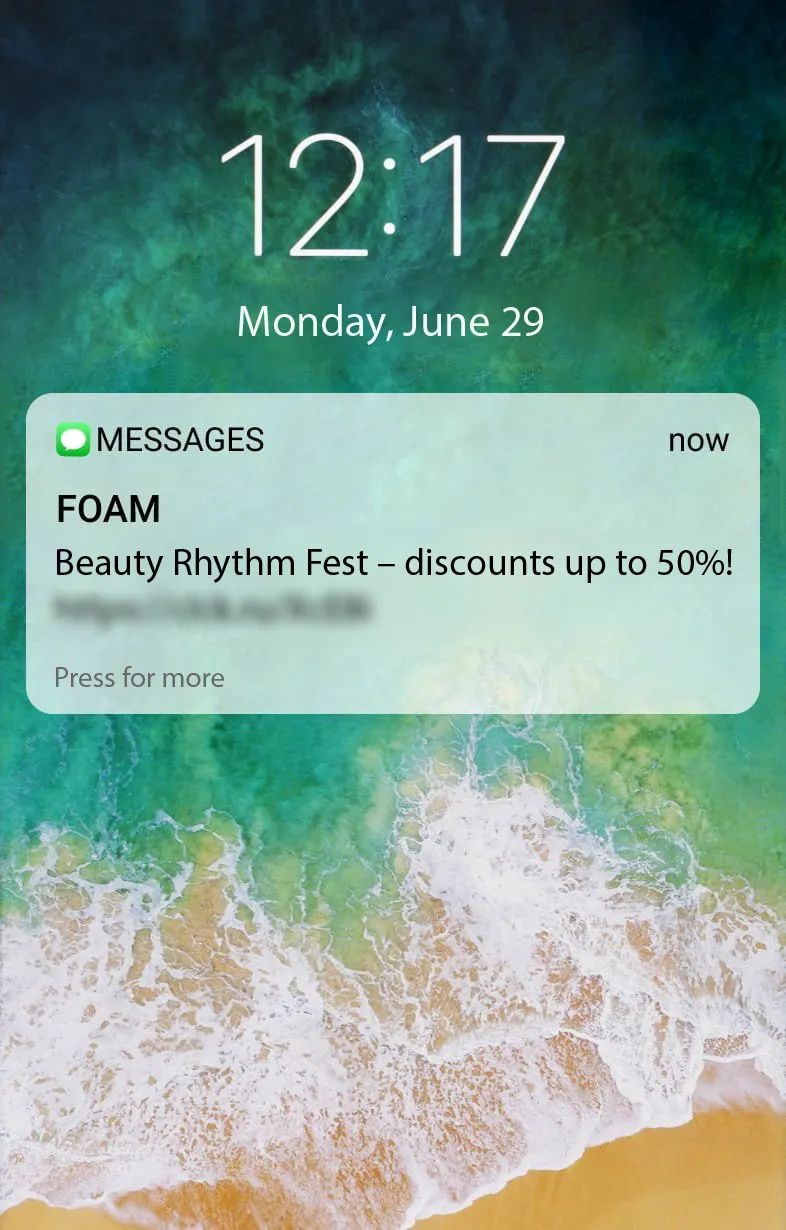
Big sales are held from time to time. For example, in August and September, they were stylized for music festivals. At this time, customers received email communications almost every day. Those who did not open email were “caught up” with text messages:
An email regarding the Beauty Rhythm Fest promotion
Text message regarding the Beauty Rhythm Fest promotion
Over time, we began to use it for cascade campaigns in large promotions and automated campaigns for birthdays, with an abandoned cart, and for reactivating “sleeping customers”. That is, we used to send only emails, and now, if a person doesn’t respond to an email, they receive a text message.
We do not have a very large database of valid contacts with a subscription to SMS-informing yet. However, the SMS channel has been doing quite well.
How the automation map was improved
Welcome series. Previously, the store had a short welcome series consisting of two emails: DOI and emails with a 10% discount. Now the sequence has been significantly expanded and made more comprehensive:
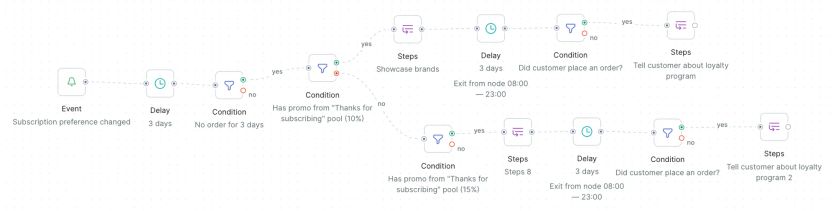
We have made a series of five emails with discount offers, where the discount amount depends on the actions of the customer. For example, if the recipient did not open the first email with a discount, they will receive a bigger discount. And if they opened the email, but did not place an order, they will receive a story about the range of products and loyalty program, pushing for the first purchase. After some time, a reminder will be sent informing them that the discount is going to expire.
The series also solves another problem. It weeds out bots that register on the website. In order not to accumulate a dead database, it displays all users who have not performed a single action within two weeks after registration in a separate segment. We then simply have to delete them.
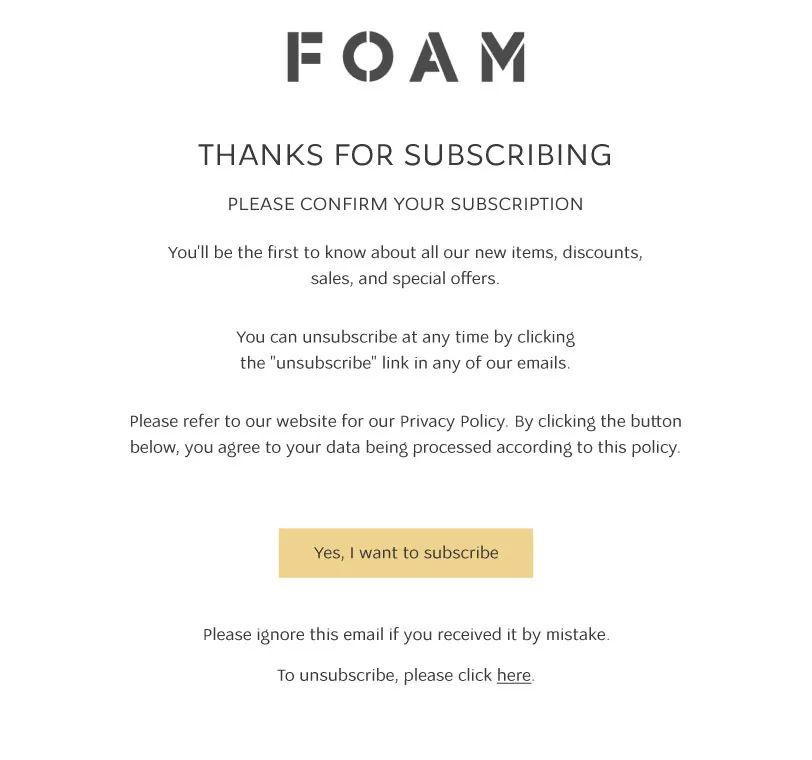
Double-Opt-In (DOI) email
This is sent to confirm registration:
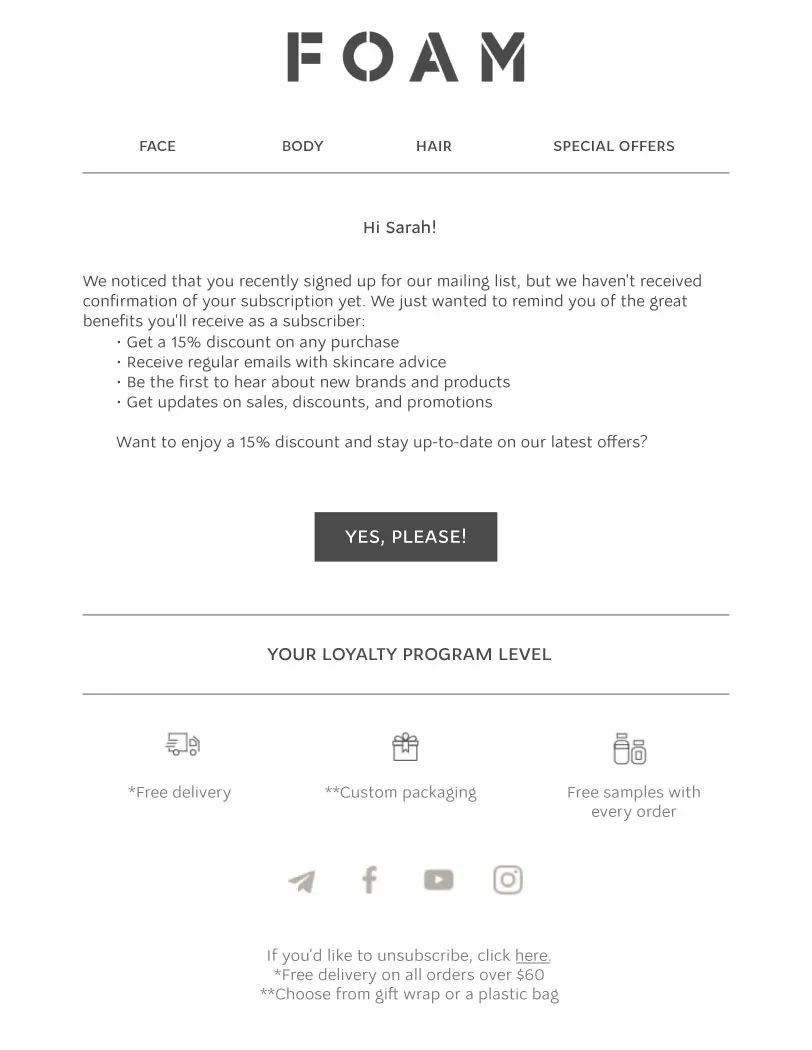
Reminder to confirm subscription
This is sent two days after an unconfirmed subscription:
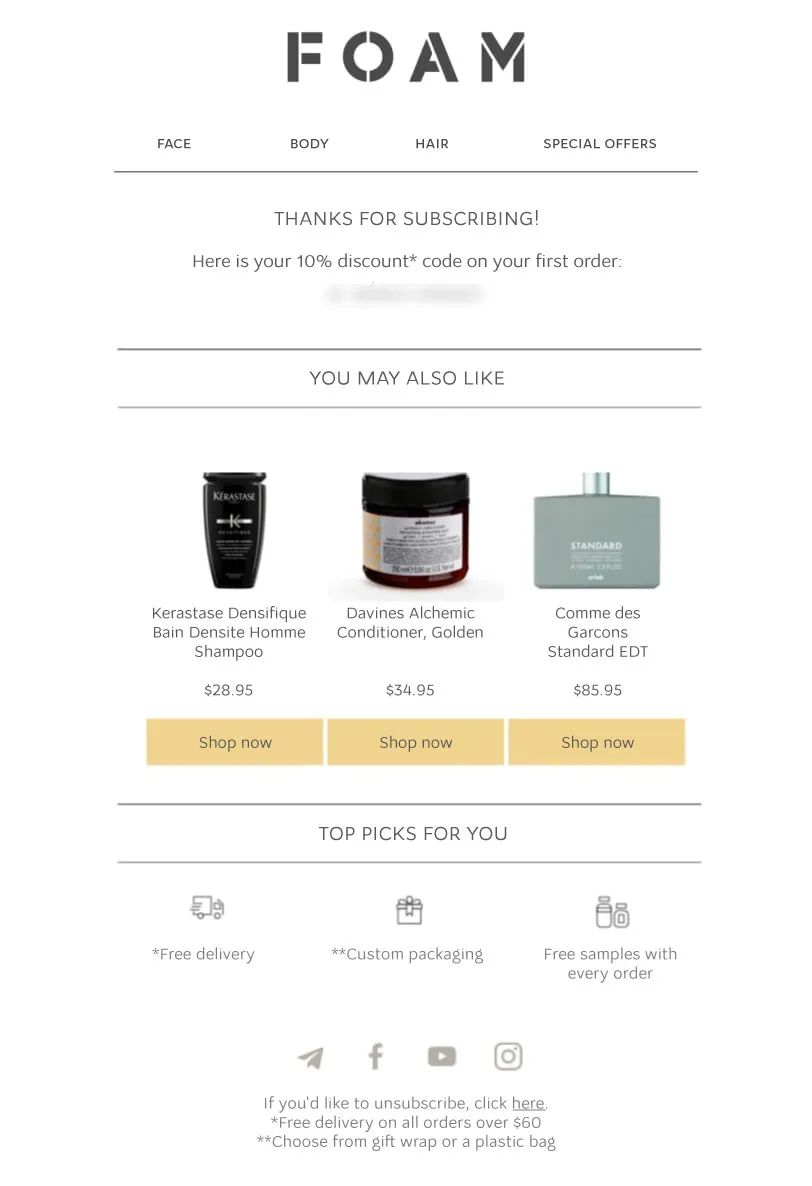
An email with a 10% discount and recommendations
This is sent if the user left their contact details in the pop-up on the website:
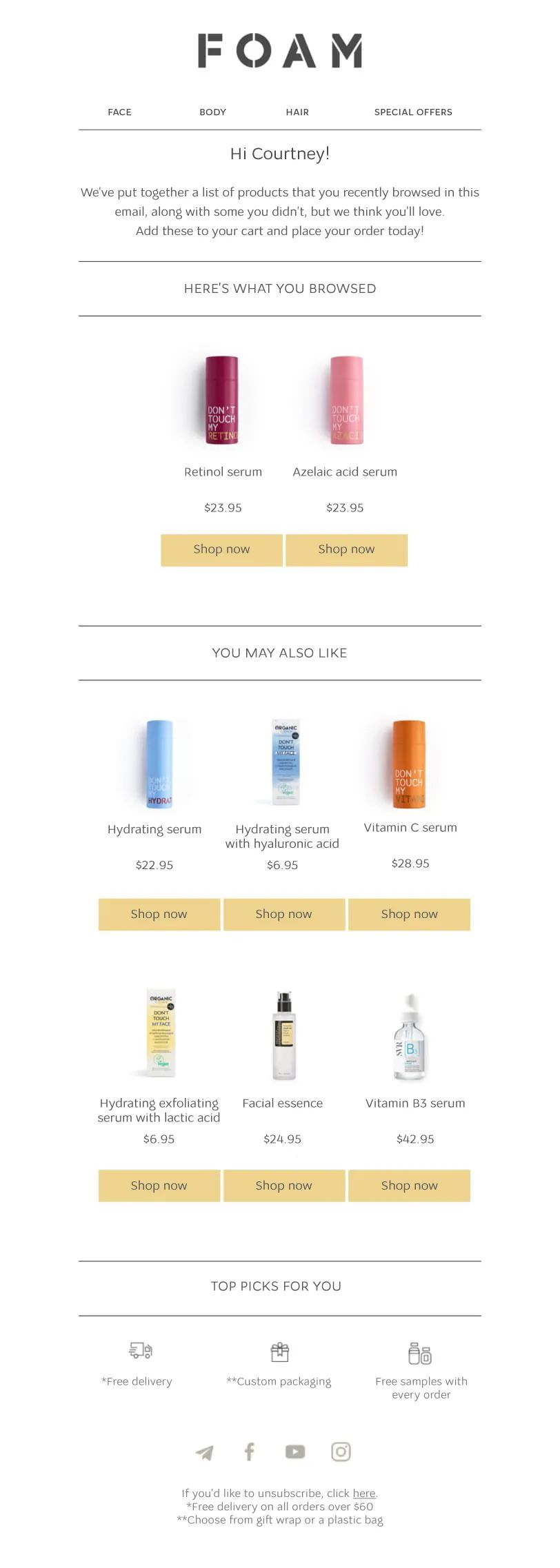
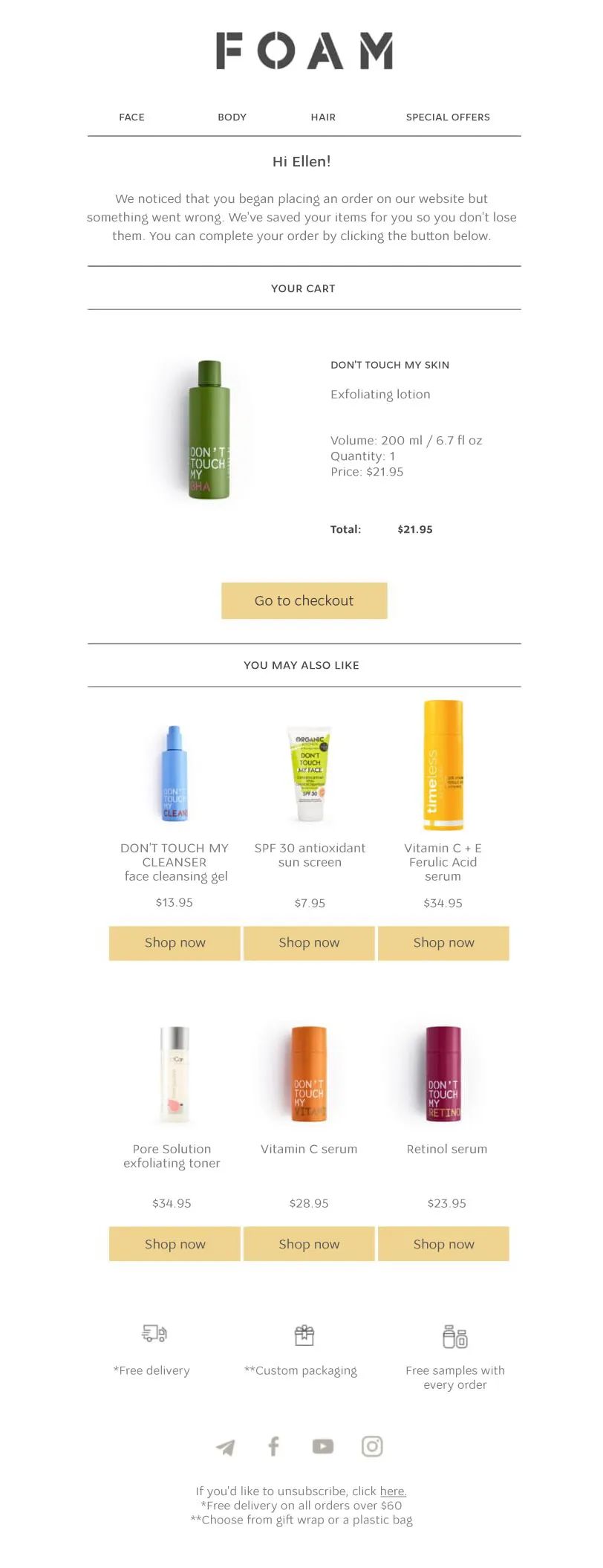
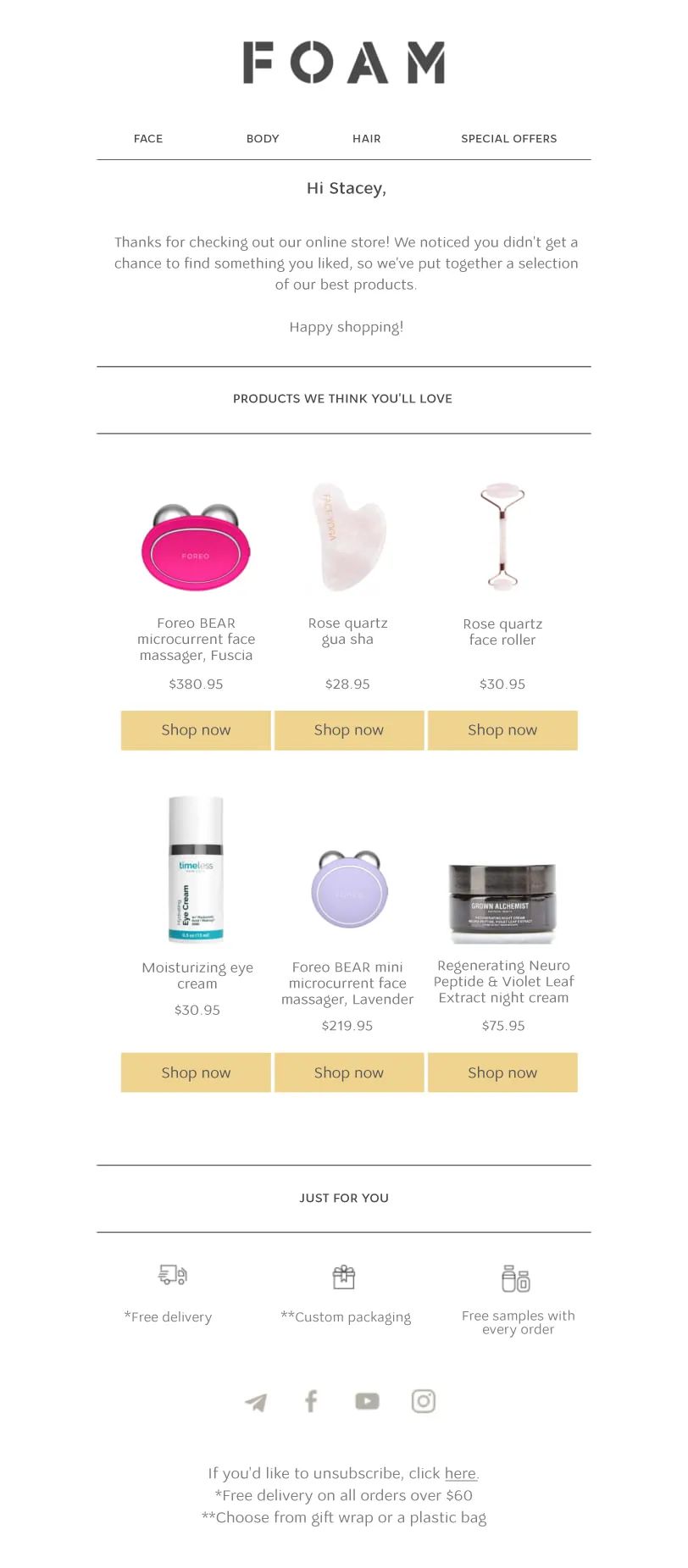
Abandoned category and product view, and abandoned cart. We launched campaigns for an abandoned category and product view, as well as an abandoned cart. Product recommendations help to return customers to the website.
Abandoned product browse
Abandoned cart
Abandoned product category view
Related products recommendations. The customers’ purchases say a lot about them, and FOAM uses this knowledge to make a suitable offer. This means that if the customer has sensitive skin, they will be offered specialized products for this issue.
An email regarding sun protection
This is sent to those who bought cosmetics that contain acids, vitamin C, and vitamin A:
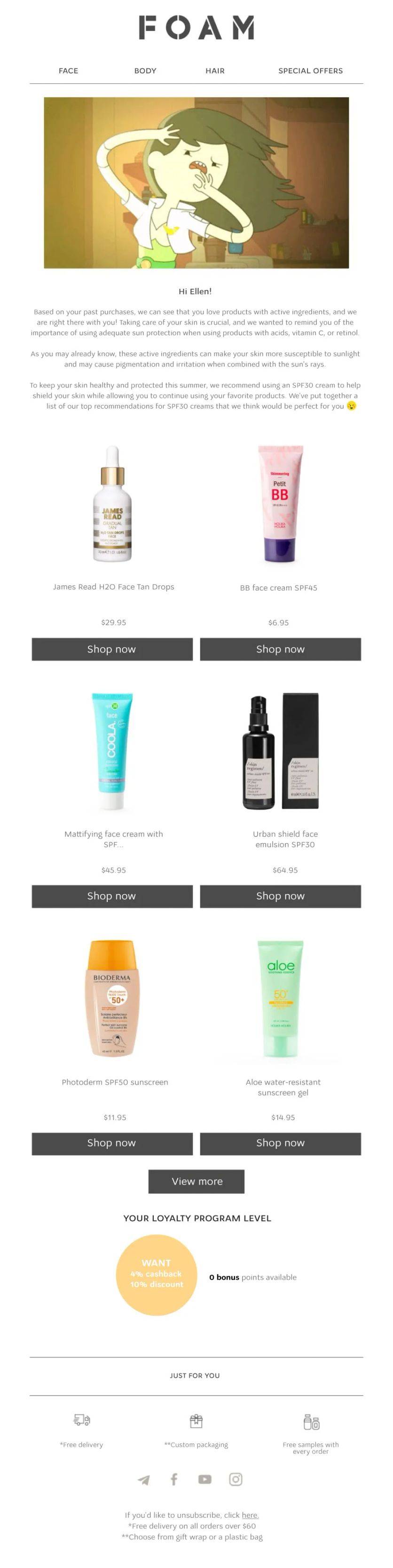
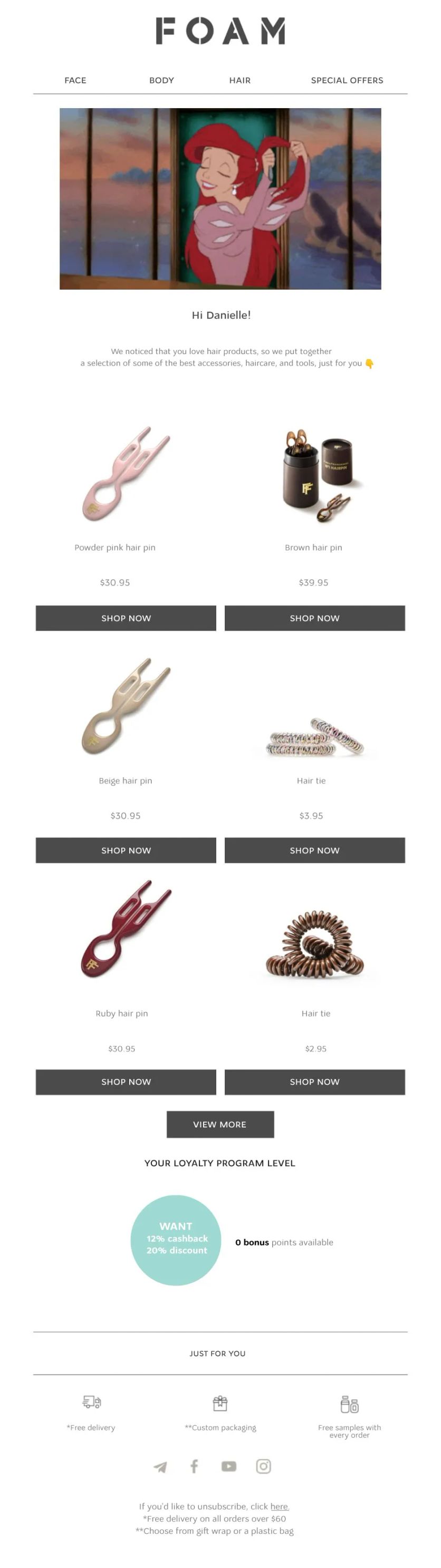
An email regarding hair accessories
This is sent to those who bought hair care products:
A reminder that the purchased product is running out. We can roughly calculate how quickly certain products run out. For example, shampoo is consumed in 60 days. This information was added to the product feed, from where it gets into Mindbox. Then we set up a trigger campaign. When a person buys a product, the system waits, and then seven days before the expected date when the product is supposed to run out, it sends an email with an offer to buy it again.
Reminder that the shampoo will end soon
Reactivation. Based on RFM analysis, the audience was divided into groups by frequency, recency, and order value. Each group received an email reminding them about the brand and offering them a 15% discount:
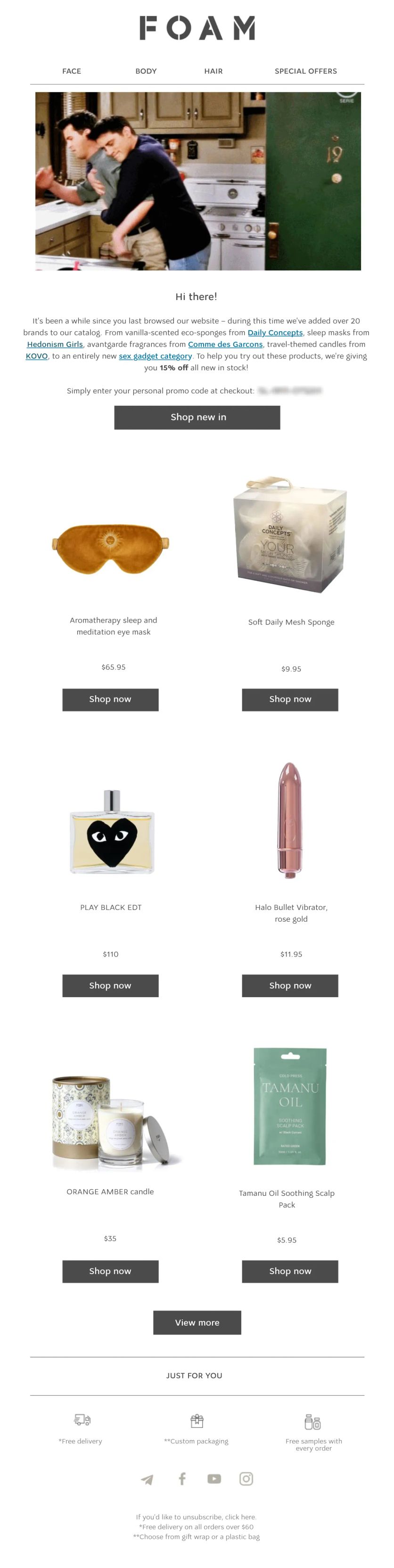
An email with reactivation discount
Results in the “Customers that are churning” segment:
Results in the “Lost regular customers” segment:
How the website was personalized
Stories, pop-ups, embedded blocks, and widgets are launched on the FOAM website in order to collect customer data and increase conversion. Product recommendations are used both in email campaigns and in the online store. “Wheel of Fortune” for collecting email addresses. Customers who are not subscribed to the store’s communications see the “Wheel of Fortune” pop-up. At the same time, it does not distract from purchases as it does not appear on the product page and in the cart.
- 9,7
thousand customers have left email addresses in 2 months
- 8,8%
pop-up conversion
A pop-up for collecting the date of birth. When we launched an automated campaign with a birthday promo code, it became necessary to collect the customers’ dates of birth. Therefore, customers with a subscription were displayed the following pop-up:
- 3
thousand customers have indicated their birthday in 2 months
- 19,5%
pop-up conversion rate
Stories. In stories, we talk about promotions and products, we observe active ingredients and the problems of customers that these products can solve.
ETA timer. Fast delivery is one of the advantages of the store. Orders placed before 16:00 will be delivered on the same day within the city. Therefore, customers from the specific cities see how much time is left to place an order to receive it today. Other users don’t see the timer.
Free shipping counter. Delivery in the store is free if the order value exceeds $80. Embedded blocks and widgets help customers understand how many products they need to add to the cart to get free delivery.
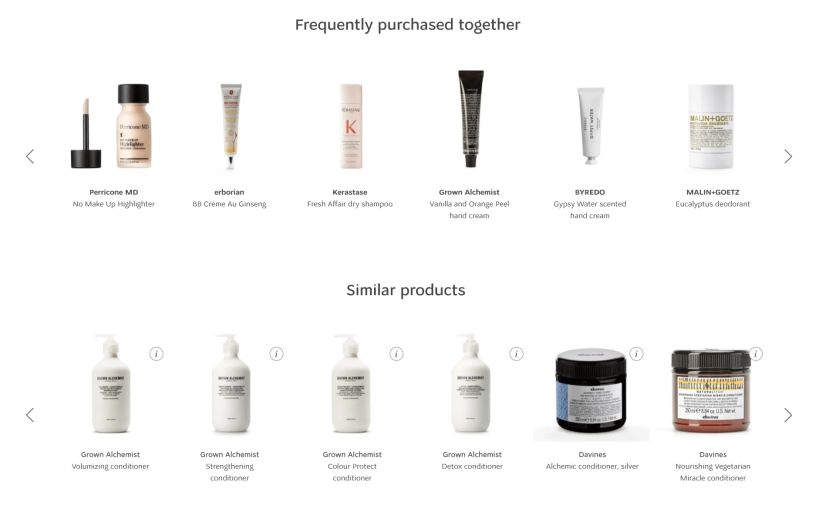
Product recommendations. Embedded blocks and widgets with recommendations are added on the main page, in the product card, and in the cart.
Why is the loyalty program being restarted?
Previously, FOAM only had a referral program for purchasers. One of the reasons for switching to Mindbox is the opportunity to develop our unique loyalty program. As a result, we launched a tiered point loyalty program. When buying, the customer receives points that they can start spending in a week. Points can be used to pay for up to 99% of the purchase. Additionally, customers received discounts on their birthday and on their favorite products. At the same time, the loyalty program is omnichannel — the customer can get bonus points in the beauty store, and spend them in the online store, and vice versa.
An email regarding the accrual of points in the loyalty program
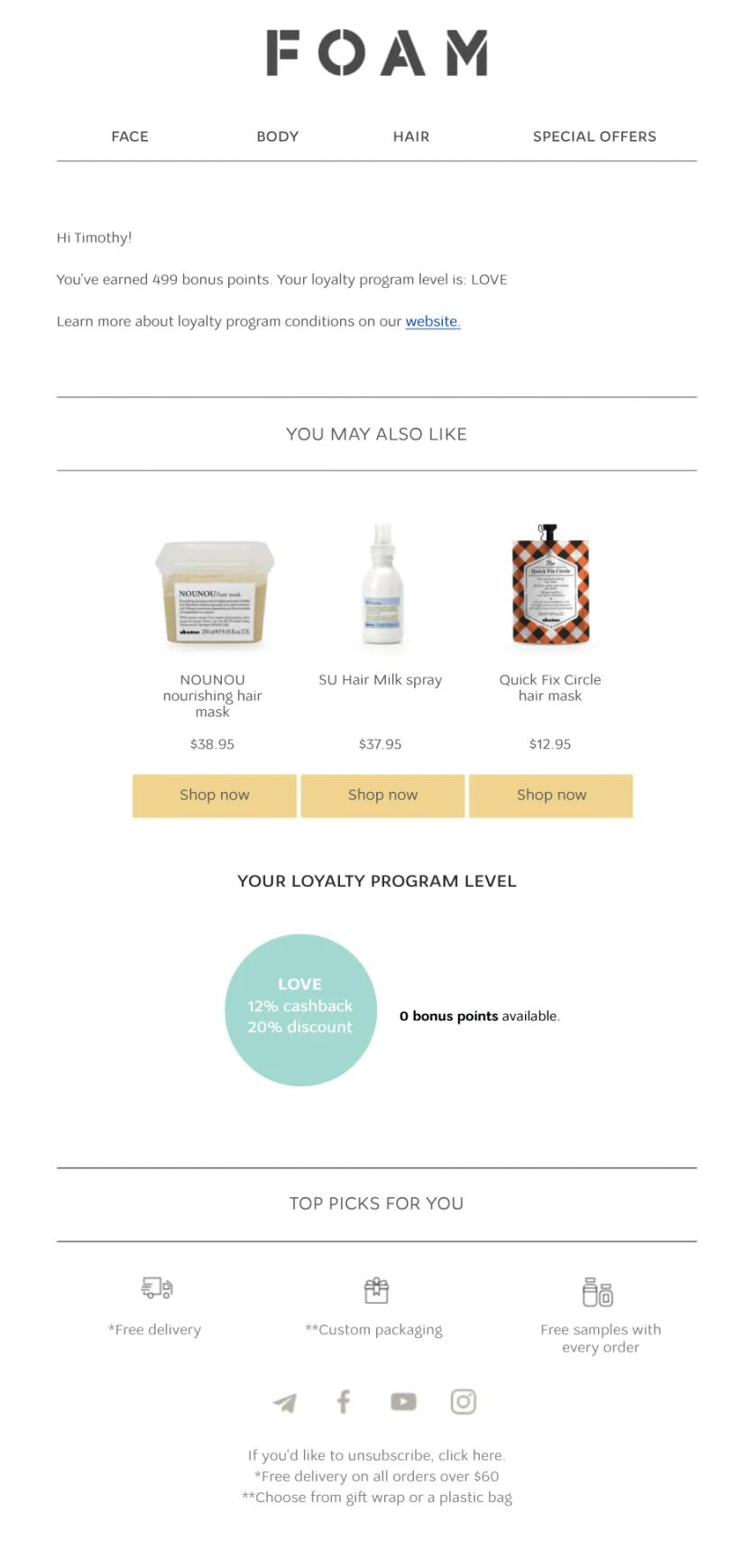
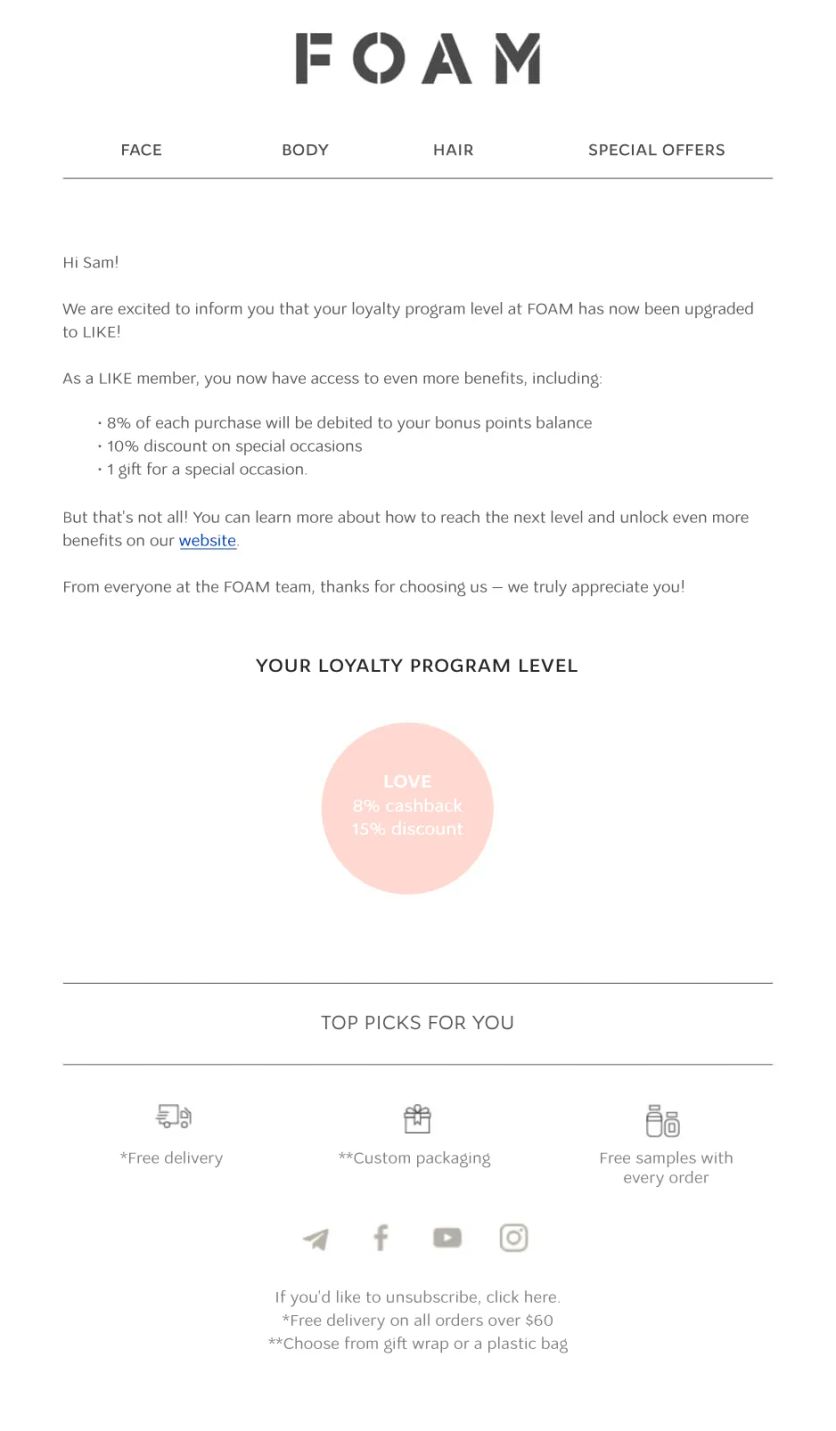
An email regarding the transition to a new level in the loyalty program
How do we plan to develop direct marketing?
- Run NPS surveys in email campaigns to track customer satisfaction.
- Modify recommendation widgets in the cart, and make them more personalized. Add recommendations to the blog. As a rule, authors mention products in articles, but they also want to add recommendations that will offer related products.
- Create more personalized pop-ups, for example with related products or information regarding promotions. Add a warning that the product is running out of stock.
- Redo the promo page on the website. Currently, this is a set of banners. We are going to make a full-fledged page and automate shares using our ERP. By adding a promotional product to the cart, the customer will see a pop-up with an offer to perform a target action (add the same product for the second time or another product of this brand) and receive a discount or gift.
- Launch a bot on the website that will ask questions and recommend products based on the answers.
- Restart the loyalty program so that it motivates customers to return.